
TONGREN · JIANGKOU · MATCHA CLUSTER EVIDENCE
Tongren and Jiangkou Matcha Cluster: What Official Evidence Tells B2B Buyers
A buyer-focused reading of official Tongren and Jiangkou matcha evidence, including raw-material bases, tencha lines, processing concentration and the limits of regional statistics.
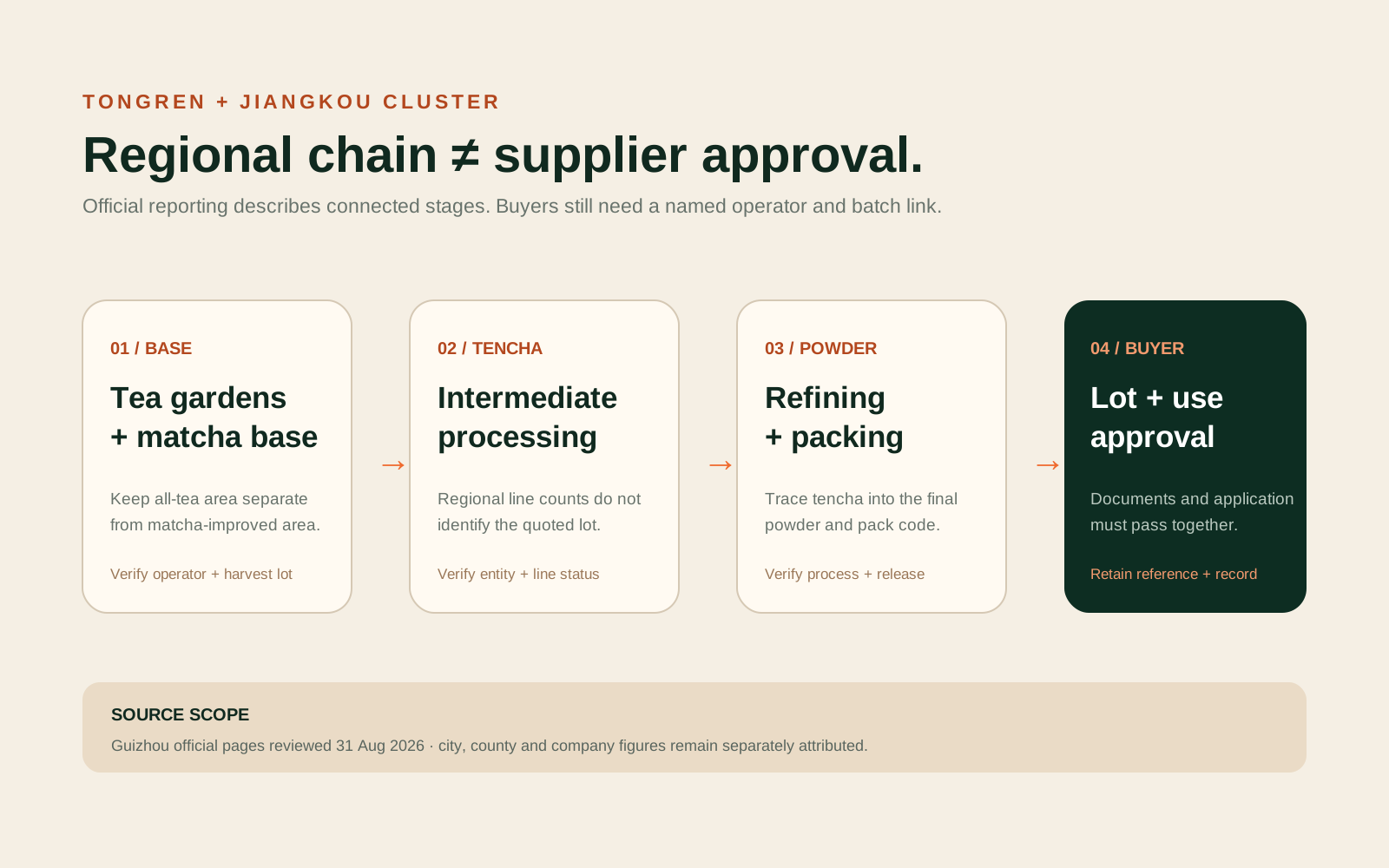
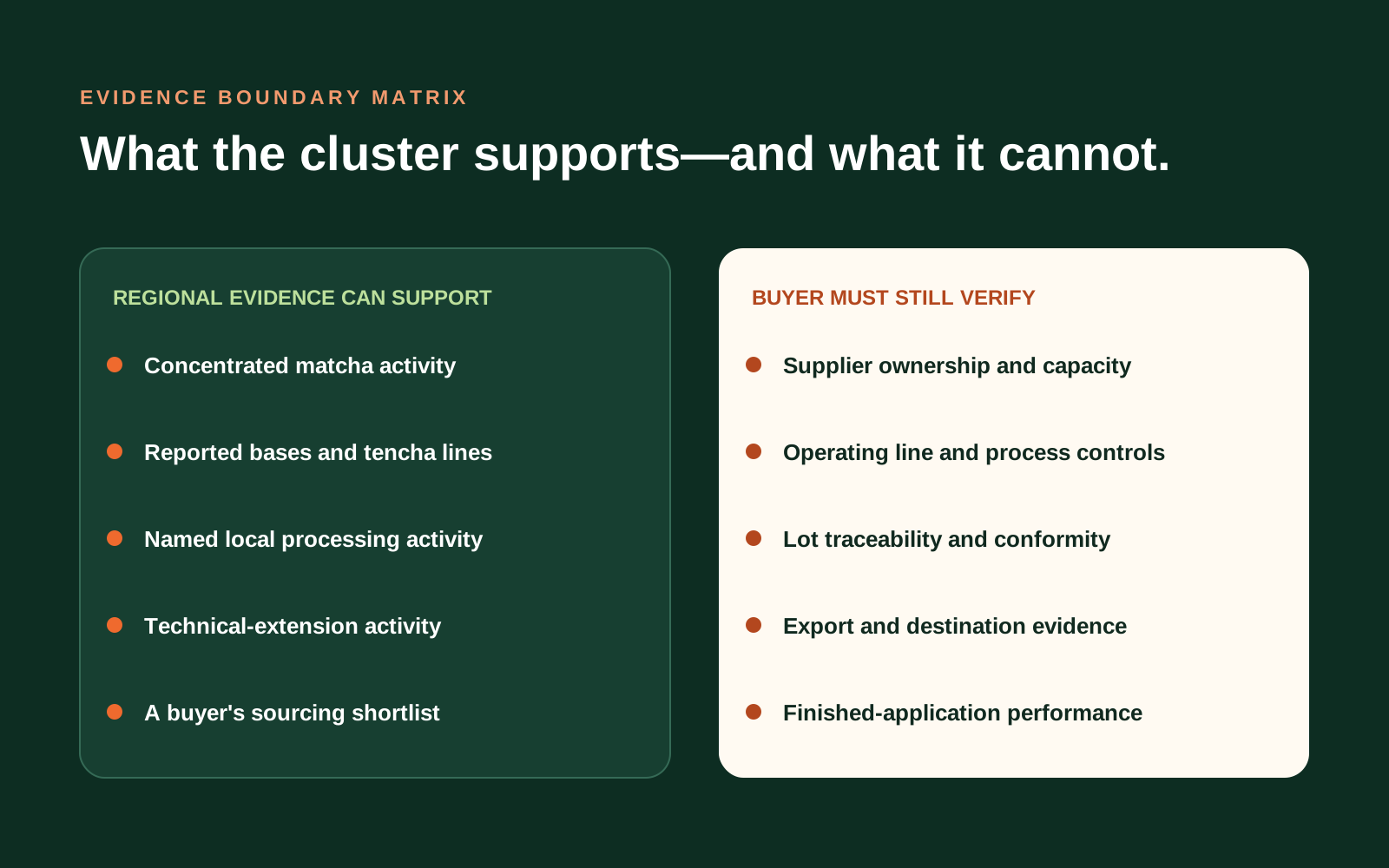
Official Guizhou sources support the existence of a concentrated matcha chain in Tongren and Jiangkou, including raw-material bases, tencha processing lines and refined matcha activity. The figures are useful for regional discovery, infrastructure questions and supplier due diligence, but they use different years, geographies and entity scopes. They do not prove the current output, ownership, certification, export record or lot quality of XIAO TEA or any unnamed supplier. Buyers must keep cluster context separate from company and batch evidence.
USE THIS GUIDE IF
- Importers and food manufacturers investigating the Tongren–Jiangkou matcha cluster
- Procurement teams checking regional scale and infrastructure claims before supplier qualification
- Quality and R&D teams linking origin context to processor, lot and application evidence
NOT THE RIGHT ROUTE IF
- Buyers looking for an endorsement of a named supplier that has not been independently qualified
- Teams adding different official figures into one national matcha total
- Anyone treating a regional export or output statement as destination compliance for a shipment
PROJECT DECISIONS
How to translate Tongren–Jiangkou cluster evidence into buying checks
Define the cluster before comparing its numbers
Tongren is a prefecture-level city in Guizhou; Jiangkou is one county within Tongren. Official pages may report the whole city, the county, the province or a named company operating in the county. They may also refer to tea gardens, matcha-adapted bases, fresh-leaf supply, tencha lines, refined matcha processing or finished sales. These are connected parts of a value chain but not interchangeable units. A buyer should copy the geography, period and noun attached to every figure before using it.
For this guide, cluster means the concentration of agricultural supply, intermediate processing, powder processing, technical services and commercial activity described by official Guizhou sources. It is not a legal certification or a single factory. Cluster evidence is useful because it can indicate available infrastructure and a pool of operators. Its commercial value depends on whether a named supplier can connect the quoted product and lot to that infrastructure with auditable records.
The provincial evidence establishes concentration, with a clear attribution limit
The Guizhou Provincial Department of Agriculture and Rural Affairs reported in January 2025 that the province had more than 30,000 mu of matcha base, 35 tencha enterprises, 48 tencha production lines and more than 1,000 tonnes of matcha output. The same response highlights Jiangkou's refined-processing concentration. This is strong administrative evidence that Guizhou had developed a multi-stage matcha industry by the reporting date.
The numbers are provincial and self-reported. They should be quoted as such. They do not identify which supplier owns which area or line, whether every line was operating at the same utilisation rate, whether output was sold in the same year or whether a proposed lot meets a buyer's specification. They also cannot be assigned to XIAO TEA. For a sourcing decision, use the figures to ask about processor linkage, current operating status, raw-material control, storage, quality systems and lot traceability.
Tongren figures describe a broader raw-material and processing system
A June 2025 Guizhou financial-administration article reports that Tongren had 61,600 mu of raw-material bases in 2024, 45 tencha lines, more than 30 tencha enterprises and matcha output above 1,200 tonnes, with reported industry value above RMB 300 million. These figures describe Tongren's city-level system and a particular reporting year. The raw-material-base area is not necessarily identical to the province's matcha-base figure because the source definitions and geographic scopes differ.
The article also contains company and market claims that should not be generalized. A government-hosted article can still mix administrative figures, enterprise statements and promotional language. Buyers should separate each sentence by attribution. Use city-level line and base figures to understand the potential cluster, then request the supplier's own registered entity, facility address, production role, current line evidence, quality records and redacted shipment evidence when export experience is material.
Jiangkou sources show a county-level chain from tea gardens to refined powder
A May 2025 Guizhou civil-affairs place-name article reports 160,800 mu of tea gardens in Jiangkou, 125,300 mu in production and 101 tea enterprises. These are all-tea figures, not matcha-only area or companies. The same source separately describes matcha development: 28,000 mu converted or improved for matcha, 15 tencha lines and company-specific tencha purchasing and matcha processing in 2024. Keeping the general-tea and matcha fields separate prevents a large tea-garden total from becoming a false matcha-base claim.
A Guizhou Development and Reform Commission article from April 2025 similarly reports 28,000 mu of accumulated matcha-base improvement, 13 tencha enterprises, 15 tencha lines and matcha output above 1,200 tonnes in Jiangkou. The repeated line and base figures provide useful corroboration at county level. They still do not tell a buyer which operator supplied a sample or whether the powder came from Jiangkou-grown leaf, imported tencha, another county or a blend. That requires batch-linked traceability.
Technical visits and projects are supporting evidence, not performance certificates
The Guizhou agriculture authority reported that a 2024 annual meeting for the provincial tea-industry technical system included visits to a Jiangkou tencha base and a processing facility to observe garden technology demonstration and matcha production. This confirms technical-extension and observation activity around the cluster. It does not publish a scored audit, certification result or validated commercial performance for every participating entity.
Government project lists and local articles can also identify storage, cold-chain or intelligent-processing investments. A named project proves that an investment or administrative action was listed at a stated time; it does not prove completion, operating conditions or ownership of an offered batch. Buyers should inspect the actual storage temperature records, warehouse hygiene, packaging environment, retained-sample system and change control used for their product rather than transferring a project title into the supplier approval file.
Build a four-link chain: base, tencha, refined powder and commercial lot
First, identify the agricultural base linked to the product, including operator, location, harvest window and any relevant shading or crop-control records. Second, identify the tencha processor, line and intermediate lot. Third, identify the final powder processor, milling or classification route, packing site and quality-release controls. Fourth, connect the buyer's sample and commercial quotation to a traceable batch, current specification and documentation set. If multiple legal entities are involved, write the roles clearly.
Then verify application performance. Use a controlled recipe and process for the intended latte, oat drink, bakery, dessert, premix or RTD application. Score tea recognition, bitterness, astringency, color in the matrix, aroma fit, mouthfeel, handling and aftertaste. Keep the winning sample code and approval record. Cluster evidence can strengthen the origin narrative, but the commercial decision should be based on the named chain and tested result.
What the cluster can and cannot say about XIAO TEA
XIAO TEA is a custom flavored matcha specialist and professional B2B supplier. We use origin and process evidence to support matcha-base selection, then build the flavor architecture around the buyer's target market and application. The difference from a generic catalogue offer is the controlled connection between brief, base, application test, adjustment and approved reference. Buyers should verify that route through project records and evidence tied to the quoted material.
The Tongren and Jiangkou statistics on this page are not XIAO TEA's factory area, capacity, output, export destinations, certifications or customer results. We do not claim them as company proof. This guide is also not an endorsement of any regional operator. It is a procurement tool: use the cluster to discover candidates and questions, then approve only the named supplier, processor, product, lot, destination documentation and application result that satisfy the project.
REGIONAL EVIDENCE BOUNDARY
Cluster statistics are not supplier or lot certificates.
The cited figures remain attributed to the relevant Guizhou authority, geography and reporting date. They are not presented as XIAO TEA production, capacity, exports, certifications or proof that an unnamed supplier or lot meets a buyer's requirements.
- Author
- XIAO TEA Application & Commercial Team
- Published
- 31 August 2026
- Review trigger
- Commercial terms, application evidence, regulatory sources or process scope changes
REFERENCE SOURCES
Official and primary references
- Guizhou Department of Agriculture and Rural Affairs — response on the province's matcha industry
- Guizhou Financial Administration — Tongren matcha industry report
- Guizhou Provincial Department of Civil Affairs — Jiangkou tea and matcha cluster profile
- Guizhou Development and Reform Commission — Jiangkou matcha industry development report
- Guizhou Department of Agriculture and Rural Affairs — 2024 tea-industry technical-system meeting in Jiangkou
- Guizhou matcha industry sourcing and manufacturer guide
RELATED QUESTIONS
Questions buyers ask next
Is Jiangkou the same as the whole Tongren matcha cluster?
No. Jiangkou is one county within Tongren. Official sources may report county, city or province data, so the geography and scope must remain attached to every figure.
Do reported tencha line counts prove current commercial capacity?
No. A regional line count does not establish operating status, utilisation, ownership or the line that produced a quoted lot. Request named-entity and batch evidence.
Can Jiangkou's tea-garden area be called matcha acreage?
No. Official sources separate all-tea garden figures from matcha-adapted or improved bases. Buyers should keep those categories distinct.
What is the most important next check after reading cluster statistics?
Map the named agricultural base, tencha processor, final powder processor and commercial lot, then review current documents and application-test the representative sample.