
CHINA MATCHA ORIGINS · REGIONAL EVIDENCE · B2B SOURCING
China Matcha Origin Map for B2B Buyers: An Evidence-Based Sourcing Guide
A source-led map of Chinese matcha production activity that separates established regional clusters, named projects and technical drafting evidence from unverified supplier claims.
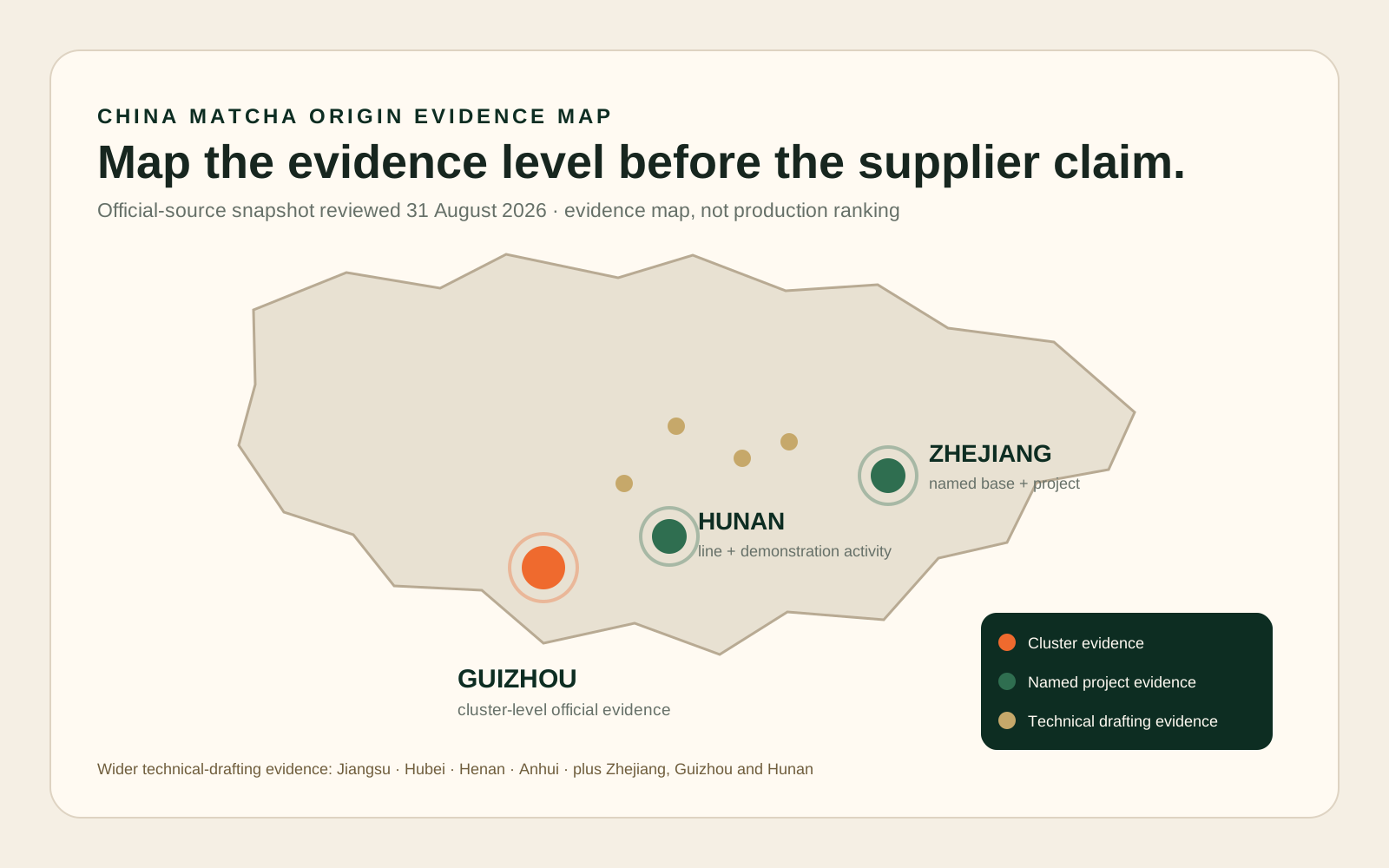
A responsible China matcha origin map is an evidence map, not a production ranking. Current official sources support cluster-level matcha activity in Guizhou, named production or investment projects in Zhejiang and Hunan, and a wider technical-research footprint across several provinces. They do not create one comparable national league table or prove the capacity, quality, ownership or export readiness of a supplier. B2B buyers should use the map to form sourcing questions, then qualify the named processor and lot separately.
USE THIS GUIDE IF
- Importers, manufacturers and distributors building a Chinese matcha supplier shortlist
- Procurement teams comparing regional claims without inventing a province ranking
- R&D and quality teams that need origin, processor and lot evidence kept separate
NOT THE RIGHT ROUTE IF
- Buyers seeking a definitive production-volume ranking unsupported by comparable official data
- Teams treating a province name as proof of one supplier's factory, certification or lot conformity
- Projects that need destination-market approval without product and shipment documentation
PROJECT DECISIONS
Seven evidence fields for a usable matcha origin claim
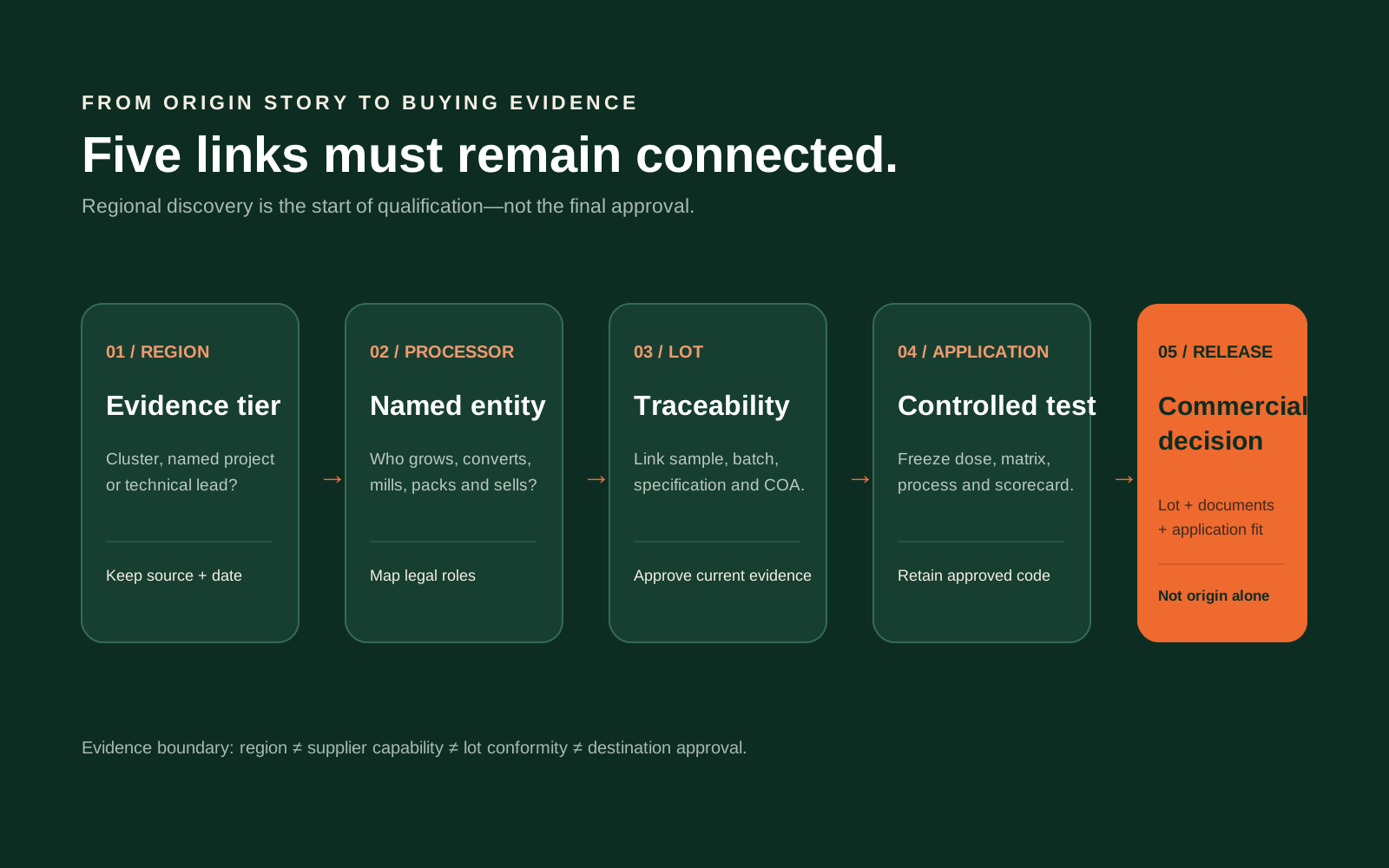
Read the map as evidence tiers, not colored prestige zones
Chinese matcha sourcing information is uneven. One official source may report a county cluster and its processing lines; another may list a specific technical-renovation project; a national technical document may simply show that experts surveyed or considered producers in a province. Putting all three on one map without labels would exaggerate comparability. This guide therefore uses three tiers: cluster evidence, named project or demonstration evidence, and national technical-drafting evidence. A province can appear in more than one tier as evidence develops.
The map is designed for discovery. It helps a buyer decide which questions to ask and which claims require additional proof. It is not a certification map, a quality score, a supplier directory or an estimate of national matcha output. Places not shown should not be read as having no activity; they may simply lack sufficiently specific official evidence in the sources reviewed on 31 August 2026. Every commercial conclusion must return to the named processor, product and lot.
Guizhou provides the clearest cluster-level evidence in the current source set
A January 2025 response from the Guizhou Provincial Department of Agriculture and Rural Affairs reported more than 30,000 mu of matcha base, 35 tencha enterprises, 48 tencha lines and provincial matcha output above 1,000 tonnes. The document also identifies Jiangkou as a significant refined-processing location. These figures are provincial self-reports tied to a stated date and administrative purpose. They support the existence of a concentrated regional industry; they do not prove the capacity, ownership, certification, sales or current output of XIAO TEA or any supplier not named in the source.
Separate Guizhou government pages provide more detailed Tongren and Jiangkou figures, but their scopes differ: some cover Tongren raw-material bases and tencha lines, while others describe Jiangkou tea gardens, matcha-base improvement or company-specific purchases and processing. Buyers should preserve the geography, year and entity attached to each number rather than combining them into a single national total. Our dedicated Tongren–Jiangkou guide explains those boundaries, while the existing Guizhou sourcing guide focuses on regional due diligence and supplier qualification.
Zhejiang evidence points to named bases and industrial investment—not a provincial total
A Zhejiang provincial economic-information article describes a matcha growing and production base in Fusheng, Yuecheng District, Shaoxing. A separate provincial manufacturing-transformation list includes a Jinhua enterprise project for a 600-tonne-per-year matcha production-line technical renovation. These sources establish that matcha-related production and investment projects are present in named Zhejiang locations. The project capacity is a planned or approved project attribute, not verified realized output and not the production of Zhejiang as a whole.
For sourcing, ask whether the offered leaf, tencha and powder actually connect to the named site; whether the project is completed and operating; which legal entity quotes the goods; and which line and batch records support the sample. Do not infer high-end quality, standards leadership or export eligibility from the Zhejiang label alone. A supplier should translate regional and project context into a traceable product description, current evidence package and reproducible application result.
Hunan sources show emerging line and demonstration activity with different meanings
The Hunan provincial industrial authority reported in April 2026 that a project in Shimen had two tencha lines, one matcha line and one primary-processing line, with a projected 400 tonnes of annual matcha output after full completion. The projection belongs to that named project and future completion condition. It is not current provincial output. In August 2026, the Hunan science and technology authority reported a matcha key-production-technology demonstration base in Baojing focused on cultivation, processing parameters and quality control.
A commercial line and a technology-demonstration base are different kinds of evidence. The first can lead to questions about commissioning, operating records, line scope and commercial batches. The second can lead to questions about validated practices, participating entities and whether technical results have transferred into the offered product. Neither establishes that every Hunan supplier uses the same process or that Hunan matcha is better or worse than powder from another region.
National technical drafting expands the search area but does not rank provinces
The State Administration for Market Regulation hosts a drafting explanation for proposed technical rules on matcha production and processing. The material says the drafting work drew on activity or research involving Zhejiang, Guizhou, Jiangsu, Hubei, Hunan, Henan and Anhui. That is useful national evidence that the technical discussion extends beyond one province. Because it is draft-support material, it does not create a final binding processing rule, quantify each province or prove that a current supplier in every listed province is active and compliant.
For Jiangsu, Hubei, Henan and Anhui, this guide therefore stops at the technical-drafting tier unless a more specific official source is tied to a current project or cluster. That restraint is intentional. A map becomes more valuable when it says where the evidence ends. Buyers can use these provinces as research leads, but they should request the same company, site, process and lot proof required elsewhere rather than treating inclusion in a draft survey as supplier qualification.
Convert an origin lead into a processor-and-lot evidence chain
Start with four locations: where the leaf was grown, where the leaf was converted into the relevant intermediate material, where the final powder was milled or blended, and which legal entity packs and sells it. Request the product specification, traceability statement, lot code logic, current certificate of analysis, residue and microbiological evidence appropriate to the destination, packaging details, storage conditions and change-control practice. If a trader is involved, map the relationship to the actual processor without demanding public disclosure of confidential commercial terms.
Then run representative samples in the intended application. Origin does not replace dose, matrix, process, sensory and stability checks. A green powder that performs in water can lose identity in sweetened oat drink, heat-exposed bakery or an RTD process. Keep the approved recipe, sample code, review date and evaluation method. When production begins, compare the commercial lot against the agreed reference and documents. This is the point where regional discovery becomes a controlled buying decision.
What XIAO TEA can contribute—and what this map cannot establish
XIAO TEA is a custom flavored matcha specialist and professional B2B supplier. Our relevant work is to translate a buyer's market, application and flavor target into matcha-base selection, controlled sample comparison, adjustment and a documented approval route. For a regional-origin claim, buyers should ask us for evidence connected to the offered material and processor rather than accept a province-wide statistic as company proof. Regional reports are not our production, exports, certifications or capacity.
This map cannot certify a supplier, guarantee destination compliance or predict finished-product performance. It also does not establish that one Chinese origin is universally superior. It does create a disciplined shortlist and a common vocabulary for procurement, R&D and quality teams. The next step is a named project brief and an evidence request tied to the material being considered, with one metric ton per approved flavor as XIAO TEA's current commercial production minimum when custom flavored matcha is required.
MAP LIMIT
Regional evidence creates questions; it does not qualify a supplier.
Every number on this page remains tied to its source, geography, entity, date and evidence level. It is not presented as XIAO TEA output, a national total, a supplier ranking or proof that an offered lot meets buyer requirements.
- Author
- XIAO TEA Application & Commercial Team
- Published
- 31 August 2026
- Review trigger
- Commercial terms, application evidence, regulatory sources or process scope changes
REFERENCE SOURCES
Official and primary references
- State Administration for Market Regulation — drafting explanation for proposed matcha processing technical rules
- Guizhou Department of Agriculture and Rural Affairs — response on the province's matcha industry
- Zhejiang Provincial Economic Information Center — Shaoxing Fusheng matcha growing and production base
- Zhejiang manufacturing-transformation project list — Jinhua matcha line renovation
- Hunan Department of Industry and Information Technology — Shimen matcha production-line project
- Hunan Department of Science and Technology — Baojing matcha technology demonstration base
RELATED QUESTIONS
Questions buyers ask next
Which Chinese province produces the most matcha?
The official sources reviewed here do not provide one current, comparable national province ranking. Guizhou has detailed cluster-level self-reported evidence, while other sources describe named projects or technical activity with different scopes.
Does a Chinese matcha origin prove product quality?
No. Origin is one traceability field. Buyers still need processor, process, lot, analytical, destination and application evidence tied to the offered product.
Why are some provinces shown only as technical-drafting evidence?
The national draft-support material identifies a wider geographic research footprint but does not quantify or qualify every current supplier. The map preserves that evidence boundary.
What should a buyer request after choosing a region?
Request the named processor, leaf and processing locations, batch traceability, current specification and lot documents, packaging and change control, then test the representative sample in the intended application.