GUIZHOU ORIGIN · MATCHA MANUFACTURER DUE DILIGENCE
Guizhou Matcha Manufacturer Guide: Industry Advantages and Buyer Checks
Why Guizhou has become a major Chinese matcha production region, what those advantages do and do not prove, and how buyers should qualify a Guizhou matcha manufacturer.

Guizhou offers buyers a credible industrial matcha sourcing base because provincial policy has supported tencha gardens, processing capacity, standards and application development, while Jiangkou anchors a larger production cluster. But Guizhou origin alone does not prove export compliance, color retention or performance in milk, oat, bakery or RTD products. Buyers should qualify each supplier and lot against the intended application. XIAO TEA connects a suitable matcha base with custom flavor architecture, finished-application testing and an approved-sample-to-repeat-batch control path.
USE THIS GUIDE IF
- Importers and ingredient distributors comparing Chinese matcha origins
- Beverage, bakery, dessert and RTD teams that need application-specific matcha
- Tea brands qualifying a Guizhou matcha manufacturer for repeat commercial supply
NOT THE RIGHT ROUTE IF
- Buyers selecting only by origin name, powder color or one water tasting
- Projects that treat regional output figures as proof of one supplier's capacity
- Custom-flavor projects without a path to one metric ton per approved flavor
PROJECT DECISIONS
Seven checks before approving a Guizhou matcha manufacturer
Why Guizhou matters in China's matcha supply map
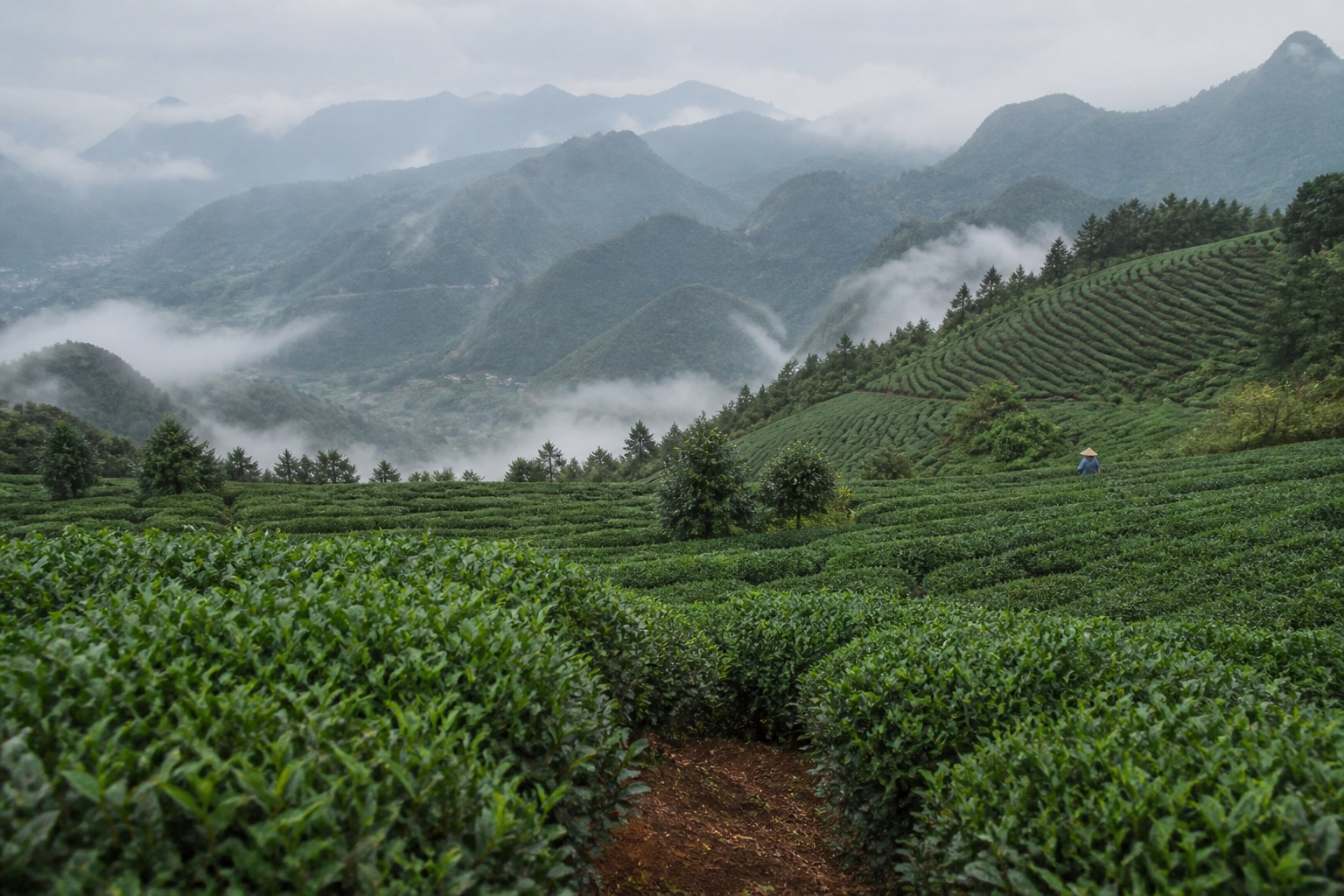
Guizhou is no longer relevant to matcha buyers only as a tea-growing story. In a 2024 policy response published by the Guizhou Provincial Department of Agriculture and Rural Affairs, the province reported more than 30,000 mu of matcha-oriented gardens, 35 tencha enterprises and 48 tencha production lines. The same response said annual matcha output had exceeded 1,000 tonnes and represented about one quarter of China's output at that time. Those are regional figures, not the capacity, inventory or export record of any individual supplier.
The province also described a 2024 central-fund allocation of RMB 53 million for a Guizhou green-tea industry cluster, with work around Jiangkou and links to Weng'an, Fenggang, Huaxi and Sinan. The stated scope included tencha bases, processing capability, research and derivative-product development. For a buyer, the practical advantage is a broader ecosystem of tea gardens, primary processing, refining and product-development activity. The next step is still to identify which company, line and lot can meet the buyer's brief.
Highland ecology can support tea quality, but it is not a finished-product guarantee
Guizhou's provincial government describes the region as high in elevation, low in latitude, relatively low in sunshine and frequently cloudy or foggy—conditions associated with tea cultivation. This ecological context helps explain why the province can support substantial tea production. Shading practice, cultivar, plucking standard, field management, primary processing and storage nevertheless remain lot-level variables. A buyer should not convert a landscape description into a universal claim about sweetness, amino-acid level, color or grade.
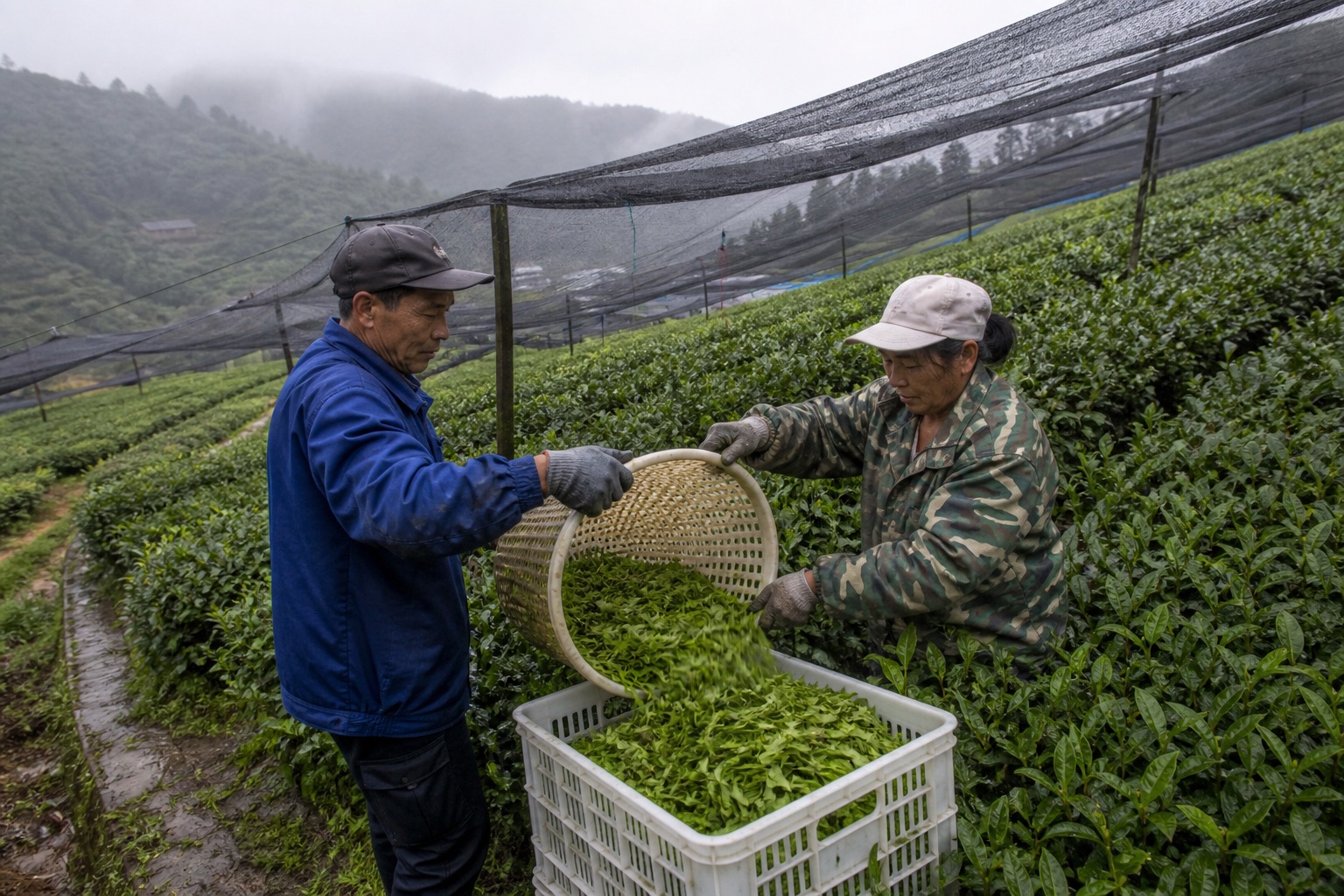
Ask for traceability that follows the offered material from garden or leaf source through tencha preparation, refining, milling and packing. Record harvest window, storage condition and relevant lot codes where available. If a supplier combines material from several sources, the buyer needs to understand how that blend is controlled. Origin can narrow the search; it cannot replace a specification, representative sample and current analytical evidence.
Industrial scale is useful when process control is visible
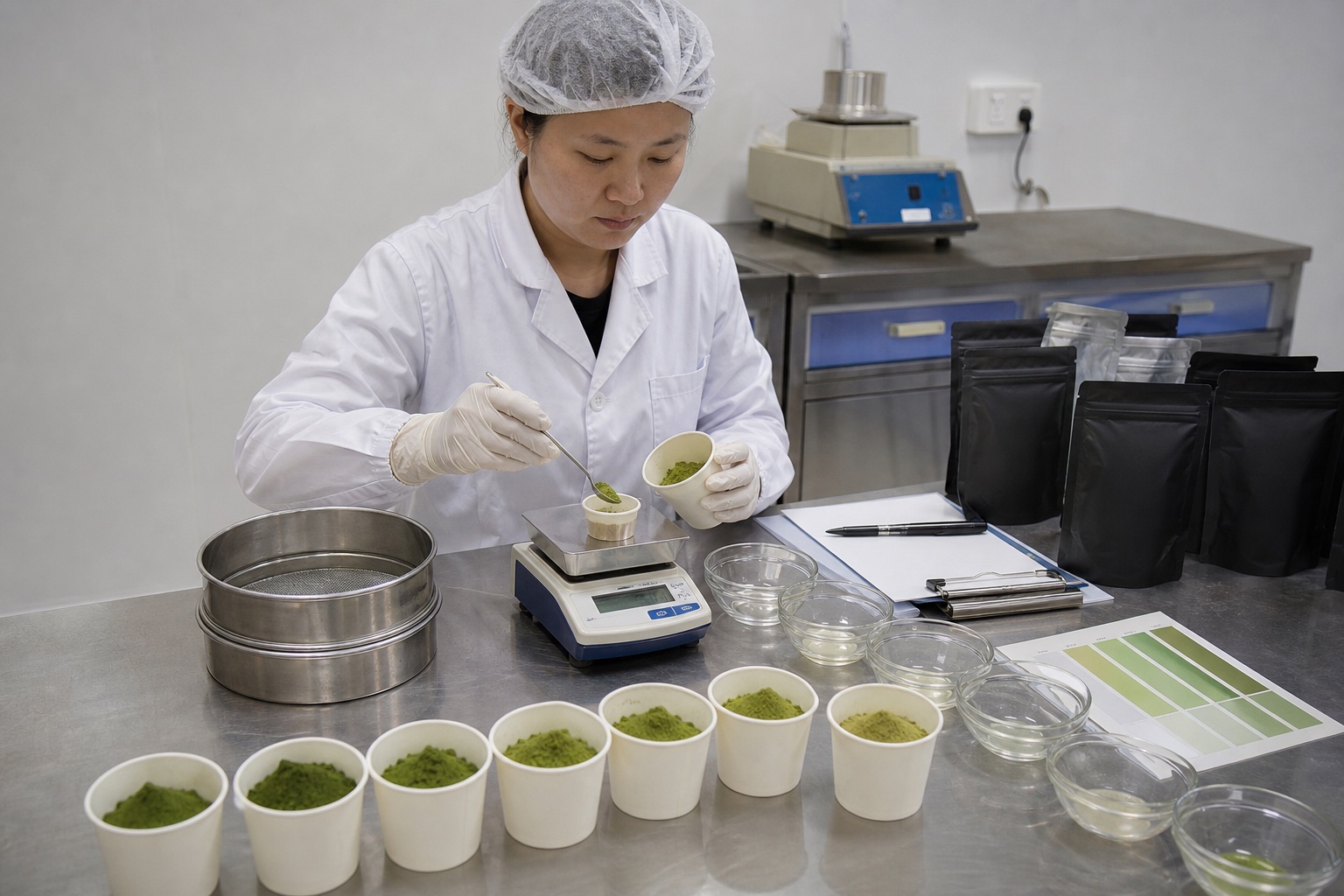
A large matcha factory should give buyers more than an impressive wide-angle photograph. During qualification, inspect material flow, zoning, foreign-material controls, enclosed milling or powder handling, dust management, sieve and magnet controls where applicable, cleaning records, environmental conditions, retained samples and batch identification. Confirm which equipment and lines produce the quoted item. A provincial cluster may contain many capable processors, but the audit question is always about the named supplier and the product being purchased.
Guizhou's standardization work provides a useful common language. China's national standard GB/T 34778-2017 is listed by the State Administration for Market Regulation as the current recommended national Matcha standard, while Guizhou has also issued DB52/T 1358-2018 for Guizhou matcha. Provincial information further describes local standards covering fresh leaves, product, processing and inspection. Standards help structure a specification discussion; they do not automatically certify every lot or settle the importing market's requirements.
What 'Guizhou matcha' does not prove on its own
The origin name does not by itself prove ceremonial grade, organic status, pesticide compliance, microbiological suitability, allergen status, export eligibility, shelf life or performance after heat and storage. It also does not establish that one powder will work equally well in a latte, oat beverage, cookie, ice cream and ready-to-drink bottle. Buyers should be cautious when regional scale, a vivid green photograph or a single certificate is used as a shortcut for the complete qualification package.
Define the destination market, food category and intended claims before asking for evidence. Then request the documents relevant to that decision, which may include an agreed specification, certificate of analysis for the offered lot, ingredient and allergen information, traceability records, food-safety system evidence and target-market testing agreed with the responsible importer or regulatory adviser. Regulatory responsibility for the finished food remains with the responsible business in the destination market.
Qualify the powder in the application that will earn the order
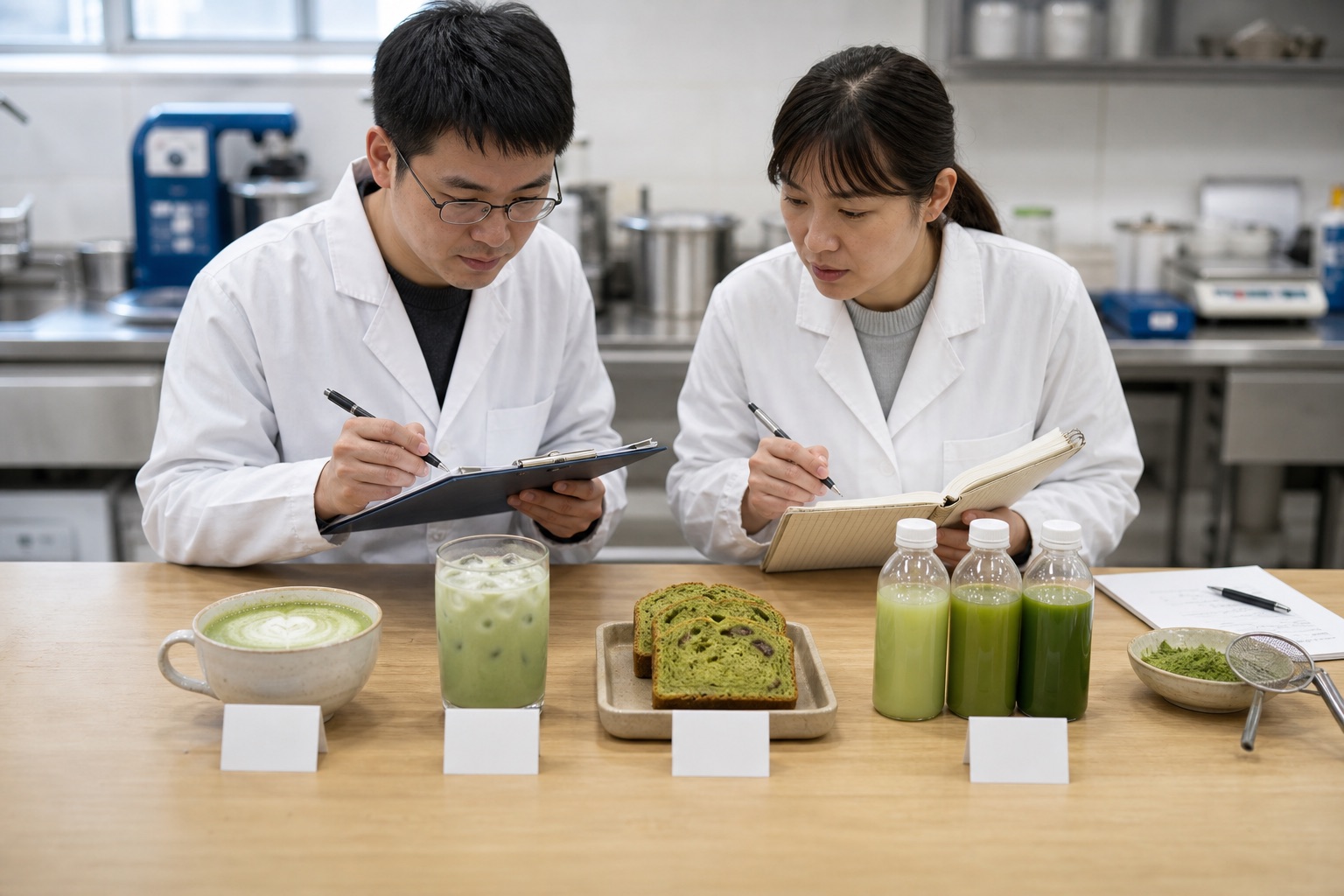
Start with one priority application and freeze its variables. For a latte, record matcha dose, water temperature, milk or oat product, sweetener, cup size, ice and preparation method. For bakery, lock the formula, mixing sequence, bake profile and evaluation time. For RTD, define the process route, package and stability checkpoints with the buyer's technical team. Compare coded samples against the same target rather than changing the base recipe while judging the matcha.
Use a scorecard that separates tea aroma, flavor fit, bitterness, aftertaste, color in the finished matrix, dispersion or handling, process loss and cost-in-use. Keep the approved sample, formula code, application recipe and acceptance notes together. Repeatability should be assessed against that controlled reference, not against a phone photograph of green powder. This is the point at which a regional sourcing advantage becomes a commercial product decision.
Where XIAO TEA is different from an origin-only matcha seller
XIAO TEA is a custom flavored matcha specialist. Our advantage is not a claim that the words 'Guizhou origin' solve every buyer problem. We begin with the buyer, market, finished application and sensory target; select or evaluate a matcha base against that matrix; build the flavor architecture; then test how tea, aroma, sweetness and processing interact in the actual product. Where a documented Guizhou-origin base is appropriate, origin becomes one controlled input to that development system.
That approach is useful when a standard powder tastes acceptable in water but loses tea character in oat milk, becomes harsh after baking, appears flat in a frozen dessert or separates from the intended RTD experience. The development record links the agreed base, flavor direction, application method, buyer feedback and approved reference. A normal commodity quotation answers 'what powder is available'; XIAO TEA's development route answers 'what formula should be approved for this product, and how will the decision be repeated.'
A controlled route from sourcing question to commercial batch
A qualified project starts with the destination market, buyer type, application, flavor direction, target sensory profile, preparation or process conditions, first commercial volume and launch timing. XIAO TEA's USD 1,000 development route includes up to five flavor directions, 50 g per flavor, international sample courier and two formula-adjustment rounds after sample receipt. If the project becomes a commercial order, USD 500 is credited against the goods payment.
Commercial production starts at one metric ton per approved flavor. Before that commitment, the buyer should approve the finished application, documentation set, formula code, packaging format, specification and change-control expectations. Guizhou's industry scale can make it an important Chinese matcha sourcing region; disciplined qualification and application development are what turn that regional possibility into a repeatable B2B product.
BEFORE FORMULA APPROVAL
Keep the conclusion tied to the tested application.
Commercial fees and scope reflect the current XIAO TEA offer. Application performance must be evaluated in the buyer's agreed product system. This page does not make an absolute claim about color, dispersion, stability, certification, regulatory status or production capacity.
- Author
- XIAO TEA Application & Commercial Team
- Published
- 27 August 2026
- Review trigger
- Commercial terms, application evidence, regulatory sources or process scope changes
REFERENCE SOURCES
Official and primary references
- Guizhou Provincial Department of Agriculture and Rural Affairs — 2024 proposal response on matcha industry development
- Guizhou Provincial People's Government — tea-growing ecology and green-control overview
- Guizhou Development and Reform Commission — provincial tea-industry layout
- State Administration for Market Regulation — GB/T 34778-2017 Matcha standard record
- Guizhou Provincial Department of Agriculture and Rural Affairs — 2025 response on Guizhou and Fanjing matcha standards
RELATED QUESTIONS
Questions buyers ask next
Is Guizhou matcha real matcha?
Guizhou has national and provincial matcha-related standards and an established tencha and matcha industry. A buyer should still confirm that the offered product's leaf and process route, specification and lot evidence meet the agreed definition and intended use.
Is Guizhou matcha better than Japanese matcha?
There is no responsible universal answer. Origin, cultivar, field practice, tencha processing, milling, storage, grade target and application all matter. Compare representative lots in the finished product against one written acceptance standard.
Does Guizhou origin guarantee compliance in the EU, United States or another market?
No. Regional origin does not guarantee destination-market compliance. The responsible buyer or importer should define the applicable evidence and limits for the specific lot and finished product.
What is XIAO TEA's advantage when using a Guizhou matcha base?
XIAO TEA connects base selection with custom flavor design, finished-application testing, structured adjustment and an approved-reference path. We do not treat origin alone as proof that a formula will work.
What is the development scope and MOQ?
USD 1,000 covers up to five flavor directions, 50 g per flavor, international sample courier and two adjustment rounds after receipt. If commercial cooperation succeeds, USD 500 is credited against the goods payment. MOQ is one metric ton per approved flavor.