Commercial Models
Bulk Matcha OEM vs ODM vs Private Label: A Buyer Responsibility Matrix
Use four practical sourcing models and a twelve-point responsibility matrix to define who controls the product, evidence, packaging, market entry and post-launch decisions.
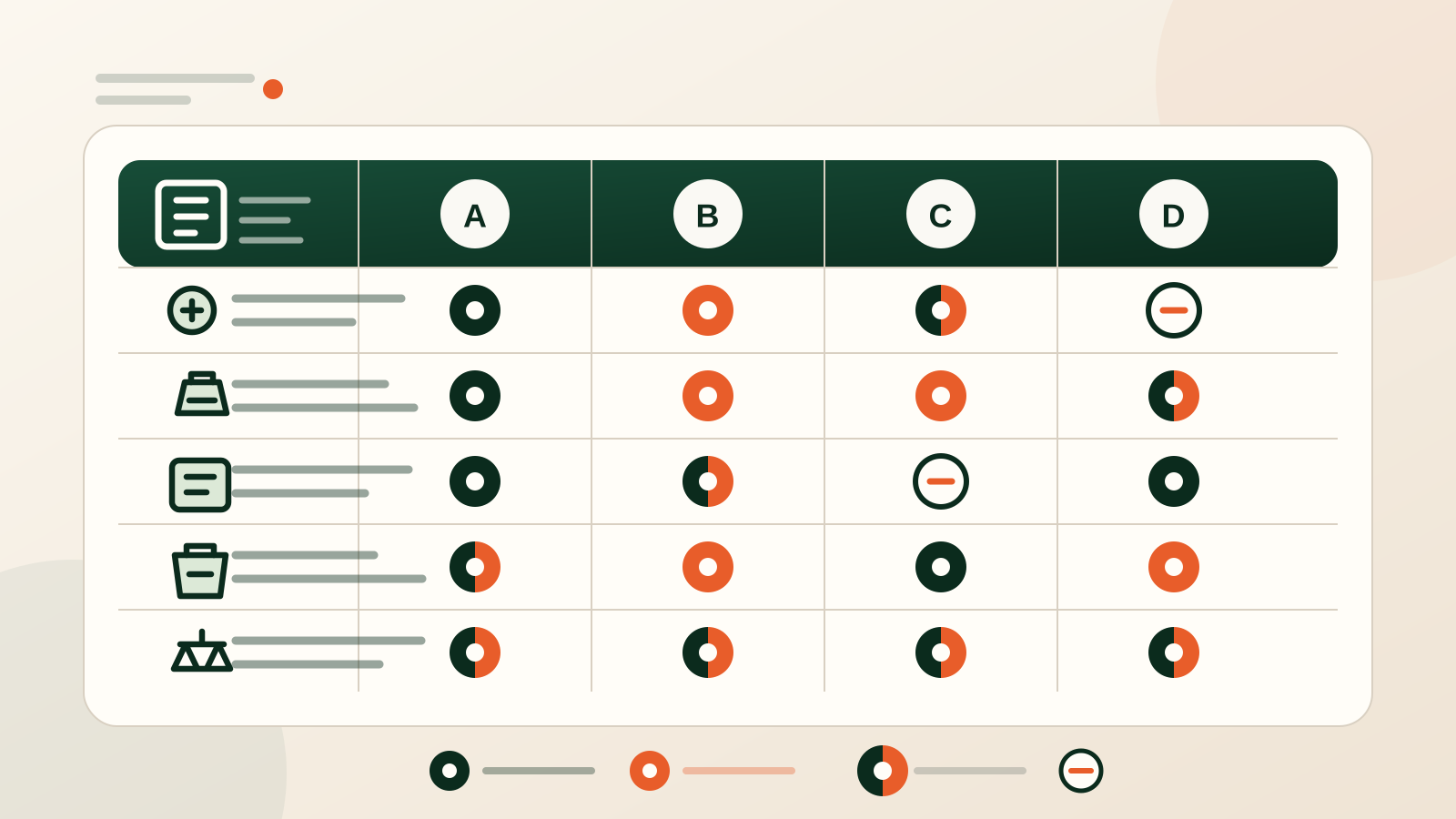
Bulk matcha buyers should define responsibilities before choosing the words OEM, ODM or private label. Those terms are not globally uniform legal definitions. In practice, compare four models: bulk ingredient supply, a standard private-label product, OEM-style manufacturing to a buyer-controlled specification, and an ODM-style supplier-led product platform. Then assign formula and intellectual-property rights, ingredient approval, specification, sample approval, manufacturing, testing, packaging, label data, importing, traceability, change control and exit deliverables in the contract. A brand on the pack does not by itself identify the developer, manufacturer, formula owner or destination-market responsible operator.
USE THIS GUIDE IF
- Food and beverage brands deciding whether to buy bulk matcha, use a standard private-label format or commission a controlled custom product.
- Procurement, R&D, quality, legal and regulatory teams aligning responsibilities before sampling, quotation or contract approval.
- Importers and distributors that need a documented handoff from formula and specification through label, release, shipment and post-market control.
NOT THE RIGHT ROUTE IF
- A universal legal definition of OEM, ODM or private label; terminology and legal effects vary by supplier, contract and jurisdiction.
- Legal advice or an interpretation of a particular agreement, intellectual-property right, importer duty or destination-market rule.
- Proof that a named supplier owns a factory, formula, certificate, capacity or destination-market approval.
- A substitute for supplier qualification, destination review, contract review, laboratory work or commercial-lot release.
PROJECT DECISIONS
Twelve responsibilities to close before choosing a sourcing-model label
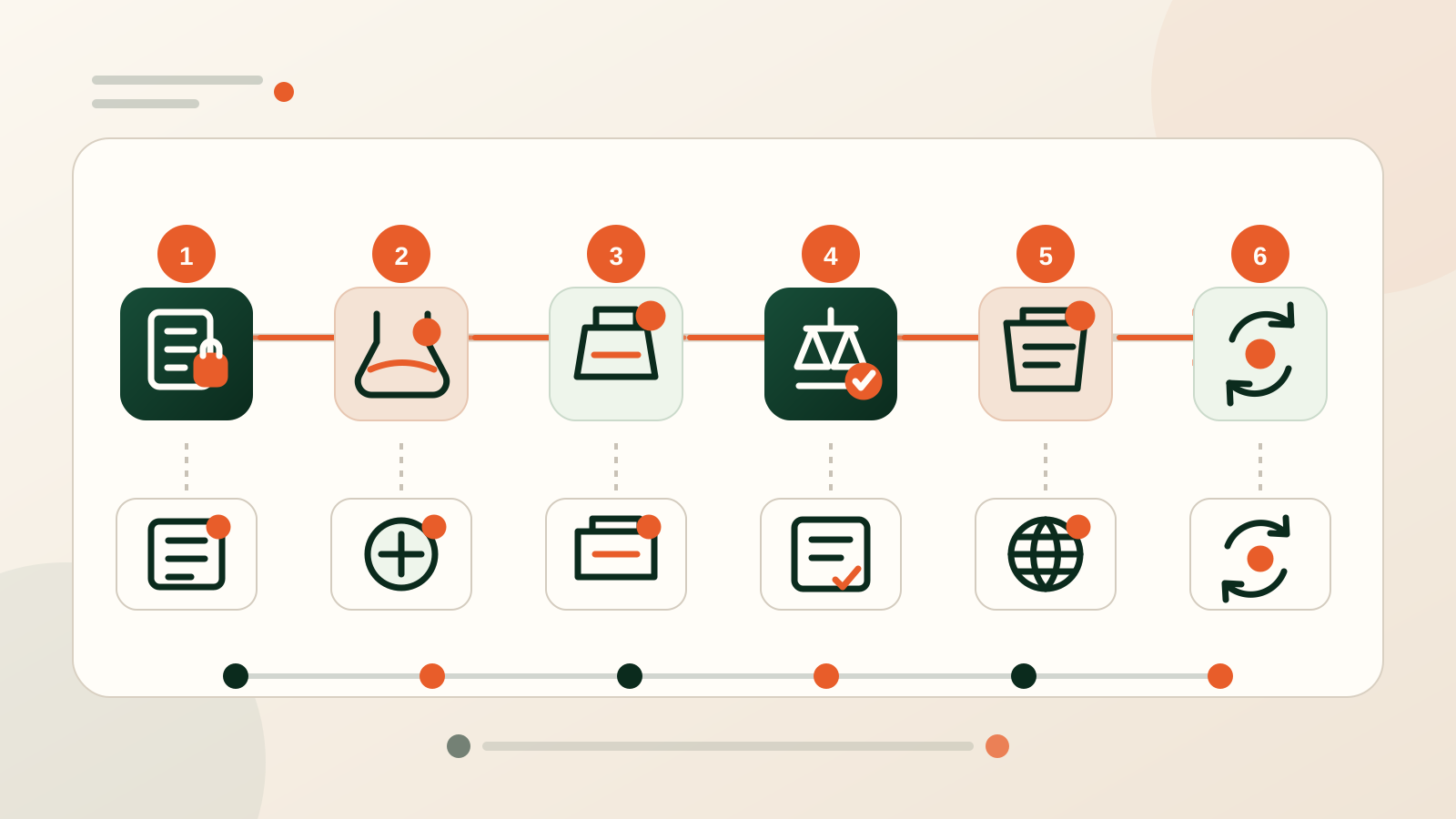
Treat OEM, ODM and private label as working models, not complete contracts
Food buyers and suppliers often use the same label for different arrangements. In this guide, bulk ingredient supply means buying matcha or a flavored matcha ingredient for the buyer's own or nominated downstream production. A standard private-label product is a supplier's preset finished format sold under the buyer's outward brand, usually with a bounded choice of pack, artwork or flavor. OEM-style means manufacturing to a buyer-controlled brief, formula or specification. ODM-style means the supplier leads with an existing or newly developed product platform that the buyer selects and adapts.
These are operational definitions for scoping a project, not globally binding legal categories. Private label describes outward branding and can sit on either an OEM-style or ODM-style project. It does not prove who developed the formula, who owns improvements, where production occurs or which entity carries importer and label obligations. Put the chosen working model at the top of the brief, then replace assumptions with a responsibility schedule.
Choose the model from the product task and the buyer's control needs
Bulk ingredient supply fits a buyer that already controls downstream blending, packing or finished-product manufacture and needs an identified ingredient with a specification and lot evidence. Standard private label can shorten the route when a preset product and bounded packaging choices genuinely fit. OEM-style is useful when the buyer must preserve a defined sensory target, formulation, ingredient policy or process interface. ODM-style can reduce early design work when the supplier's platform is suitable and the buyer understands the limits of adaptation and use rights.
Do not decide from speed or headline price alone. Map the destination, finished application, expected volume, acceptable customization, internal technical resources, formula-control requirement, packaging need, importer role and launch date. Compare models only after each party has stated its deliverables. A hybrid may be reasonable, but it needs more precise drafting: for example, a supplier-led flavor platform manufactured against buyer-approved application and label specifications.
Separate confidentiality from formula ownership and permission to use
WIPO guidance explains that recipes, formulas, manufacturing processes and commercially valuable information may be protected as trade secrets when the relevant conditions and reasonable protection measures are met. Project controls can include limited access, purpose restrictions, marking, information-security measures, confidentiality clauses and NDAs. Those controls help protect information; they do not by themselves answer who owns a formula or whether the buyer receives exclusivity, a territorial licence or rights to future improvements.
Create a dated background-IP schedule for both parties, then define each development output. Close ownership or licence, application field, territory, term, exclusivity, sublicensing, disclosure to laboratories or contract packers, reverse-engineering position where applicable, retained know-how and termination rights with qualified legal advice. Share only the information needed for the approved task and maintain a controlled record of recipients and versions.
Connect the approved sample to specification, production and lot release
Freeze the sample code, formula or product code, specification revision, preparation method and application test conditions. The specification should state the characteristics and limits relevant to the agreed product, while the reference sample or sensory standard records an approved direction. State who may revise either document and which change requires re-sampling, buyer approval or a new quotation. An approved laboratory sample is not proof that a future commercial lot will conform.
For commercial production, identify the actual manufacturing and packing sites, controlled instructions, material substitutions, test plan, methods, laboratory, COA fields and release authority. Connect the lot code to production, test and shipment records. Use the site's separate specification, COA and supplier-evaluation guides to evaluate those documents; the sourcing-model label does not replace evidence review or first-lot verification.
Keep packaging and label accountability visible behind the buyer's brand
A private-label pack can display the buyer's brand while being developed, made, packed or distributed by different entities. Define who selects the barrier structure and pack size, supplies artwork data, purchases packaging, approves proofs, owns tooling and carries obsolete-material exposure. Confirm how coding identifies the production site and lot. Do not let the outward logo conceal the operational chain needed for quality investigations or a market response.
Codex CXS 1-1985 provides international guidance that pre-packaged food information should not be false or misleading and addresses ingredient, name-and-address and lot-identification information. EU Regulation 1169/2011 and US requirements such as 21 CFR 101.5 operate within their own jurisdictions and allocate responsibilities differently. Therefore, record who supplies source data, who translates and checks it, who approves claims and artwork, and who obtains destination-specific advice before printing.
Name the importer, traceability chain and incident roles for each market
The commercial model does not determine every legal role. In the EU, Regulation 1169/2011 addresses the operator responsible for food information, and Regulation 178/2002 establishes traceability and withdrawal or recall duties within its scope. In applicable US imports, FDA's Foreign Supplier Verification Programs place defined verification duties on covered importers. These sources do not create one global rule and do not turn an OEM, ODM or private-label label into an importer definition.
Build a destination matrix naming the contracting party, manufacturer, packer, exporter, importer, brand owner and other responsible operators. State the records each keeps, how lots are traced one step back and forward where required, who receives change and deviation notices, and who leads complaints, withdrawal or recall. Codex hygiene principles support clear authority, documented controls and maintained recall procedures, but they do not prove that a specific partner has implemented them.
Compare complete deliverables, change rules and exit exposure
Build the quotation around the same responsibility matrix. Separate powder or finished-product price from development, samples, testing, documentation, primary and secondary packaging, tooling, print setup, freight, duties, storage and disposal. Align quantity, pack, Incoterm, currency, validity, lead time and included evidence. A standard private-label offer may have less development but more fixed packaging exposure; an OEM-style or ODM-style project may allocate development and change costs differently.
Before approval, define change-notification periods, requalification triggers, permitted substitutions, ownership of remaining stock and tooling, and the handback of formulas, specifications, data and artwork. Record what survives termination and whether either party can continue using project outputs. Keep SAMPLE DIRECTION APPROVED, CONTRACTED, SUPPLIER QUALIFIED, FIRST LOT RELEASED and MARKET READY as separate states; none should be inferred from a signed quotation alone.
Use XIAO TEA for application-led flavored matcha development within a defined boundary
XIAO TEA works as a custom flavored matcha specialist and professional B2B supplier for buyers that need a flavor direction matched to a matcha base and tested in the intended application. The development logic connects the brief, matcha-base and flavor matching, milk, oat-drink or bakery testing as relevant, sensory adjustment, sample confirmation, scale-up requirements and repeat-order information. The buyer and XIAO TEA still need a written responsibility matrix covering formula use, specifications, labels, destination checks, testing, release and change control.
The current development route is USD 1,000 for up to five flavors, with 50 g per flavor, international courier included and two adjustment rounds after sample receipt. After commercial cooperation, USD 500 may be credited toward the goods payment. MOQ is one metric tonne per approved flavor. These commercial terms do not establish exclusivity, destination compliance, supplier approval or commercial-lot release; those items require the applicable brief, evidence, contract and buyer authorisation.
EVIDENCE BOUNDARY
A commercial label can organise a discussion; only named responsibilities close the risk.
OEM, ODM and private label are not globally uniform legal definitions. Branding does not by itself prove formula ownership, actual manufacturing, importer status or destination compliance. An NDA supports confidentiality but does not automatically transfer intellectual property or grant exclusivity. Codex texts are international guidance; cited EU and US rules apply only within their stated jurisdiction and scope. A specification, approved sample, certificate or COA each provides limited evidence and cannot replace the buyer's contract, supplier qualification, destination review or commercial-lot release.
- Author
- XIAO TEA Application & Commercial Team
- Published
- 2 September 2026
- Review trigger
- Commercial terms, application evidence, regulatory sources or process scope changes
REFERENCE SOURCES
Official and primary references
- WIPO — Guide to Trade Secrets and Innovation, Part IV: Trade Secret Management
- WIPO — Frequently Asked Questions on Trade Secrets
- Codex — General Standard for the Labelling of Pre-packaged Foods, CXS 1-1985
- Codex — General Principles of Food Hygiene, CXC 1-1969
- Regulation (EU) No 1169/2011, Articles 7–8
- Regulation (EC) No 178/2002, Articles 18–19
- FDA — Food Labeling Guide and 21 CFR 101.5
- FDA — Foreign Supplier Verification Programs official guidance and final rule pages
RELATED QUESTIONS
Questions buyers ask next
Are OEM, ODM and private label legally fixed definitions worldwide?
No. They are widely used commercial labels, but their meaning and legal effect vary by supplier, agreement and jurisdiction. Define the working model, then state every material responsibility in the brief and contract.
Does private label mean the brand owner owns the formula or factory?
No. Private label describes the outward brand or pack. Development, formula rights, manufacturing, packing, importing and market responsibilities may sit with different entities and must be verified separately.
Does an NDA give the buyer ownership or exclusive use of a flavored matcha formula?
Not automatically. An NDA normally addresses confidentiality and permitted disclosure. Ownership, licence, exclusivity, territory, application, term, improvements and post-termination use need explicit agreement and applicable legal review.
Can a supplier certificate or one COA close importer and label responsibilities?
No. A certificate has a named entity, site, scope and validity, while a COA reports stated results for an identified lot. Neither alone completes destination labelling, importer verification, traceability or lot-release duties.
Which sourcing model is best for custom flavored matcha?
The best fit depends on who controls the product target, formula platform, testing, packaging, market entry and future changes. Compare the four working models against the same responsibility matrix, then choose or combine them without leaving hybrid responsibilities implied.