Supplier Selection
How to Choose a Bulk Matcha Supplier: From Application Brief to Commercial Choice
Choose a supplier model, build a traceable shortlist, compare coded samples in the finished product and move only suitable candidates into formal qualification.
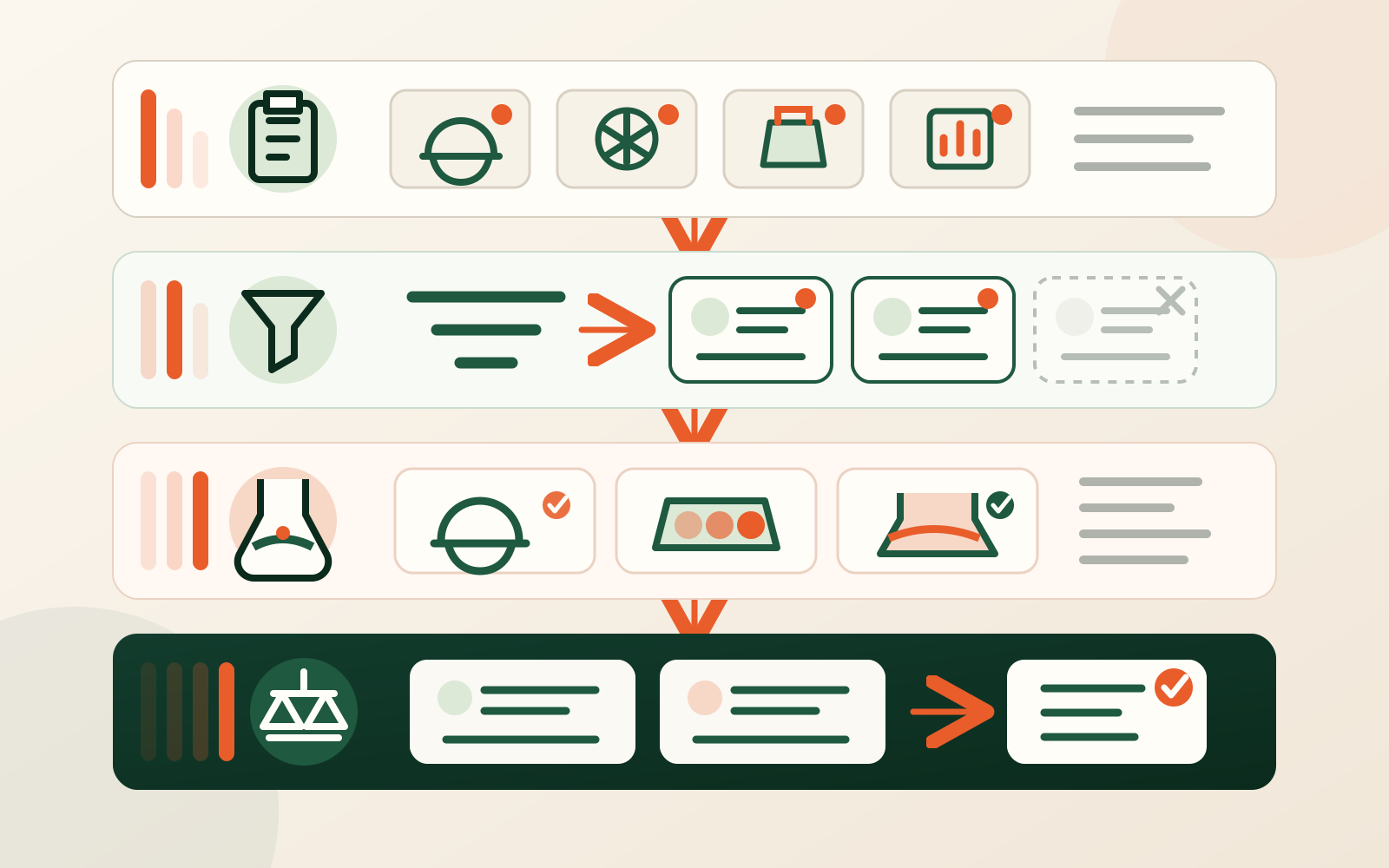
Choose a bulk matcha supplier by starting with the finished product, not a country name or price list. Define the destination, application, process, sensory target, volume, packaging and evidence needs; then shortlist suppliers whose business model and development capability match that job. Send every candidate the same brief, compare attributable documents, run blinded tests in the real formula, confirm scale-up and repeat-order controls, and only then compare landed value and commercial terms. Use a separate evidence-gate framework for formal qualification; this guide covers the path to a defensible shortlist and conditional commercial choice.
USE THIS GUIDE IF
- Procurement, R&D and quality teams sourcing bulk matcha for latte, plant-based drinks, bakery, desserts, ice cream, RTD, premix or private-label products.
- Importers and brands comparing manufacturers, formulators, exporters and packers with different responsibilities.
- B2B buyers replacing a price-led search with a controlled brief, sample and application-testing process.
NOT THE RIGHT ROUTE IF
- A substitute for the buyer's regulatory, importer, laboratory, audit or supplier-approval process.
- An unverified ranking of suppliers, countries, capacities or certifications.
- Approving a supplier solely from one sample, certificate or COA.
PROJECT DECISIONS
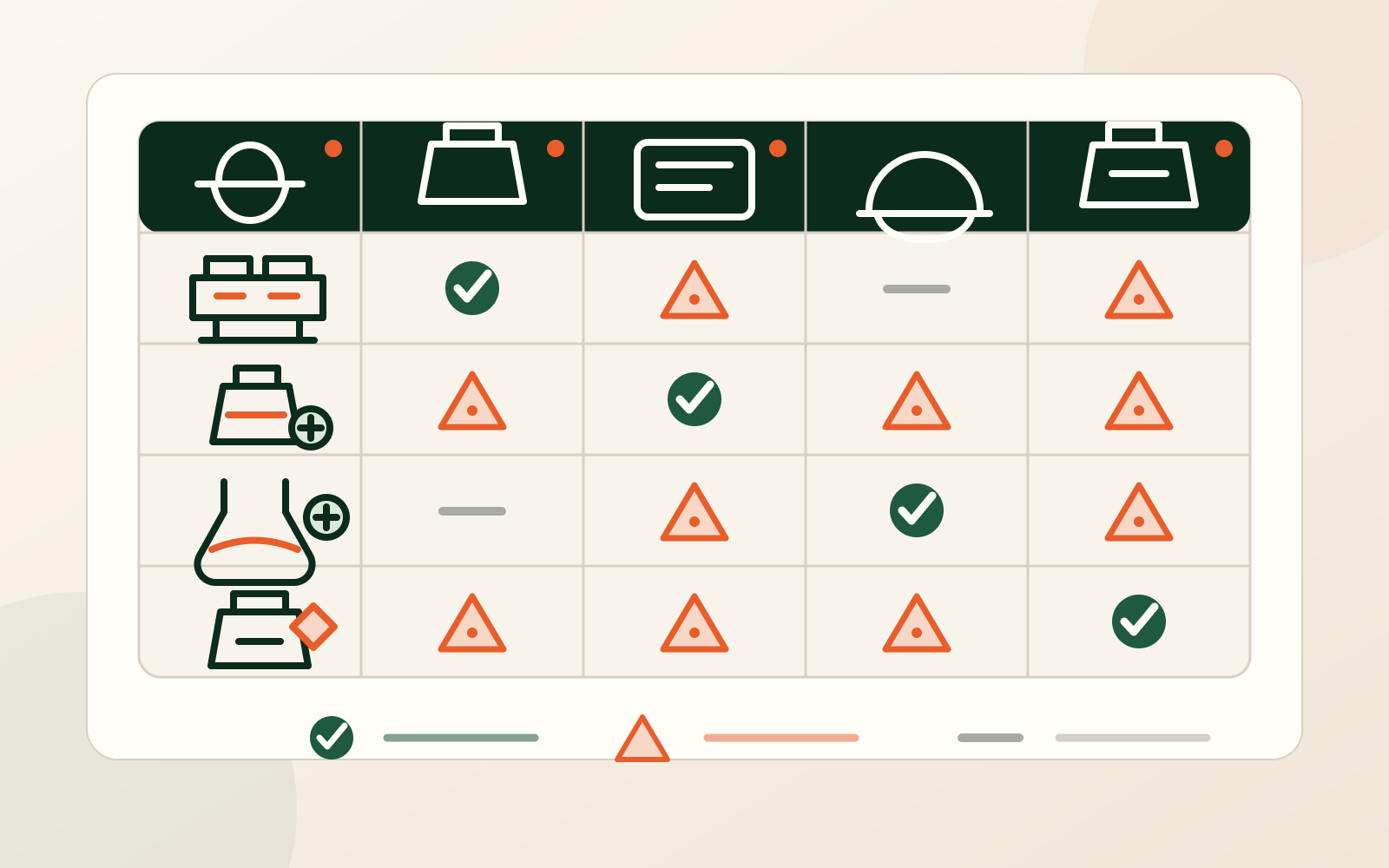
Twelve steps from a finished-product need to a qualified supplier-evaluation shortlist
Start with the finished-product job before searching for suppliers
Bulk matcha is not a complete sourcing brief. The same powder can show different colour, aroma, bitterness, dispersion and finish in water, dairy milk, oat drink, cake batter, ice-cream base or a ready-to-drink beverage. The first question is not who sells the best matcha, but what the matcha must do in the buyer's product and process.
Freeze a first application brief before contacting candidates: destination, product category, recipe structure, dosage range, hot or cold conditions, shear or homogenisation, hold time, pack format, intended shelf-life plan, sensory target, forecast order pattern and required evidence. For flavored matcha, also state the flavor direction, sweetness source, dairy or plant base and permitted ingredients. The output is a one-page task that every supplier can answer on the same terms.
Match the supplier model to the responsibilities the project needs
Manufacturer, factory, trader, formulator, exporter, OEM and private-label packer are role descriptions, not proof of capability. One business may perform several roles, while another project may involve a contracting entity, production site, developer, packer and exporter. Identify who contracts, receives payment, produces, tests, releases, packs and ships, and how responsibility passes between them.
A standard bulk powder project may emphasise raw-material control, processing, particle profile, batch evidence and industrial packaging. A flavored latte, oat, bakery or RTD project may need application development, blending, adjustment and scale-up records. A trader is not automatically unsuitable and a direct producer is not automatically the best fit; both must show that their role, product and support match the actual buying task.
Build an attributable longlist with one standard RFI
Record how each candidate was found, the legal name, outward-facing brand, location, official contact route and claimed supply-chain role. Search results, advertising positions, marketplace badges, origin names and factory photographs can help discovery, but none is supplier approval evidence. Use official business and licence systems where available to support identity checks, while keeping the deeper site, scope and certificate review for formal qualification.
Send the same short RFI to every candidate. Ask for the contracting, payment, production, packing and export entities; available products and pack formats; normal MOQ; development route; sample policy; indicative lead time; available specification, COA and food-safety document types; change-notification practice; and application support. Use MATCH, CLARIFY and NOT FIT. A missing database result should trigger confirmation, not a public allegation of fraud.
Standardise the RFQ so quotations are genuinely comparable
Candidates that pass the initial fit screen should receive the same product definition and commercial assumptions. Require the product or sample code, specification version, price unit, currency, net pack weight, case or pallet configuration, Incoterm, freight boundary, quote validity, MOQ, production or dispatch lead time, payment terms, shelf-life basis, and the documents or tests included in price.
Price per kilogram is comparable only when product, dosage, packaging, Incoterm and responsibility boundaries are aligned. A lower-price powder that requires a higher use level may cost more per conforming cup, bottle or bakery unit. Keep a visible to-be-confirmed state for destination testing, import, labelling, taxes and logistics; an indicative quote is not a compliance or landed-cost guarantee.
Test coded samples in the real application, not only as dry powder
Enter samples as codes rather than supplier stories. Freeze water, formula, dosage, mixing or homogenisation equipment, temperature, time, product format, holding and storage conditions. Record results before exposing supplier identity or price. Keep the sample code connected to the supplier product code, specification version and any later commercial lot.
Dry-powder colour and aroma are only first observations. Latte tests should show how protein, fat, sugar and temperature affect tea character, aroma and colour. Bakery needs post-heat colour, bitterness and aroma review. Ice cream and desserts require low-temperature, fat and sweetness assessment. RTD and premix projects may also need dispersion, sedimentation, foam, homogenisation and a separately designed shelf-life programme.
Design scale-up and repeat-order verification before selecting
A laboratory sample and a commercial order can differ because of raw-material lots, blending uniformity, equipment, packaging, transport and storage. Ask how an approved sample becomes a controlled specification, which parameters will be frozen, how the first lot will be checked, how material changes will be communicated and how repeat orders will connect to retention samples, specifications and batch records.
Depending on risk, the buyer may request another sample, multiple-lot comparison, a pilot, enhanced first-lot testing or independent laboratory confirmation. There is no universal frequency for every project. A quickly dispatched attractive sample supports a direction; it does not by itself demonstrate one-tonne scale or continuing repeat-order consistency.
Compare landed value and execution risk, not price alone
After application testing, compare cost per conforming finished-product unit, including dosage, process loss, packaging, sampling or retesting, freight, inventory, payment terms, lead-time variability and contingency options. A low quote cannot compensate for application failure, uncontrolled variation or unclear responsibility; a high quote does not automatically prove better quality.
Record the basis for every commercial and risk judgement. If a candidate leads in application performance but still has open document, scale-up or commercial items, mark it CONDITIONAL rather than APPROVED. Price negotiation, sample-direction approval and formal supplier qualification are different decisions and must retain different states.
Make a staged choice, then open formal supplier qualification
The output is a defensible shortlist, not permanent approval. Move the two or three remaining candidates into the separate supplier-evaluation framework, where the buyer applies entity, site, certificate-scope, traceability, specification, COA, destination-risk and change-control gates. Approval is used only after the buyer completes its own qualification, destination checks, first-lot verification and authorisation.
XIAO TEA works in this path as a custom flavored matcha specialist and professional B2B supplier: translating a buyer brief into matcha-base and flavor matching, testing in the intended application, adjusting tea character, aroma, sweetness and finish, and turning an approved direction into scale-up and repeat-order information. The current development route is USD 1,000 for up to five flavors, 50 g per flavor, international courier included and two adjustment rounds after sample receipt; USD 500 may be credited to the goods payment after commercial cooperation. MOQ is one metric tonne per approved flavor. These terms do not replace qualification or import review.
EVIDENCE BOUNDARY
Shortlisting identifies whom to investigate; it does not approve a supplier.
A registration record supports an identity check but does not prove site ownership, capacity, export readiness or product quality. A management-system certificate applies to its named entity, site, scope and validity; it is not a lot-release record. A COA reports stated results for one identified lot and is not universal destination compliance. A sample demonstrates only the recorded test conditions, not commercial scale or future-lot consistency. FDA FSVP and EU sources apply only within their stated legal scope. Final approval remains the buyer's controlled responsibility.
- Author
- XIAO TEA Application & Commercial Team
- Published
- 1 September 2026
- Review trigger
- Commercial terms, application evidence, regulatory sources or process scope changes
REFERENCE SOURCES
Official and primary references
- National Enterprise Credit Information Publicity System (China)
- State Administration for Market Regulation Government Service Platform (China)
- GB/T 34778-2017 Matcha — National Standards Information
- Codex — General Principles of Food Hygiene, CXC 1-1969
- Codex — Principles for Traceability/Product Tracing, CXG 60-2006
- FDA — Foreign Supplier Verification Programs Guidance
- ISO 22000:2018
- IAF CertSearch — Certificate Verification Guide
- European Commission — EU Pesticides Database
- Regulation (EC) No 2073/2005
RELATED QUESTIONS
Questions buyers ask next
Is a direct manufacturer always better than a trader for bulk matcha?
No. The relevant question is whether production, development, testing, release, export and support responsibilities are clear and fit the project. An intermediary needs a traceable responsibility chain; a direct manufacturer still needs to demonstrate application, commercial and destination support.
Should buyers choose between Chinese and Japanese matcha before testing products?
Not as the primary decision. Origin provides context but cannot replace application performance, dosage, consistency controls, specification, lot evidence and total cost. Define the finished-product task and test specific products.
Is the lowest price per kilogram the best commercial choice?
No. Compare dosage, yield, process loss, packaging, freight, testing, inventory and execution risk per conforming finished-product unit. A lower unit price may create a higher finished-product cost.
Can a buyer place a commercial order after one laboratory sample passes?
Not automatically. The sample proves only the recorded test conditions. Commercial selection also requires specification linkage, first-lot controls, change management, batch evidence and destination responsibilities.
How is this guide different from the Bulk Matcha Supplier Evaluation Framework?
This guide starts with the application brief and leads to a shortlist, controlled sample testing and a conditional commercial choice. The evaluation framework begins after that point and applies formal evidence gates for entity, site, certificate scope, traceability, specification, COA, destination risk and change control.