
PLANT-BASED LATTE APPLICATION
Plant-Based Matcha Latte Development: Oat-Matrix Testing and Transfer Control
A cross-market method for developing bulk matcha or custom flavored matcha in one defined oat or plant-based latte, then deciding what can advance, what must be retested and what still requires separate commercial evidence.
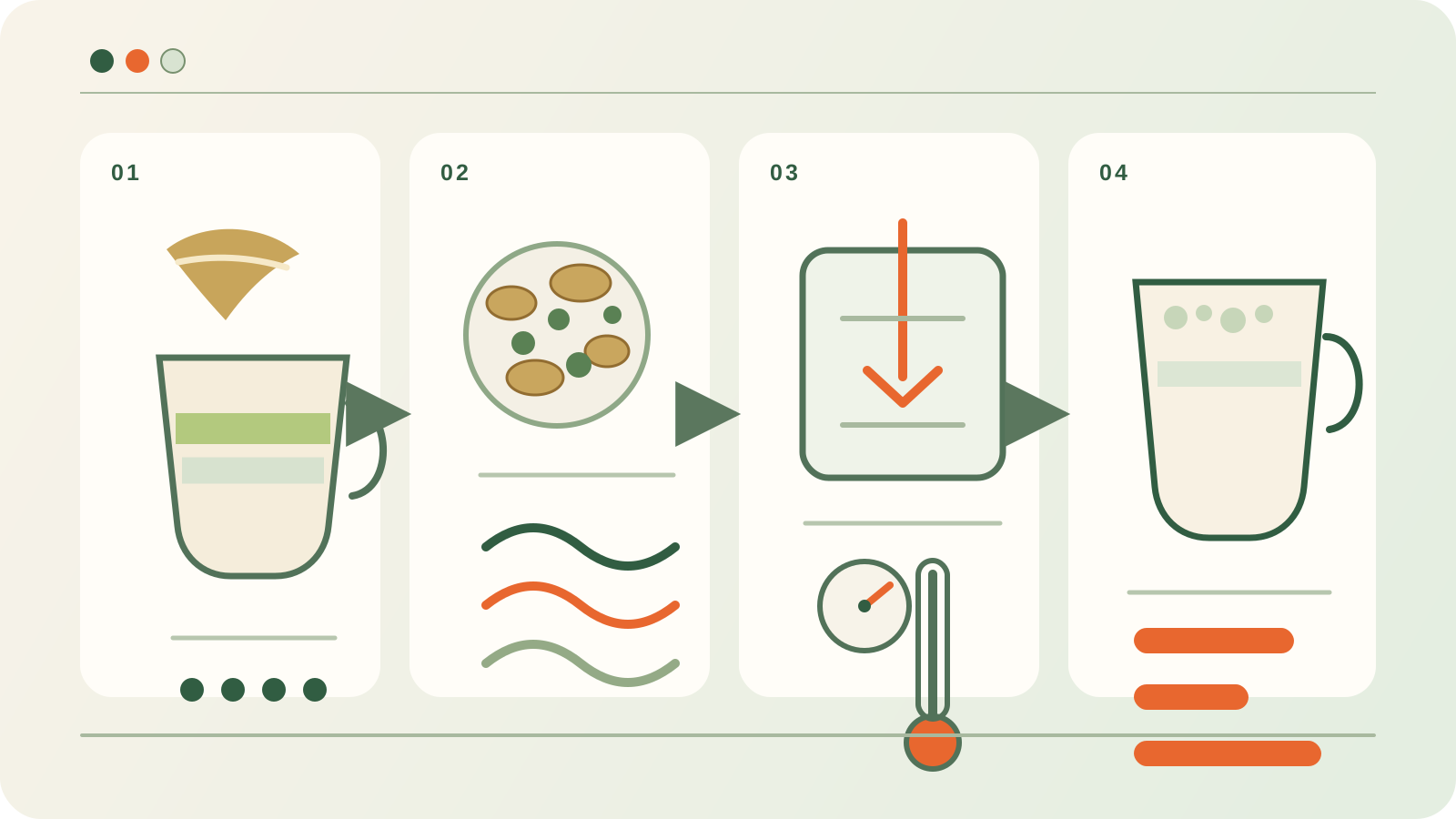
Develop a plant-based matcha latte around one named finished product and one exact beverage base, not around the category word “oat” or “plant milk.” Freeze the base SKU, matcha direction, sweetness, flavor inputs, preparation method, equipment, heat or ice condition, hold point and evaluation time before comparing coded samples. Approve sensory fit and operating repeatability only for those recorded conditions. A preferred cup may move to specification and pilot work, but it does not prove stability, food safety, destination compliance, consumer preference or commercial-lot release.
USE THIS GUIDE IF
- Beverage manufacturers, cafe chains, tea brands, importers and private-label teams developing hot, iced, chilled or packaged plant-based matcha lattes.
- Procurement, R&D, quality and operations teams that need one controlled record linking the brief, exact plant base, coded samples, finished-drink observations and next decision.
- Projects able to nominate one primary oat or other plant-base product, one process route, target sensory roles and accountable owners for testing and release.
NOT THE RIGHT ROUTE IF
- A universal oat-matcha recipe, fixed temperature, use level, pass score, shelf-life claim or health recommendation.
- A claim that oat, soy, almond, coconut, pea, rice or other plant bases are interchangeable or will behave the same across brands and batches.
- Proof of food safety, allergen control, destination approval, factory capacity, customer results or commercial-lot conformity without project-specific evidence.
PROJECT DECISIONS
Eight controls to lock before approving a plant-based matcha latte direction

Define one finished product before choosing the matcha
Start with the beverage the buyer intends to sell. State the destination, channel, service or processing route, cup or batch format, intended use occasion and the team that can accept or reject the direction. If the plan includes hot, iced and packaged versions, nominate one as the approval reference and list the others as transfer checks. This prevents an attractive bench sample from being presented as evidence for every plant-based latte format.
Describe the role matcha must perform after the selected base, sweetness and flavor are present. The project may require clear tea recognition, controlled bitterness and astringency, a defined green appearance, an aroma bridge, sufficient body, a clean finish or reliable preparation. These are buyer-set targets, not universal standards. Origin, cultivar, grade and powder colour cannot replace testing in the actual finished drink.
Treat the exact oat or plant base as a controlled ingredient
Record the actual plant-base product, not only the words oat milk or plant milk. Capture its brand or technical description, SKU, batch where relevant, ingredient list, nutrition information available to the team, sweetened or unsweetened status, flavor background and whether it is designed for barista use. The purpose is traceability: another operator should understand which liquid system produced the observation without assuming that a label category predicts performance.
A published comparison of selected commercial UHT soy, oat, quinoa and rice beverages found different physicochemical and separation behaviour among the products studied. That supports controlling the real base, but it does not predict every brand, batch or matcha recipe. Therefore a supplier, SKU, formulation or meaningful batch change should trigger a documented transfer review. Results from dairy or one plant base must not be copied to another matrix without testing.
Build the sensory target in the complete latte
Compare coded candidates in the complete beverage. Predefine attributes such as tea recognition after dilution, bitterness and astringency balance, requested flavor fit, sweetness balance, green appearance, mouthfeel, foam where relevant, dispersion, visible settling or separation, finish and operating repeatability. Give assessors shared anchors for too low, near target and unacceptable. Vague requests such as stronger, smoother or more premium do not show which attribute changed.
When a custom flavor is required, define its function as a top note, bridge or body element and state how much tea identity must remain. Freeze syrups, sweeteners and flavor inputs during comparison because they can mask, amplify or redirect the same attributes being judged. XIAO TEA’s role is to develop around the named market, application and sensory target; the buyer’s qualified team retains final product, safety, regulatory and release decisions.
Lock dispersion, heat, ice and evaluation time
Write a repeatable build record: pre-dispersion or hydration step where used, order of addition, mixing or shear equipment, operating sequence, project-set temperature conditions, cup or batch size, ice load, hold point and evaluation time. This guide intentionally does not impose a universal dose, temperature, speed or holding period. Those values must be set for the real product, equipment and food-safety system.
Observe each commercially relevant state separately. Heat can alter aroma, foam and appearance; ice changes dilution and temperature; holding can expose settling, separation or colour change; packaging introduces additional processing and storage questions. Record anomalies and operator deviations rather than averaging them away. If another operator cannot reproduce the build from the record, the sample is not ready to become a transferable commercial instruction.
Use coded repeats and a clear decision gate
Present samples under neutral codes and compare them in a balanced order where practical. Use the same base batch and locked recipe, record assessors and preparation repeats, and score only predefined attributes. ISO sensory standards support disciplined methods, profile construction, assessor performance and controlled rooms; they do not choose the formula, weights, anchors or pass score for a specific plant-based latte.
End with a recorded decision: ADVANCE, ADJUST, RETEST or STOP. ADVANCE means the direction may enter specification and pilot planning under the tested conditions. ADJUST identifies attributes and variables to change. RETEST names the changed base, process or route. STOP records why the direction should not proceed. Keep sample approval separate from shelf life, hygiene, allergen control, destination compliance, packaging qualification and commercial-lot release.
Control transfer from oat to other plant bases and commercial scale
Use oat as a reference only when oat is the named approval matrix. Moving to soy, almond, coconut, pea, rice or another base creates a new transfer question because ingredients, solids, fat, protein, sweetness, stabilisers and processing can differ. The same applies when a cafe changes its barista SKU, a manufacturer changes process equipment, or a packaged product adds heat treatment and storage. Define the minimum retest scope before the change occurs.
For scale-up, convert the approved sample into controlled fields: ingredient identities, use levels, process sequence, evaluation points, target attributes, permitted ranges, change-control triggers and responsible owners. Link those fields to the specification, COA review, pilot evidence and lot-release plan. A controlled development method makes XIAO TEA different from a supplier that only sends a powder; it still does not replace buyer-side validation or destination-market responsibility.
EVIDENCE BOUNDARY
What the cited evidence supports—and what it cannot prove
ISO 6658, ISO 13299, ISO 11132 and ISO 8589 support general sensory methodology, profile construction, assessor performance and controlled evaluation environments. Codex CXC 1-1969 supports hygiene, GHP and HACCP responsibilities. Mäkinen et al. studied selected commercial UHT plant-based beverages and reported differing physicochemical and separation behaviour. Together, these sources support controlling the exact base, method, assessors, repeats and records. They do not provide a universal oat-matcha formula, dose, temperature, pass score or shelf life; they do not certify XIAO TEA, a buyer, a factory or a batch; and they cannot predict a specific formula’s sensory, stability, safety, allergen or market result.
- Author
- XIAO TEA Application & Commercial Team
- Published
- 3 September 2026
- Review trigger
- Commercial terms, application evidence, regulatory sources or process scope changes
REFERENCE SOURCES
Official and primary references
- ISO 6658:2017 — Sensory analysis — Methodology — General guidance
- ISO 13299:2016 — General guidance for establishing a sensory profile
- ISO 11132:2021 — Measurement of quantitative descriptive panel performance
- ISO 8589:2007 — General guidance for the design of sensory test rooms
- Codex CXC 1-1969 — General Principles of Food Hygiene
- Mäkinen et al. (2015), Food Chemistry, PMID 25172757 — selected commercial UHT plant-based beverage comparison
RELATED QUESTIONS
Questions buyers ask next
What is the best matcha for an oat-milk latte?
There is no universal best powder independent of the product. Lock the exact oat base, sweetness, flavor direction, process and target attributes, then compare coded matcha candidates in that finished drink.
Can one result cover every oat beverage brand?
No. A brand, SKU, formulation or meaningful batch change can alter the tested matrix. Record the change and let the buyer’s qualified team define the transfer or retest scope.
Can an oat approval be transferred to soy, almond or coconut?
Not automatically. Each base can differ in ingredients, solids, fat, protein, sweetness, stabilisers and processing. Treat the move as a controlled transfer question and test the real target product.
Does a stable-looking bench cup prove shelf life?
No. It records an observation at named conditions and time. Shelf life, food safety, allergen control, packaging and distribution require separate qualified programs and evidence.
What should a buyer send to start a plant-based matcha latte project?
Send the market, channel, exact plant-base SKU, complete working recipe, primary hot, iced, chilled or packaged route, target tea and flavor role, equipment, first volume, timing, evidence needs and decision owners.