
DAIRY LATTE APPLICATION
Dairy Matcha Latte Development: Milk-Matrix Testing and Commercial Approval
A cross-market B2B method for briefing, testing and approving bulk matcha or custom flavored matcha in one defined dairy-latte application without turning a bench cup into an unsupported commercial claim.
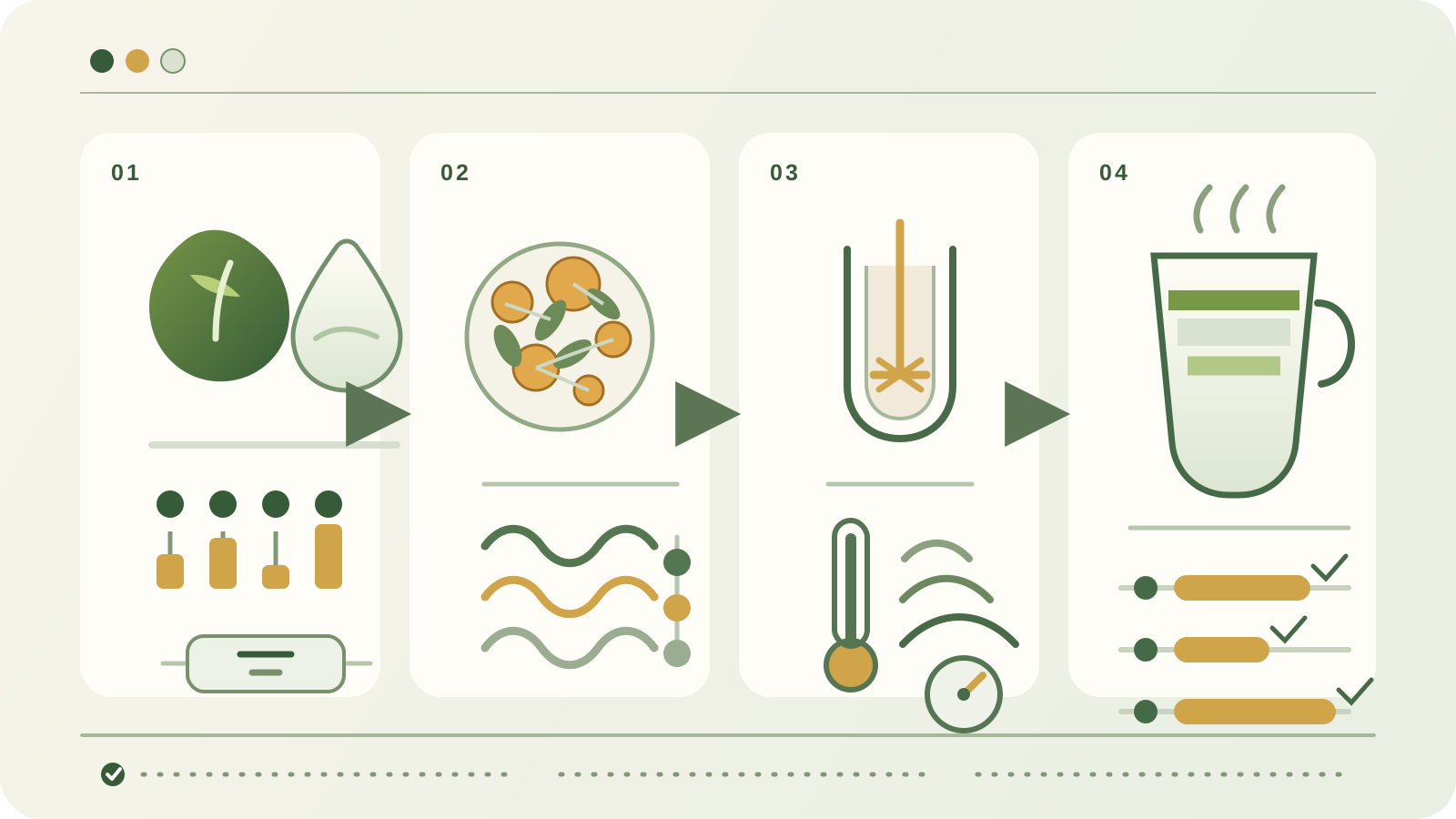
Develop a dairy matcha latte around one named finished product and one primary service or process route. Freeze the actual milk, matcha direction, sweetness and flavor inputs, preparation method, equipment, cup or batch format, hold point and evaluation conditions before comparing coded samples. Approve tea recognition, bitterness and astringency balance, aroma fit, milk-phase integration, green appearance, mouthfeel, dispersion, finish and operating repeatability only for those recorded conditions. A preferred cup can advance to specification and pilot work; it does not by itself prove food safety, destination compliance, shelf life or a released commercial lot.
USE THIS GUIDE IF
- Beverage manufacturers, cafe chains, tea brands, importers and private-label teams developing a hot, iced, chilled or packaged dairy matcha latte.
- Procurement, R&D, quality and operations owners who need one shared record connecting the buyer brief, coded samples, finished-drink observations and the next approval decision.
- Projects able to name an actual dairy ingredient, primary preparation route, target sensory role and accountable owners for formulation, testing and commercial release.
NOT THE RIGHT ROUTE IF
- A universal matcha-latte recipe, fixed temperature, dose, pass score, shelf-life claim or health recommendation that can be copied across products and markets.
- A plant-based milk master guide; oat, coconut and other non-dairy systems require their own parent method and controlled transfer tests.
- Proof of a customer result, factory line, certification, destination approval, production capacity or commercial-lot conformity without project-specific evidence.
PROJECT DECISIONS
Eight controls to lock before approving a dairy matcha latte direction
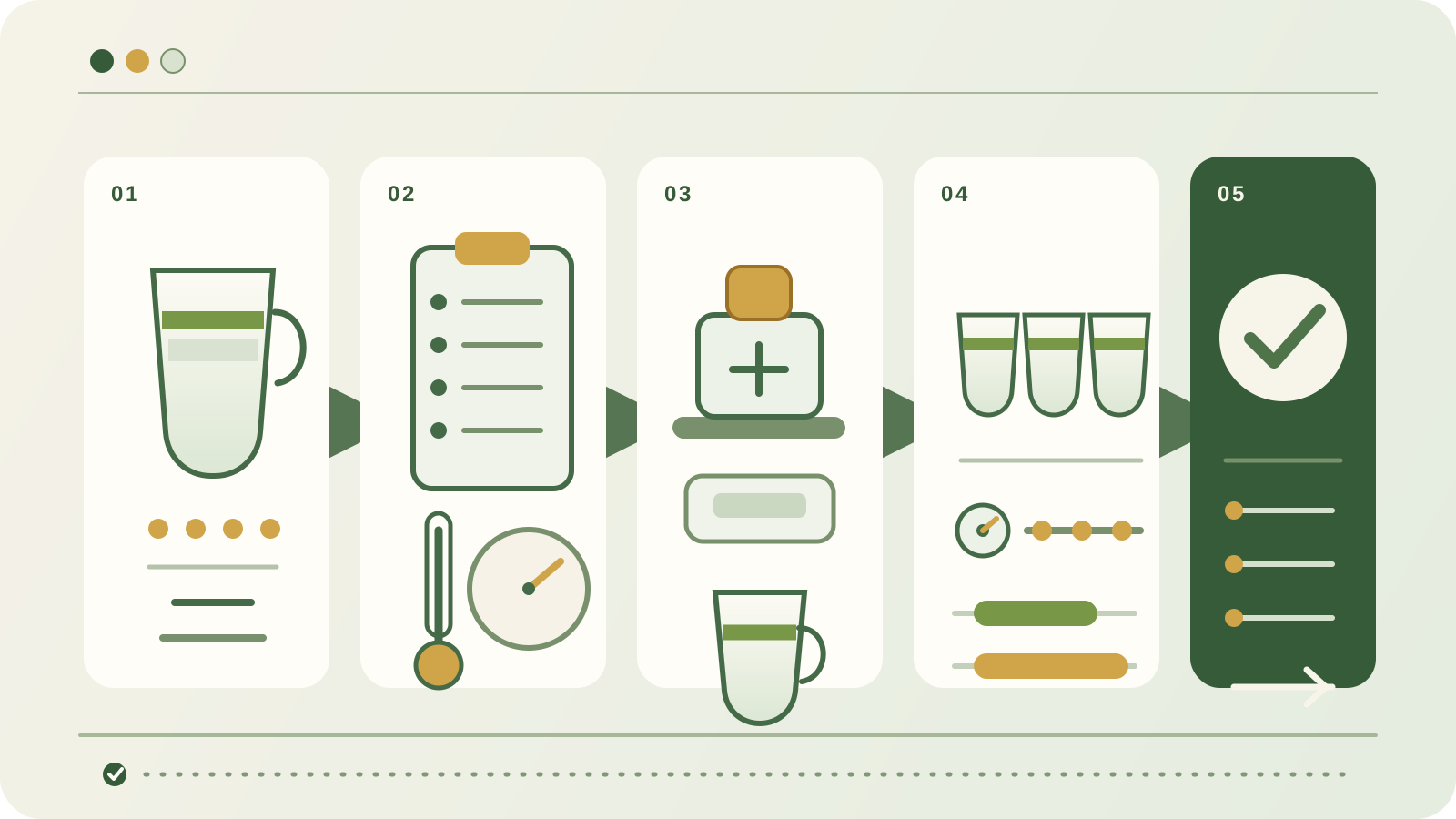
Define one approval product before selecting the matcha
Begin with the finished product that the buyer intends to make, not with a supplier grade name or a powder photograph. State whether the reference is a made-to-order hot latte, a made-to-order iced latte, a centrally prepared chilled drink or a packaged beverage. Name the buyer, destination, channel, cup or batch format, primary use occasion and the team that can accept or reject the direction. If the commercial plan includes several routes, nominate one as the approval reference and treat the others as transfer checks. This keeps the development question narrow enough to answer and prevents one attractive sample from being presented as proof for every service condition.
The product statement should also explain what role matcha must perform after milk, sweetness and any requested flavor are present. A buyer may need clearly recognizable tea character, a controlled bitter and astringent structure, a specific green appearance, sufficient body, a clean finish or an aroma bridge that remains coherent in dairy. Those are project targets, not global standards. Do not start by declaring one cultivar, origin, grade or intensity universally best for latte. The suitable direction depends on the actual milk matrix, flavor brief, process, serving conditions, evidence needs and commercial fit that the buyer records.
Treat the actual milk matrix as a controlled formulation input
Record the exact milk or dairy ingredient used in the approval recipe. Where information is available to the team, capture the product name or technical description, relevant batch, fat and protein information, total solids or sweetness background, stabilisers or added flavors, and whether the input changes between hot and cold service. This is not a request to infer performance from a nutrition panel. It is a control record that lets another operator understand which liquid system was tested. Published sensory standards for milk and dairy products support disciplined preparation and evaluation, but they do not supply a universal flavored-matcha formula or certify the finished drink.
Milk is not a neutral carrier. Protein, fat, sugars, solids and processing history can change perceived tea identity, bitterness, astringency, aroma release, body, colour and dispersion. A published model study of tea polyphenol and protein interaction supports treating the actual protein environment as a variable, but it cannot predict a specific matcha, milk, dose, flavor system or process result. Therefore, changing the dairy product, supplier, format or meaningful batch characteristic should be documented and reviewed as a transfer condition. A direction approved in dairy must not be declared suitable for oat, coconut or another plant-based drink without a separate controlled test.
Set the tea, bitterness, aroma and sweetness target in the finished drink
Judge the matcha in the complete latte rather than from dry colour or bag aroma alone. Before samples are identified, define the attributes that matter to the product: tea recognition after dilution, bitterness and astringency balance, requested aroma fit, sweetness balance, integration with the milk phase, green appearance, mouthfeel, dispersion or clumping, finish and preparation repeatability. Define what too low, near target and clearly unacceptable mean for this project. Avoid undefined instructions such as make it premium, stronger or greener. They do not tell the developer which attribute changed, in which direction or at what evaluation point.
If a custom flavor is part of the brief, write its role rather than only its name. A spice, fruit, vanilla, caramelized-dairy or other direction may act as a top note, bridge or body element, but it must not erase the agreed tea identity unless the buyer explicitly chooses that product architecture. Freeze the sweetener and every flavor input while comparing matcha candidates. Changing a syrup, sauce, sugar source, dairy background or flavor format can alter the same attributes being scored. The goal is not maximum aroma or minimum bitterness in isolation; it is a controlled balance that serves the named finished product and remains intelligible after the actual preparation route.
Freeze preparation, heat, ice and service conditions without inventing universal numbers
Write a repeatable preparation record for the approval route. Include hydration or pre-dispersion where used, order of addition, mixing, whisking or shear equipment, operating steps, timing, actual project temperature conditions, cup or batch size, ice load where relevant, and the handover or evaluation point. The responsible technical team should set these conditions from the real product and equipment. This guide does not publish a universal temperature, dose, mixing speed or holding time because a copied number can be inappropriate for a different dairy system, matcha direction, device, food-safety plan or service model.
Evaluate hot, iced and held states as separate observations. Ice changes dilution and temperature; steaming or other heat exposure can change aroma, bitterness, foam and appearance; a handover interval can expose settling, clumping or loss of tea definition. Record what happens at the named points instead of extending the conclusion beyond them. For a packaged or centrally prepared chilled route, the buyer's qualified process owner must define processing, cooling, packaging and food-safety requirements. A bench preparation can screen directions and reveal application risks, but it cannot establish commercial sterility, shelf life, package compatibility, distribution tolerance or factory-line performance.
Compare coded samples with anchored attributes and repeated preparation
Assign neutral codes so the first evaluation does not reveal supplier, formula name, price, origin or the team's expected winner. Define the comparison task, attributes, anchors, critical defects and decision rule before tasting. ISO 6658 supports general sensory-analysis methodology; ISO 13299 addresses sensory-profile construction; ISO 11132 addresses quantitative descriptive-panel performance; and ISO 8589 addresses controlled test environments. These references support disciplined language, assessors, repeatability and records. They do not create a global dairy matcha latte score, attribute weighting, pass line or proof that the buyer or XIAO TEA operates an ISO-certified sensory laboratory.
Prepare coded repeats under the same recorded conditions and note who made and assessed each sample, the order, any deviation and whether assessors agree on the direction of the difference. Keep observation separate from preference and project decision. Tea identity declines after the named handover point while vanilla remains dominant is actionable; this tastes less premium is not. Use the existing Bulk Matcha Sample Evaluation Scorecard to preserve codes, formula controls, anchored scores and the decision state. Select ADVANCE, ADJUST, RETEST or STOP, then state the responsible owner and the exact evidence needed for the next action.
Use transfer gates whenever the matrix, route or operating method changes
A transfer gate asks whether the original approval still supports a changed condition. Typical triggers include a different milk product, a hot-to-iced or iced-to-hot route, a changed cup or batch size, a new sweetener or flavor input, different equipment, a longer handover or hold, a central-kitchen step, entry into RTD processing, or a new package. Do not hide these changes inside a routine revision. Record which variables moved, preserve the original approval reference and open a focused transfer test that compares the changed route with the controlled baseline.
Country and product-format solution pages belong below this global method. A Saudi saffron-cardamom dairy latte, a Korean strawberry latte and a Brazilian caramelized-dairy and coconut latte should retain their local buyer, flavor and service decisions while linking back to this milk-matrix method. An Australian oat-milk latte, a Thai coconut-based drink or another plant system is adjacent, not evidence for dairy performance. A Swedish stick-pack or retail latte blend adds dose, packer and home-preparation questions that this page does not own. Clear parent-child boundaries reduce keyword overlap and, more importantly, stop evidence from one matrix or format being reused as though it approved another.
Connect the approved direction to specification, pilot and release evidence
When a coded direction advances, retain the sample identity, complete formula and process record, scorecard, decision, date, responsible owners and approved reference sample where practical. Translate the buyer-approved attributes and operating boundaries into the controlled product specification and pilot protocol. Link later revisions, change control, batch documents and first-lot review back to that record. A preferred sample is a development milestone. It does not establish supplier qualification, lot conformity, allergen control, food safety, label accuracy, destination compliance, process validation, packaging suitability, shelf life, consumer acceptance or commercial success. Each requires its own qualified evidence and owner.
XIAO TEA works in this route as a custom flavored matcha specialist and professional B2B supplier: translating the buyer's market and dairy-application brief into matcha-base and flavor matching, testing under the agreed matrix, documenting structured feedback and moving an approved direction toward controlled scale-up and repeat-order specifications. The current development route is USD 1,000 for up to five flavor directions, 50 g per flavor, international sample courier included and two adjustment rounds after sample receipt. If commercial cooperation follows, USD 500 may be credited to the goods payment; MOQ is one metric tonne per approved flavor. These terms do not prove capacity, compliance or release. Submit one controlled dairy-latte project brief through the request-project form.
APPLICATION APPROVAL BOUNDARY
A controlled dairy-latte result supports one recorded matrix and route—not every milk, process or commercial claim.
ISO 6658, ISO 13299, ISO 11132 and ISO 8589 support general sensory methodology, profile construction, panel performance and controlled evaluation environments. ISO 22935-2 and ISO 22935-3 address sensory evaluation and conformity scoring for milk and dairy products. Codex CXC 57-2004 keeps hygiene, safety suitability, process control, records and responsibilities for milk and milk products separate from sensory preference. Luck et al. report a model study of tea polyphenol and protein interaction. Together these sources justify controlling the actual milk matrix, evaluation method, assessors, repeatability and records. They do not provide a universal matcha-latte formula, temperature, dose, attribute weight, pass score or shelf life; they do not certify a compound flavored drink, XIAO TEA, a buyer laboratory, a factory or a commercial batch; and they cannot predict a specific formula's sensory, stability, safety or market result.
- Author
- XIAO TEA Application & Commercial Team
- Published
- 2 September 2026
- Review trigger
- Commercial terms, application evidence, regulatory sources or process scope changes
REFERENCE SOURCES
Official and primary references
- ISO 6658:2017 — Sensory analysis — Methodology — General guidance
- ISO 13299:2016 — Sensory analysis — General guidance for establishing a sensory profile
- ISO 11132:2021 — Sensory analysis — Measurement of quantitative descriptive panel performance
- ISO 22935-2:2023 — Milk and milk products — Sensory analysis — Methods for sensory evaluation
- ISO 22935-3:2023 — Milk and milk products — Sensory analysis — Guidance on a method for evaluation of compliance with product specifications
- Codex CXC 57-2004 — Code of Hygienic Practice for Milk and Milk Products
- ISO 8589:2007 — Sensory analysis — General guidance for the design of test rooms
- Luck et al. (2008), PubMed 19053817 — Tea polyphenol and protein interaction model study
RELATED QUESTIONS
Questions buyers ask next
What is the best bulk matcha for a dairy matcha latte?
There is no universal best powder independent of the product. Define the actual milk, sweetness, flavor direction, process, service route and target attributes, then compare coded candidates in that finished drink. The best decision is the direction that meets the recorded project target and evidence requirements.
Can one approval cover both hot and iced dairy matcha lattes?
Do not assume so. Hot and iced routes change temperature, dilution, foam, aroma release, appearance and handover conditions. Nominate one primary approval route and run a controlled transfer check for the other.
Must a team retest if it changes the milk product?
A meaningful milk change should trigger a documented transfer review because protein, fat, solids, sweetness and processing can change finished-drink performance. The scope of retesting should match the risk and the buyer's qualified technical decision.
Does a successful bench latte prove food safety or shelf life?
No. It supports sensory and application observations under named conditions. Food safety, process validation, packaging, destination requirements, lot testing and shelf life require separate qualified programs and evidence.
What should a buyer send to start a custom dairy matcha latte project?
Send the destination and channel, primary hot, iced, chilled or packaged route, exact dairy input, complete working recipe, matcha and flavor target, equipment and method, first volume per approved flavor, launch timing, required evidence and decision owners. XIAO TEA's current development route and MOQ remain subject to the written project agreement.