
Sample Evaluation
Bulk Matcha Sample Evaluation Scorecard for B2B Buyers
A controlled, application-specific method for comparing bulk matcha and flavored matcha samples after delivery—without confusing a bench result with commercial approval.
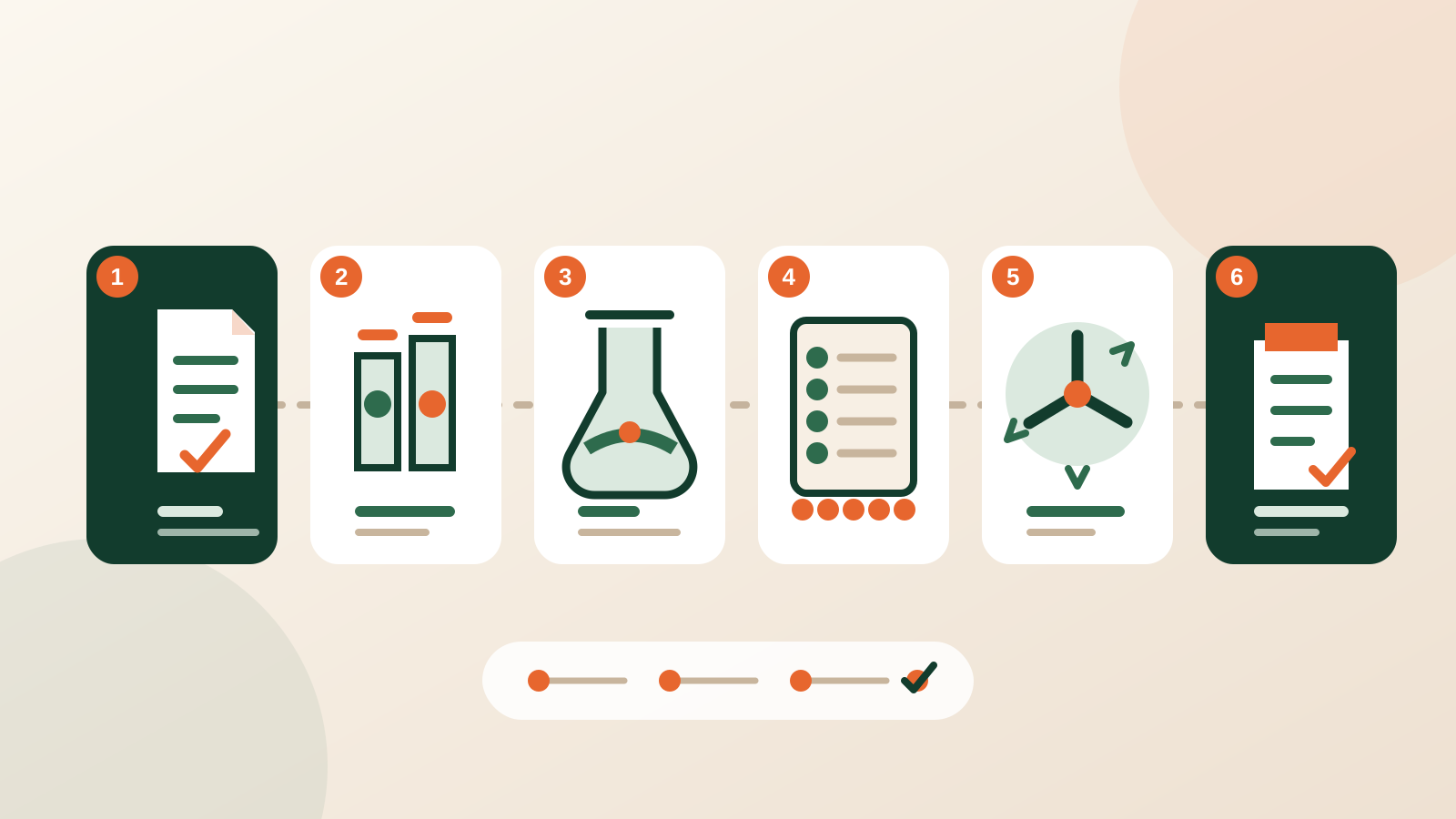
Evaluate a bulk matcha sample in the finished application, not from powder colour or aroma alone. Before testing, freeze the formula, dose, ingredient base, equipment, mixing order, temperature, time and evaluation point. Present coded samples, score pre-defined attributes on an anchored 1–5 scale, record N/A where an attribute does not apply, and repeat before deciding ADVANCE, ADJUST, RETEST or STOP. The decision supports only the recorded application conditions; it does not establish consumer acceptance, shelf life, destination compliance or release of a commercial lot.
EDITABLE PROCUREMENT TOOL
Download the 8-language bulk matcha sample evaluation scorecard (XLSX)
Use the editable setup, sample register, dairy, plant-based, bakery, RTD and decision sheets. Define project targets before scoring; the workbook does not impose a universal pass threshold.
USE THIS GUIDE IF
- R&D, procurement and quality teams comparing bulk matcha or custom flavored matcha samples after receipt.
- Cafe chains, beverage plants, bakeries, dessert manufacturers, premix brands and private-label teams that need one repeatable decision record.
- Projects that can name a primary dairy latte, plant-based drink, bakery or RTD application and keep its test conditions fixed.
NOT THE RIGHT ROUTE IF
- Consumer preference research, market-demand proof or a universal claim that one flavor is liked in every country.
- A replacement for the approved product specification, lot COA, microbiological or residue testing, destination review, shelf-life program or commercial-lot release.
- A pass score copied across unrelated recipes, equipment, pack formats or applications without revalidation.
PROJECT DECISIONS
Ten controls to complete before approving a bulk matcha sample direction

Use the scorecard after the sample arrives, not as a substitute for the brief
The sample scorecard sits between development sampling and controlled product approval. Before samples are made, the RFQ or project brief should identify the market, buyer, application, flavor direction, first commercial volume and timing. The sample program defines which directions are supplied and how revisions work. After delivery, this scorecard gives procurement, R&D and quality one method for deciding whether a direction should advance, be adjusted, be retested or stop. It does not renegotiate the sample scope and it does not replace the supplier qualification gate.
Start the form by writing one decision sentence, such as: choose the flavored-matcha direction that keeps tea identity and the requested aroma balance in a 250 ml hot dairy latte after a ten-minute service hold. That sentence is deliberately narrow. It prevents dry-powder appearance, a second milk, an iced recipe and a bakery trial from being mixed into one verdict. If the project has four applications, open four controlled test records and nominate which one is the commercial approval reference.
Code samples and control the evaluation before discussing the story
Give every candidate a neutral code that does not reveal supplier, grade, origin, flavor name, price or the team's expected winner. One coordinator can preserve the controlled key. Prepare samples in a planned order, change the order where the method requires it, record the assessors and keep distracting claims away from the first evaluation. Blinding cannot remove every source of bias, but it reduces the chance that a premium label, a greener dry powder or a familiar sample name determines the score before the finished product is judged.
Define attributes and scale anchors in advance. A practical five-point scale can mean 1 = clearly below the project target, 3 = near the target but adjustment is required, and 5 = meets or exceeds the pre-defined target under the tested conditions. Add descriptions for 2 and 4 or use the workbook's intermediate anchors. Use N/A when an attribute does not belong to the application. Do not average unrelated attributes into a universal pass mark. Mark critical defects and weightings before results are visible.
For dairy and oat drinks, freeze the liquid system and service window
For a dairy latte, record the exact milk, fat and protein information available to the team, matcha dose, water and milk quantities, sweetener, mixing order, whisk or shear method, steam or liquid temperature, cup size and evaluation time. Score tea recognition, aroma fit, bitterness and astringency balance, sweetness balance, integration with the milk phase, mouthfeel, green appearance, clumping or dispersion, finish and preparation repeatability. The result belongs to that recipe and service method; switching milk or dose creates a transfer check, not the same test.
For oat or another plant-based drink, preserve the base SKU and batch because cereal sweetness, oil, stabilisers and flavour can change masking, body and colour. Record hot and iced routes separately. Useful attributes include tea recognition, aroma fit, cereal masking, sweetness amplification, mouthfeel, colour dilution, dispersion, sediment after a named hold, finish and hot-to-cold transfer. A sample that scores well in dairy should not be declared suitable for oat drink without this controlled check.
For bakery, evaluate the cooled product after the real heat route
A bakery scorecard must attach to a complete formula and process. Record flour or premix, sugar, fat, liquid and other key materials; matcha dose; mixing order and equipment; batter or dough hold; piece weight; mould or depositor; oven type, time and temperature; cooling; and the declared evaluation point. Compare coded matcha directions while keeping those variables fixed. Dry-powder aroma and raw batter can be screening observations, but the finished item after its normal cooling or pack hold controls the application decision.
Score post-bake tea identity, aroma survival and fit, bitterness, finished crumb or filling colour, powder distribution, texture impact, aftertaste and visible process loss. Record tray position or other known process variation rather than selecting the most attractive piece. A bench bake can identify a direction for pilot work; it cannot prove performance across an untested commercial oven, depositor, package, shelf-life period or repeated production lot.
For RTD, separate immediate performance from stability and release
For an RTD or beverage-factory route, record the actual formula, matcha dose, hydration, mixing and shear, homogenisation where used, heat route, container and evaluation checkpoints. If pH, acidity or another process field matters, record the actual measured condition and the responsible technical owner's instruction rather than inventing a generic value. Evaluate tea recognition, aroma, bitterness and astringency, mouthfeel, colour change, dispersion, sediment, ring formation or phase separation and any observed package interaction at named points.
Use the result to select or adjust a development direction, not to claim shelf life. A same-day beaker, one thermal pass or a short hold does not establish microbiological safety, commercial sterility, package compatibility, transport durability or performance through the declared life. Those questions require the buyer's qualified food-safety, process, packaging and stability program. The scorecard should visibly mark which evidence remains open before pilot, validation or commercial release.
Turn scores into one of four controlled next actions
ADVANCE means the direction can enter the next defined stage under the recorded conditions. ADJUST means the direction remains useful but the team can state a precise change, such as reduce first-note cardamom while preserving tea identity in the fixed oat recipe. RETEST means the evidence is not interpretable or transferable because a control failed, repeats disagree, records are incomplete or a second target application must be tested. STOP means the direction is fundamentally mismatched or the project lacks a technical or commercial reason to continue.
Keep the observation, requested change and decision separate. Include the responsible owner and next test conditions. Do not quietly change several variables in a revision and compare it with the first result as though only the formula changed. Where a candidate advances, retain its code, the exact application record and an approved reference sample. These records should later connect to the controlled product specification, pilot protocol, change control and first-lot review.
Keep the evidence boundary clear when working with XIAO TEA
XIAO TEA works as a custom flavored matcha specialist and professional B2B supplier. The development logic begins with the buyer's market and finished application, matches a matcha base to that matrix, adjusts aroma and sweetness balance through structured feedback, and carries the approved direction toward scale-up and repeat-order controls. The buyer's scorecard is valuable because feedback stays tied to a sample code, formula and use condition instead of asking for an undefined stronger, greener or more premium powder.
The current development route is USD 1,000 for up to five flavor directions, 50 g per flavor, international sample courier included and two adjustment rounds after sample receipt. If commercial cooperation follows, USD 500 may be credited to the goods payment; MOQ is one metric tonne per approved flavor. Those terms describe the project route, not evidence that a sample, factory, commercial lot, destination compliance or finished-product life has been approved. Download the workbook, freeze one real application and send the resulting brief and decision record through the project form.
DECISION BOUNDARY
A score supports the tested application; it does not release the commercial product.
ISO 6658 provides general sensory-analysis methodology; ISO 13299 covers sensory-profile construction; ISO 11132 addresses quantitative descriptive-panel performance; ISO 8589 covers test-room design; ISO 5492 supplies sensory vocabulary; and ISO 20613 discusses sensory analysis in quality control. These references support disciplined attributes, assessors, repeatability, environment, terminology and records. They do not supply a universal matcha score, pass threshold or formula, and they do not prove that XIAO TEA or any buyer operates an ISO-certified sensory laboratory. Product specification, lot evidence, qualified destination review, process validation and commercial release remain separate decisions.
- Author
- XIAO TEA Application & Commercial Team
- Published
- 2 September 2026
- Review trigger
- Commercial terms, application evidence, regulatory sources or process scope changes
REFERENCE SOURCES
Official and primary references
- ISO 6658:2017 — Sensory analysis — Methodology — General guidance
- ISO 13299:2016 — Sensory analysis — General guidance for establishing a sensory profile
- ISO 11132:2021 — Sensory analysis — Measurement of quantitative descriptive panel performance
- ISO 8589:2007 — Sensory analysis — General guidance for the design of test rooms
- ISO 5492:2008 — Sensory analysis — Vocabulary
- ISO 20613:2019 — Sensory analysis — General guidance for use in quality control
RELATED QUESTIONS
Questions buyers ask next
What should buyers score when comparing bulk matcha samples?
Choose attributes for the real application. Common fields include tea recognition, aroma fit, bitterness and astringency balance, sweetness balance, colour, mouthfeel, dispersion, process loss and aftertaste. Add application-specific controls instead of using one generic total.
Is a higher total score always the better matcha sample?
No. A total can hide a critical defect or give equal weight to an irrelevant field. Define must-have attributes, unacceptable defects, weights and target ranges before testing, and review the attribute pattern with the notes.
Can one sample approval cover dairy, oat drink, bakery and RTD?
No. Each matrix and process can change flavour release, colour, mouthfeel, dispersion and heat response. Nominate one primary approval application and run separate controlled transfer tests for the others.
Does the scorecard prove shelf life or commercial-lot conformity?
No. It records application observations under named conditions. Shelf life, food safety, packaging, destination requirements, lot testing, process validation and release require their own qualified evidence.
What feedback helps a custom flavored matcha developer adjust a sample?
Tie the feedback to a code and fixed recipe, then identify the attribute, direction and checkpoint: for example, tea identity falls after the ten-minute hot-oat hold while vanilla remains. Avoid vague requests such as make it more premium.