
INDIA · BEVERAGE TEAMS · LASSI-STYLE APPLICATION
How Indian beverage teams should brief mango-cardamom matcha for a lassi-style drink
An application and procurement brief for Indian beverage brands and central kitchens defining mango-cardamom flavored matcha through the actual fermented dairy base and service process.
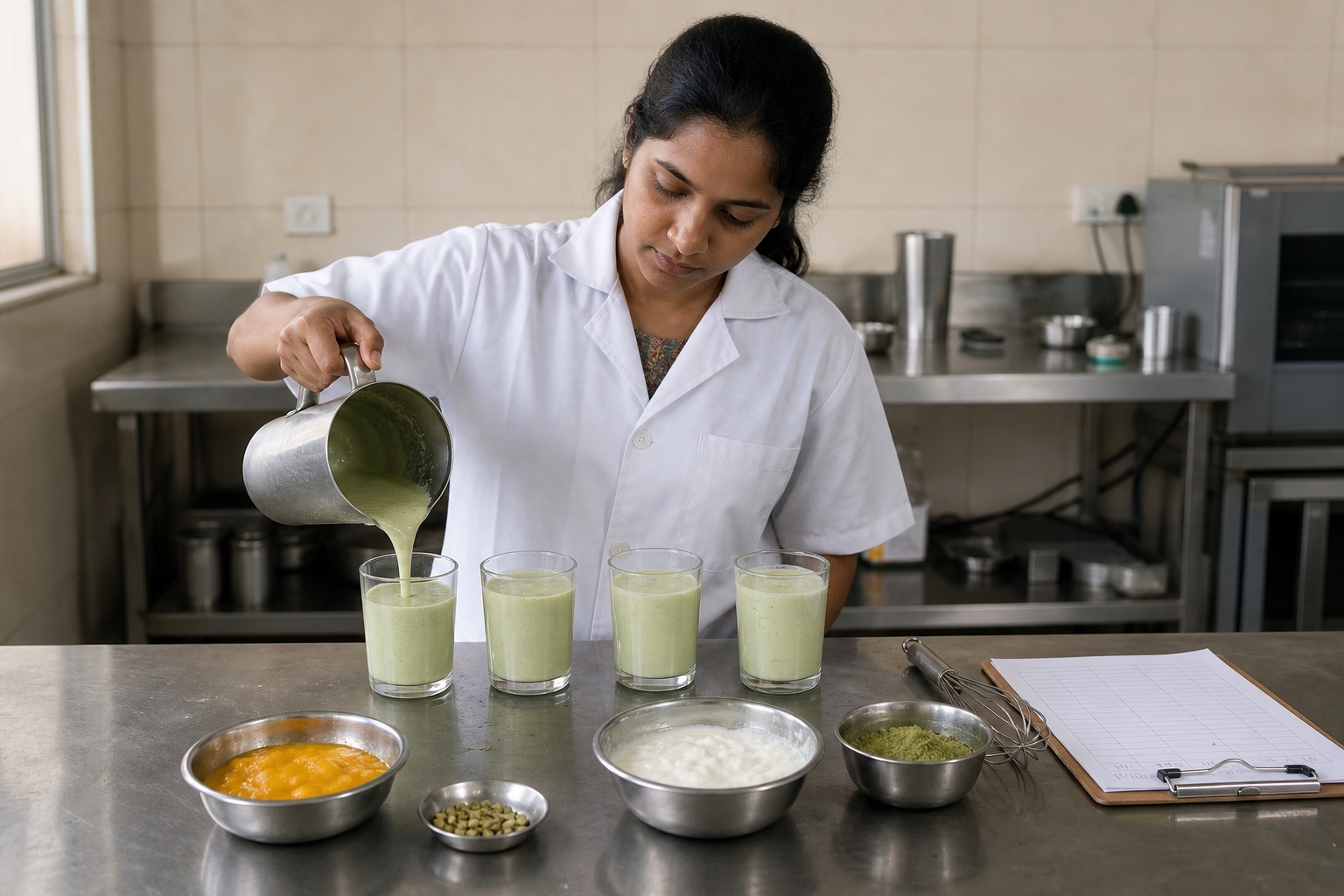
An Indian beverage team should lock the actual fermented dairy base, mango input, cardamom format, matcha dose, sweetener, mixing sequence, serving weight and chilled-service window before requesting samples. Compare candidates in the finished lassi-style drink with one evaluation sheet, then repeat the preferred direction using the buyer's normal equipment and service steps. Powder aroma or one freshly blended cup cannot establish texture, separation, operational repeatability, food safety, labelling or shelf life.
USE THIS GUIDE IF
- Indian beverage brands, hotel groups and multi-site foodservice central kitchens
- R&D, quality, operations and procurement teams defining a fermented dairy matcha drink
- Projects with a fixed primary application and a credible path to one metric ton per approved flavor
NOT THE RIGHT ROUTE IF
- Consumers or single outlets seeking a few kilograms of ready-made drink powder
- Teams that have not selected the fermented dairy base, mango input or service format
- Projects asking a powder supplier to establish finished-product food safety, label compliance or shelf life
PROJECT DECISIONS
Seven decisions to lock before mango-cardamom matcha sampling
Define the finished drink and approval route before choosing a flavor
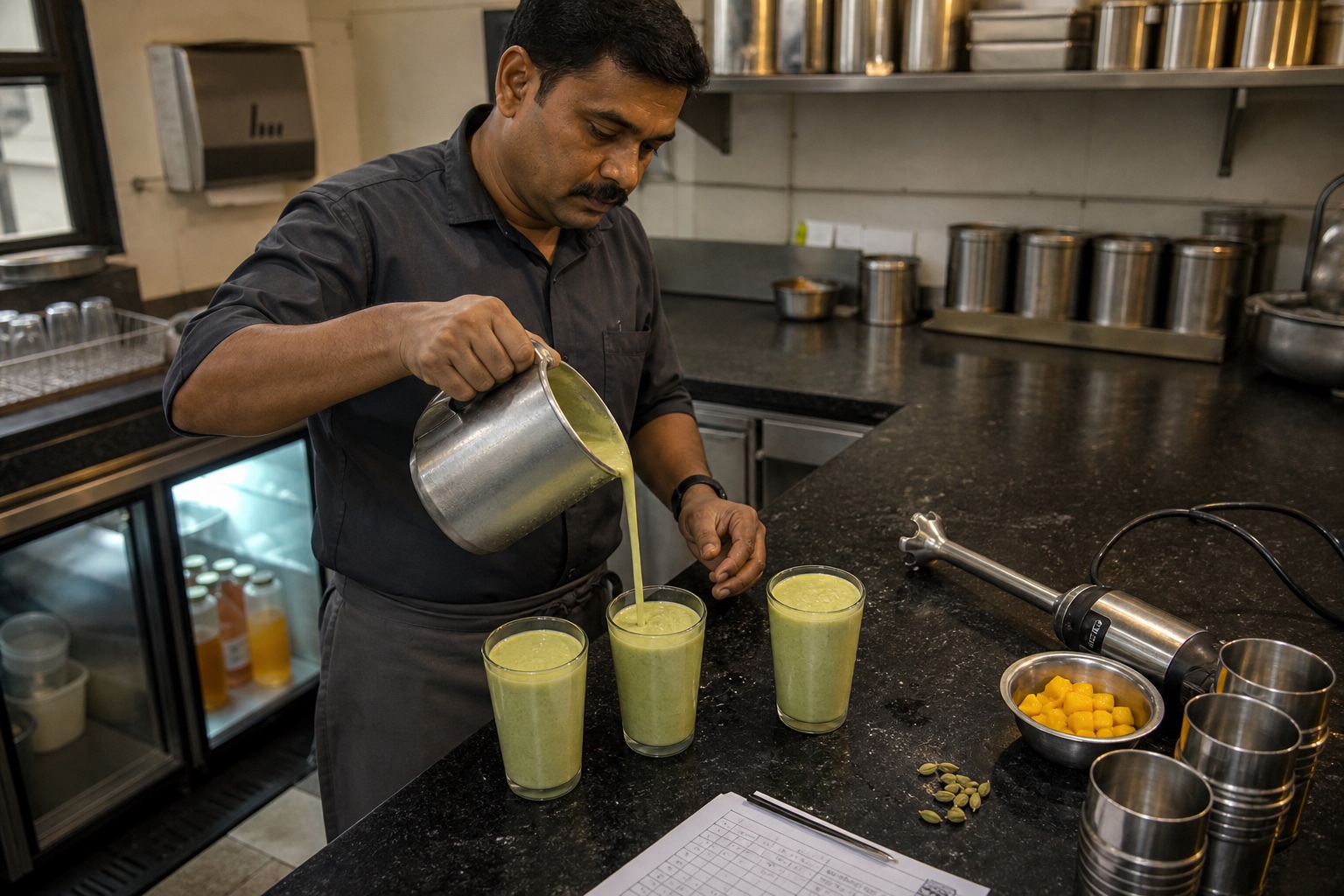
Begin with the product that will be sold. State whether the primary reference is a made-to-order drink blended at a hotel or cafe, a centrally prepared chilled batch sent to several outlets, or a prepacked fermented dairy beverage. Choose one route for formula approval. The equipment, time between preparation and service, container, distribution responsibility and documentation are different enough that one loose brief should not cover all three without separate checks.
The request should name the primary Indian sales channel, serving size, expected first volume, launch timing and the owners of sensory, quality, operations, regulatory and purchasing decisions. Mango-cardamom matcha is a product direction, not proof of Indian consumer demand. The buyer must validate the proposition, price and channel with its own evidence. The supplier's job begins with a controlled application target rather than a cultural story or an assumed national preference.
Give matcha, mango, cardamom and fermented dairy separate roles
Write a sensory role map before discussing strength. The matcha base should remain identifiable after the fermented dairy acidity, milk solids and sweetness, and it should finish as tea rather than a generic green color. Mango can provide body and fruit identity, but the exact pulp, puree, preparation or flavor input changes water, acidity, fibre and aroma. Cardamom can bridge fruit, dairy and tea; too much can leave a sharp spice tail that replaces the matcha finish.
This is where XIAO TEA operates as a custom flavored matcha development specialist. The work matches a tea base and flavor architecture to the declared fermented dairy application, then uses structured feedback to adjust the supplied direction. It is not a catalogue powder with an Indian label, and it does not assume that one formula will perform unchanged in yoghurt, a diluted lassi-style drink, an ambient premix and a freshly blended cafe cup.
Lock the actual base, mango input and one-variable comparison
Use the intended dahi, curd, yoghurt or other qualified fermented dairy base throughout the comparison. Record the exact item, batch condition and preparation step rather than calling every matrix 'yoghurt'. Lock the mango supplier item and format, cardamom source or flavor input, sweetener, water or milk addition, matcha dose, batch mass, mixing tool, mixing time, order of addition and final serving weight. Keep confidential formula quantities inside the buyer's controlled project record.
Prepare coded candidates from one common base and change only the planned flavored-matcha direction in the first comparison. If the dairy base, mango pulp and sweetness all change at the same time, the team cannot tell whether the tea base, aroma architecture or product matrix caused the result. Evaluate pourability, visible streaking, fruit identity, tea recognition, cardamom finish, sweetness, acidity, color, mouthfeel and aftertaste. A green powder and a fragrant mixing bowl are references, not approval evidence.
Repeat the preferred direction with the buyer's normal service process
Move one or two preferred directions from the R&D bench into the equipment and timing available at the intended operation. For a central kitchen, record batch size, blender or mixing tool, addition sequence, transfer vessel, portioning method and the planned time before outlet service. For made-to-order service, record the cup, ice if used, utensils, target fill weight and realistic preparation time. Compare the first and last portions from the same batch instead of tasting only a carefully selected middle cup.
Within the responsible operator's qualified program, define chilled checkpoints before the trial begins. Review visible separation, sediment, serum release, surface bubbles, cup-wall coating, aroma, mango and tea recognition, cardamom tail, sweetness, texture and the intended drinking temperature. The responsible business must establish food safety, cold chain, packaging and shelf life from its complete formula, process, equipment and distribution route. This page does not prescribe a universal pH, holding time, microbial limit or shelf life.
Prepare the India product-identity and label-information handoff early
FSSAI's current regulations and reference compendia include drinks based on fermented milk and recognised names such as lassi, while Appendix A places related dairy-based drinks within the food-category system. The responsible Indian food business should determine the correct identity and designation for the exact formula and sale format. A development name such as 'mango-cardamom matcha lassi-style drink' is not, by itself, a regulatory classification or an approval of the finished product.
FSSAI's current Labelling and Display Regulations compilation covers information for prepacked foods and essential information displayed where food is manufactured, served or stored. Its provisions address matters such as the food name, ingredient information, nutrition information, allergen declaration, net quantity, responsible food business, batch and date information, country of origin for imported food and necessary instructions. Milk is among the listed allergen categories. XIAO TEA can supply accurate ingredient and specification information for its material; the Indian responsible party must review the complete recipe, additives, allergen controls, claims, language, package and current legal requirements.
Use two adjustment rounds to reach one documented commercial direction
After each application review, combine all functions' comments into one decision sheet tied to the exact base, mango input, dose, batch method and checkpoint. 'Cardamom becomes sharp and matcha disappears after the third sip in the declared chilled cup' is actionable; 'make it more local' is not. Rank the issues, separate observations from proposed solutions and preserve the candidate code, preparation record, cup reference and approval notes. That record supports the next buyer-run verification; it does not become a fabricated performance claim.
XIAO TEA's current USD 1,000 development route covers up to five flavor directions, 50 g per flavor, international sample courier and two formula-adjustment rounds after receipt. If the project becomes a commercial order, USD 500 is credited against the goods payment. Commercial production starts at one metric ton per approved flavor. A sound release decision combines finished-drink sensory fit, repeatable preparation, the responsible operator's chilled and food-safety program, label-information handoff and a credible commercial volume path.
BEFORE FORMULA APPROVAL
Keep the conclusion tied to the tested application.
Commercial fees and scope reflect the current XIAO TEA offer. Application performance must be evaluated in the buyer's agreed product system. This page does not make an absolute claim about color, dispersion, stability, certification, regulatory status or production capacity.
- Author
- XIAO TEA Application & Commercial Team
- Published
- 26 August 2026
- Review trigger
- Commercial terms, application evidence, regulatory sources or process scope changes
REFERENCE SOURCES
Official and primary references
RELATED QUESTIONS
Questions buyers ask next
Should a buyer approve mango-cardamom matcha from a water tasting?
No. Use the intended fermented dairy base, mango input, sweetener, dose, mixing method and serving format. Powder or water tasting can screen directions, but the finished drink should control approval.
Can the same formula cover made-to-order, central-kitchen and prepacked drinks?
Do not assume it can. Select one primary format, then run focused checks for each additional process, pack and service route before transferring the approval.
Does XIAO TEA set the food safety or shelf life of the finished lassi-style drink?
No. XIAO TEA develops the supplied flavored-matcha direction against the agreed application. The responsible food business must establish finished-product food safety, cold chain, packaging and shelf life.
What should the first India development brief include?
Include the product format, fermented dairy base, mango and cardamom inputs, dose, sweetener, batch method, serving or pack, chilled-review owner, first volume per flavor, launch timing and approval roles.