
NETHERLANDS · BEVERAGE MANUFACTURERS · VANILLA OAT-MATCHA RTD
How Dutch beverage manufacturers should brief vanilla oat-matcha for a chilled RTD line
A line-development brief for Netherlands beverage manufacturers validating vanilla oat-matcha from powder dispersion through process, cold storage and Dutch retail-label handoff.
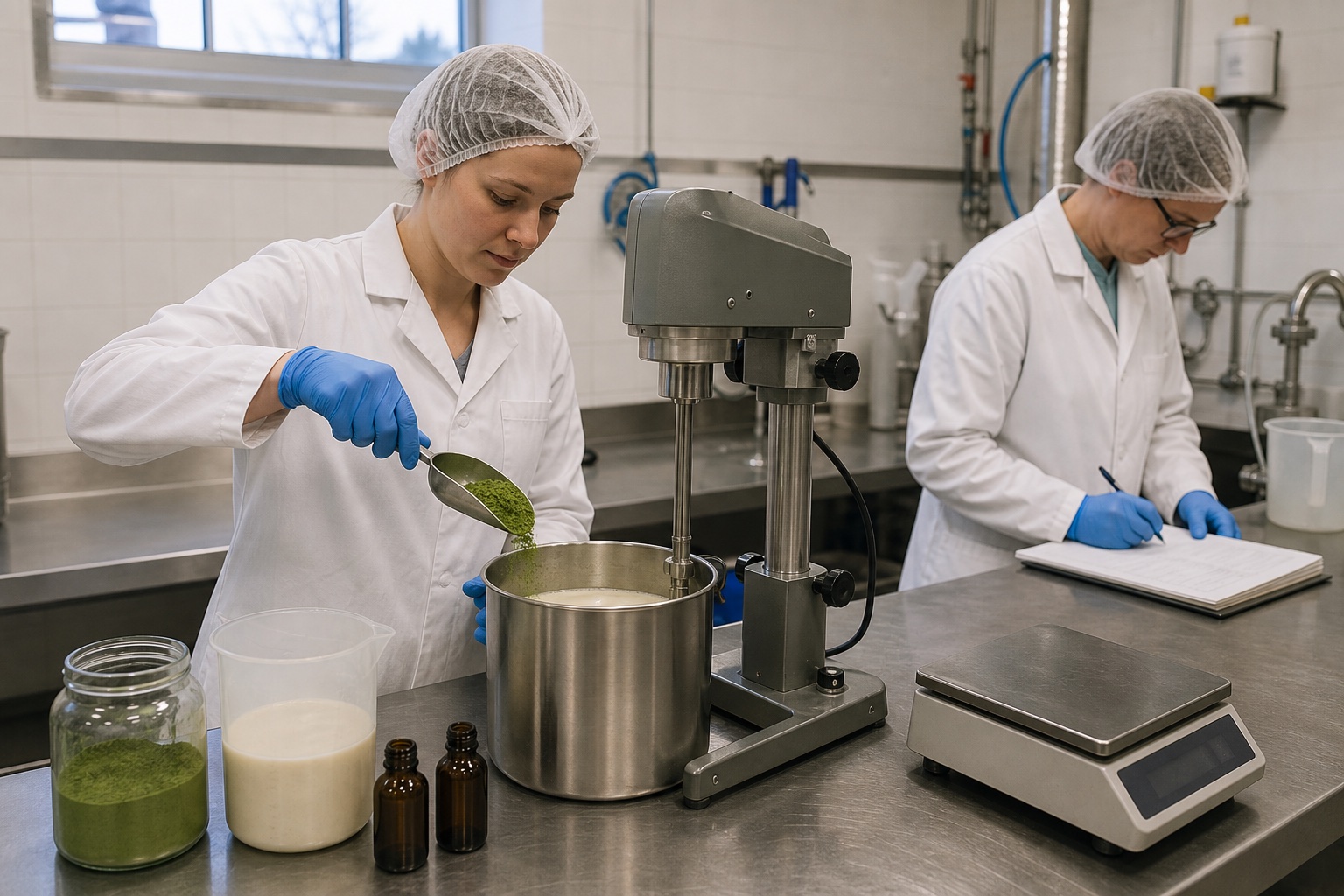
A Netherlands beverage manufacturer should brief vanilla oat-matcha around one finished chilled RTD system, not approve it from powder aroma or a freshly mixed bench cup. Freeze the oat base, vanilla ingredient, sweetener, matcha dose, powder addition sequence, homogenization route, validated heat treatment, fill pack, cold-storage plan and release criteria before comparing samples. Approve only after the buyer records dispersion, sensory balance, settling, re-suspension and label inputs across the intended process and storage checkpoints.
USE THIS GUIDE IF
- Netherlands beverage manufacturers and private-label RTD producers with a defined chilled product route
- R&D, quality, operations and procurement teams preparing one reproducible pilot brief
- Brands with an intended first commercial volume and a path to one metric ton per approved flavor
NOT THE RIGHT ROUTE IF
- A café seeking a few kilograms for made-to-order drinks
- Teams that have not selected the oat base, pack format or chilled distribution route
- Projects expecting a powder supplier to set the finished beverage's food-safety process or shelf life
PROJECT DECISIONS
Seven inputs to lock before a vanilla oat-matcha RTD pilot
Define the Dutch chilled RTD product before selecting a matcha direction
Start with the product that will be manufactured and sold, not the powder name. State whether the intended format is a single-serve bottle, carton, can or another sealed pack; the planned net quantity; chilled distribution route; expected consumer preparation such as shake-before-use; first commercial volume; and the people who own sensory, food-safety, packaging, label and purchasing approval. Naming the Netherlands as the destination market does not prove a trend or demand level. It tells the development team which finished label, language and responsible-business review must be planned.
Write the sensory target as roles rather than adjectives. Vanilla should round the oat base and bridge sweetness into the tea body; matcha should remain identifiable through the mid-palate and finish; sweetness should support the target without disguising bitterness; and any cereal note from the oat base should be treated as part of the formula rather than noise. XIAO TEA works as a custom flavored matcha specialist by matching tea base and flavor architecture to this named beverage system, then revising against the buyer's processed product. A catalogue grade alone does not settle those interactions.
Lock the oat base, vanilla ingredient and control formula
Use one controlled oat base for the first comparison and document its supplier code or buyer formula, relevant solids, fat and protein information available to the R&D team, sweetness, stabilizer or emulsifier system, background flavors and water addition. Also record the selected sweetener system and target finished dose. If the base or sweetness changes between samples, the team loses the ability to tell whether a difference came from the flavored matcha or from the beverage itself.
Define vanilla precisely. A vanilla extract, a flavoring, a vanilla-containing preparation and a finished premix may create different sensory and documentation tasks. Record the exact ingredient, supplier specification, intended dose range and addition point used by the beverage manufacturer. Regulation (EC) No 1334/2008 provides the EU framework for flavourings and food ingredients with flavouring properties, including general requirements and conditions of use. The responsible food business must assess the exact material and finished formula; a flavor description is not a regulatory approval.
Build a recorded dispersion and homogenization trial
Create a pilot sheet before opening the samples. Record batch size, liquid temperature at powder addition, whether matcha is pre-slurried, the sequence of oat base, water, sweetener, vanilla and flavored matcha, mixing equipment, rotor or agitator setting used by the facility, mixing time, hold before the next process step and any filtration or screen. Keep all controls fixed while comparing the planned flavor directions. The purpose is reproducibility, not a universal recipe.
Inspect more than surface color. Record dry pockets, wall build-up, foam, visible particles and transfer loss at the same points in every trial. If the facility uses homogenization, document the actual equipment and validated operating setting used by the manufacturer; do not copy a pressure or pass count from a different line. A bench sample can help select a direction, but it cannot establish line-ready dispersion or physical stability without the buyer's equipment, process and finished pack.
Carry the same candidate through the validated process and chilled pack
The manufacturer should move the selected candidates through its own validated food-safety, heat-treatment, cooling, hygiene and filling route. Record the process code, equipment, batch size, temperatures and times actually approved by the facility, the point of vanilla addition, fill temperature, headspace, closure and pack material. This guide intentionally does not prescribe a pasteurization or sterilization program: safe processing depends on the complete formulation, hazard analysis, equipment and regulatory responsibilities of the beverage business.
Compare the product at agreed checkpoints such as before treatment, after treatment and cooling, after filling, and after the pack reaches its defined chilled condition. Score matcha recognition, vanilla balance, oat cereal note, sweetness, bitterness, aroma loss, foam, color and aftertaste using the same coded evaluation sheet. These observations are project data, not a guarantee that one flavored-matcha direction will behave the same in another base, pack or process.
Approve with a retained-sample and cold-storage decision plan
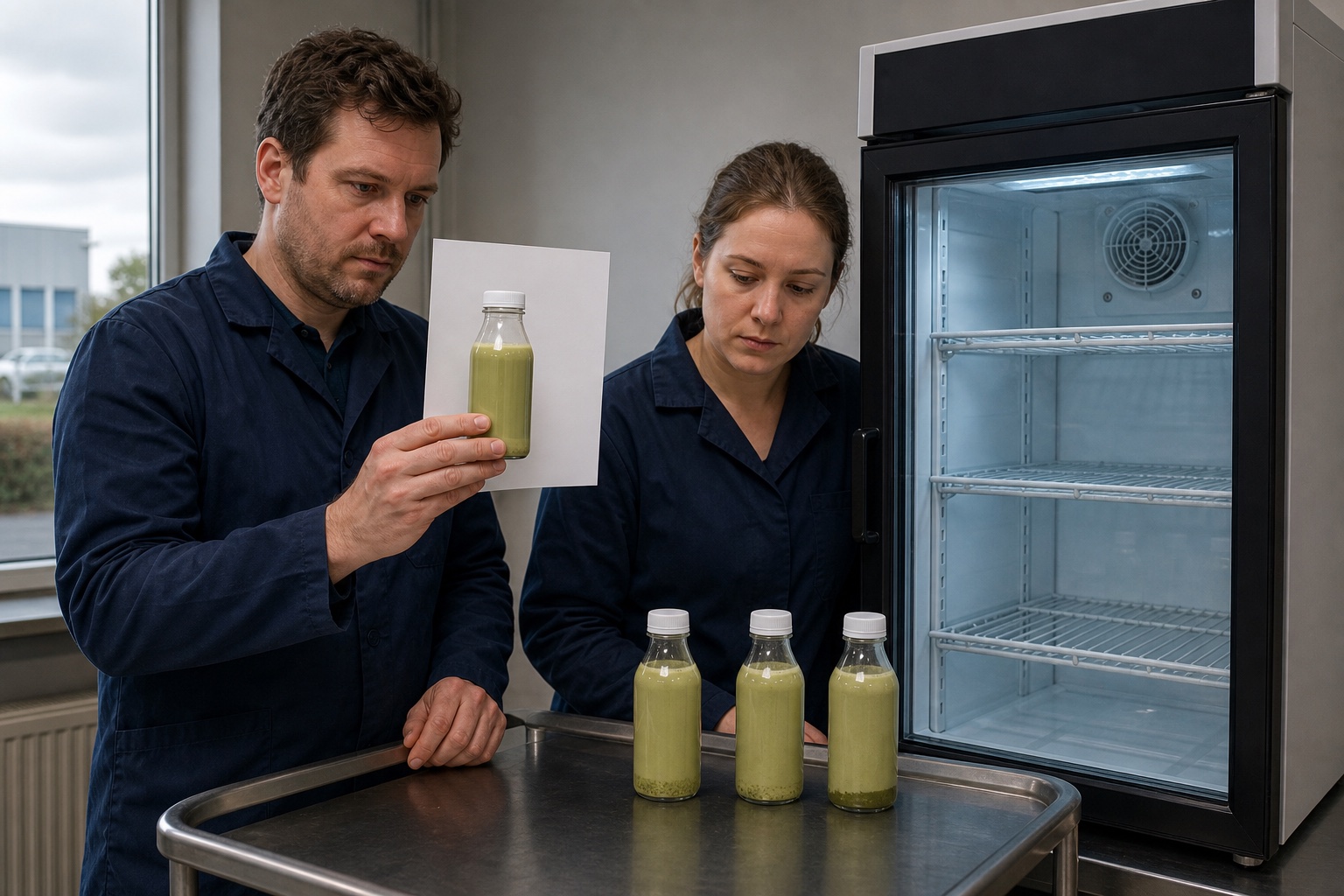
Set fixed retained-sample checkpoints that fit the buyer's development plan. At each point, photograph the sealed pack under consistent light and record sediment height or another chosen observation method, visible separation, re-suspension steps, flavor balance, aroma, color and pack condition. Decide in advance whether the intended consumer is expected to shake the product and what wording, if any, the responsible business will validate. Opening a fresh bottle on pilot day is not a substitute for shelf-life, microbiological, packaging or distribution validation.
Use acceptance language that can guide an adjustment. 'Vanilla is balanced before treatment but masks the matcha finish after one week at the selected chilled checkpoint' is actionable; 'make it premium' is not. The same applies to settling: record what is seen, the pack orientation, storage condition and re-suspension method rather than claiming stability from a single photograph. Final release belongs with the manufacturer's qualified shelf-life and food-safety program.
Hand off Dutch label inputs and converge within the commercial route
The Netherlands Food and Consumer Product Safety Authority states that prepacked food labels must provide applicable information such as the food name, ingredient list, allergens, net quantity, date marking, storage or use conditions, responsible operator details and nutrition information, and that mandatory information for the Dutch market must be in Dutch. NVWA also explains that allergens used as ingredients must be clearly distinguished in the ingredient list. Oats and any soy or other allergenic components in a particular base or flavor carrier therefore require a full finished-formula review; XIAO TEA can provide accurate ingredient and specification information only for the material it supplies.
After the first processed comparison, consolidate feedback around one preferred direction and the exact next change. XIAO TEA's USD 1,000 development route covers up to five flavor directions, 50 g per flavor, international sample courier and two formula-adjustment rounds after receipt. If the project becomes a commercial order, USD 500 is credited against the goods payment. Commercial production starts at one metric ton per approved flavor. Approval should connect finished-beverage fit, documented process execution, label handoff and a credible volume plan—without claiming a customer result, shelf life, certification, line validation or production performance that has not been established for the specific project.
BEFORE FORMULA APPROVAL
Keep the conclusion tied to the tested application.
Commercial fees and scope reflect the current XIAO TEA offer. Application performance must be evaluated in the buyer's agreed product system. This page does not make an absolute claim about color, dispersion, stability, certification, regulatory status or production capacity.
- Author
- XIAO TEA Application & Commercial Team
- Published
- 23 August 2026
- Review trigger
- Commercial terms, application evidence, regulatory sources or process scope changes
REFERENCE SOURCES
Official and primary references
RELATED QUESTIONS
Questions buyers ask next
Can vanilla oat-matcha RTD be approved from a fresh bench sample?
No. A fresh bench sample can screen directions, but commercial approval should follow the buyer's recorded process, sealed pack and selected chilled-storage checkpoints.
Does XIAO TEA set the beverage manufacturer's heat-treatment or shelf-life program?
No. The beverage business must use a qualified process based on its complete formula, hazard analysis, equipment, packaging and regulatory responsibilities. XIAO TEA develops the supplied flavored-matcha direction against the agreed application.
Should the Dutch label be copied from the flavored-matcha specification?
No. XIAO TEA provides ingredient and specification information for its supplied material. The responsible food business must review the complete beverage formula, allergens, product name, nutrition information, storage instructions, claims and Dutch-language label.
What should the Netherlands RTD buyer include in the first brief?
Include the finished pack, oat base, vanilla ingredient, sweetener, matcha dose, mixing and process route, chilled-storage plan, first volume per flavor, launch timing and the people who approve sensory, quality and commercial release.