
AUSTRALIA · CAFE CHAINS · OAT MILK
How Australian cafe chains should brief custom matcha for hot and iced oat-milk lattes
A procurement and application-testing brief for Australian cafe groups developing one custom flavored matcha across hot, iced and takeaway oat-milk service.
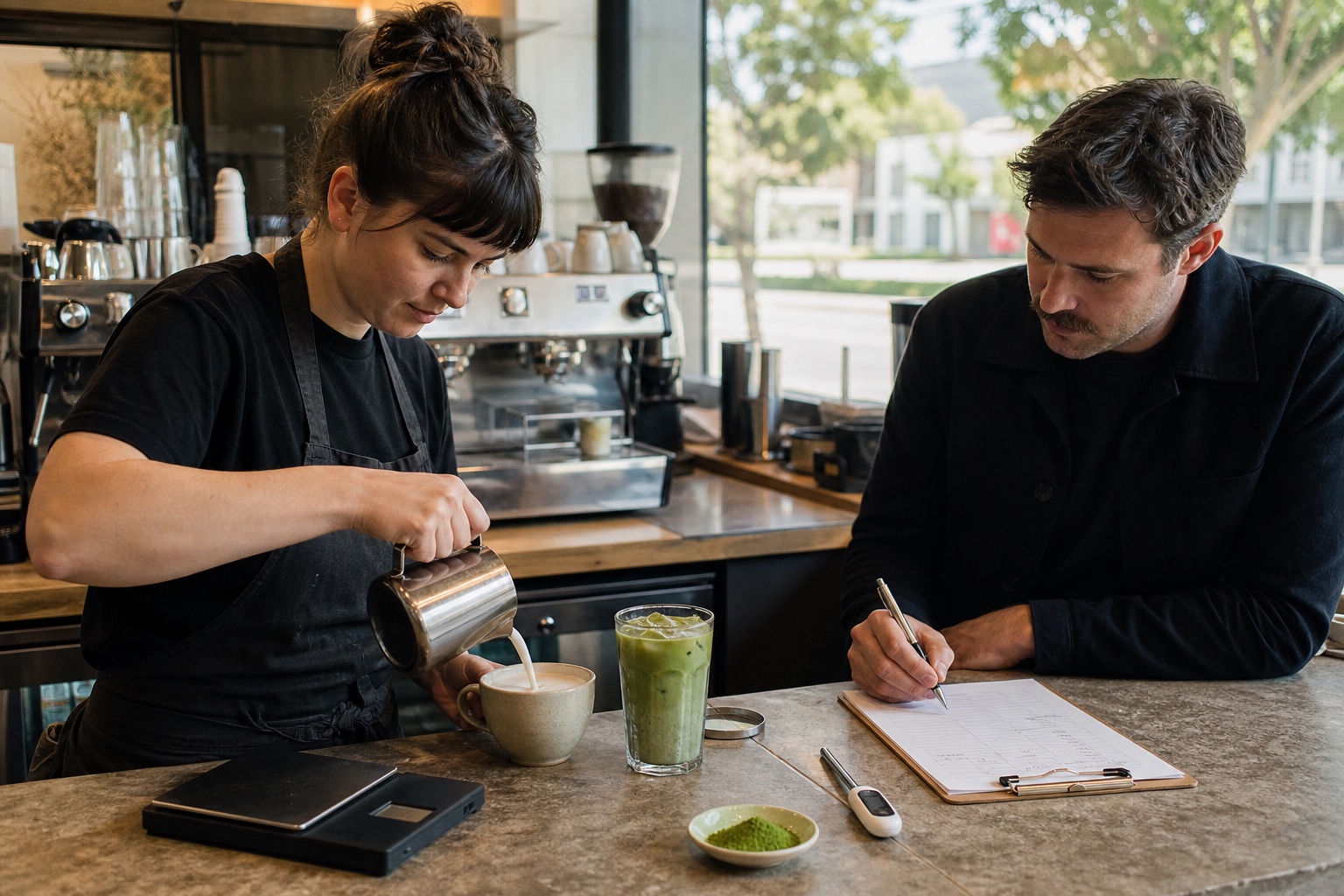
An Australian cafe chain should not approve custom matcha from a water tasting or a single presentation. Lock the exact oat beverage, cup sizes, matcha dose, sweetener, water temperature, mixing method and holding time; then compare hot, iced and takeaway builds with the same evaluation sheet. The supplier brief should also state the launch market, store count, first volume per flavor and the local ingredient-information questions that must be resolved before rollout.
USE THIS GUIDE IF
- Australian multi-site cafe and beverage groups
- Importers supplying one formula to several cafe locations
- R&D and operations teams validating hot and iced oat-milk service
NOT THE RIGHT ROUTE IF
- A single cafe seeking a few kilograms
- Teams that have not selected the oat beverage or serving format
- Projects without a path to one metric ton per approved flavor
PROJECT DECISIONS
Five decisions to lock before supplier sampling
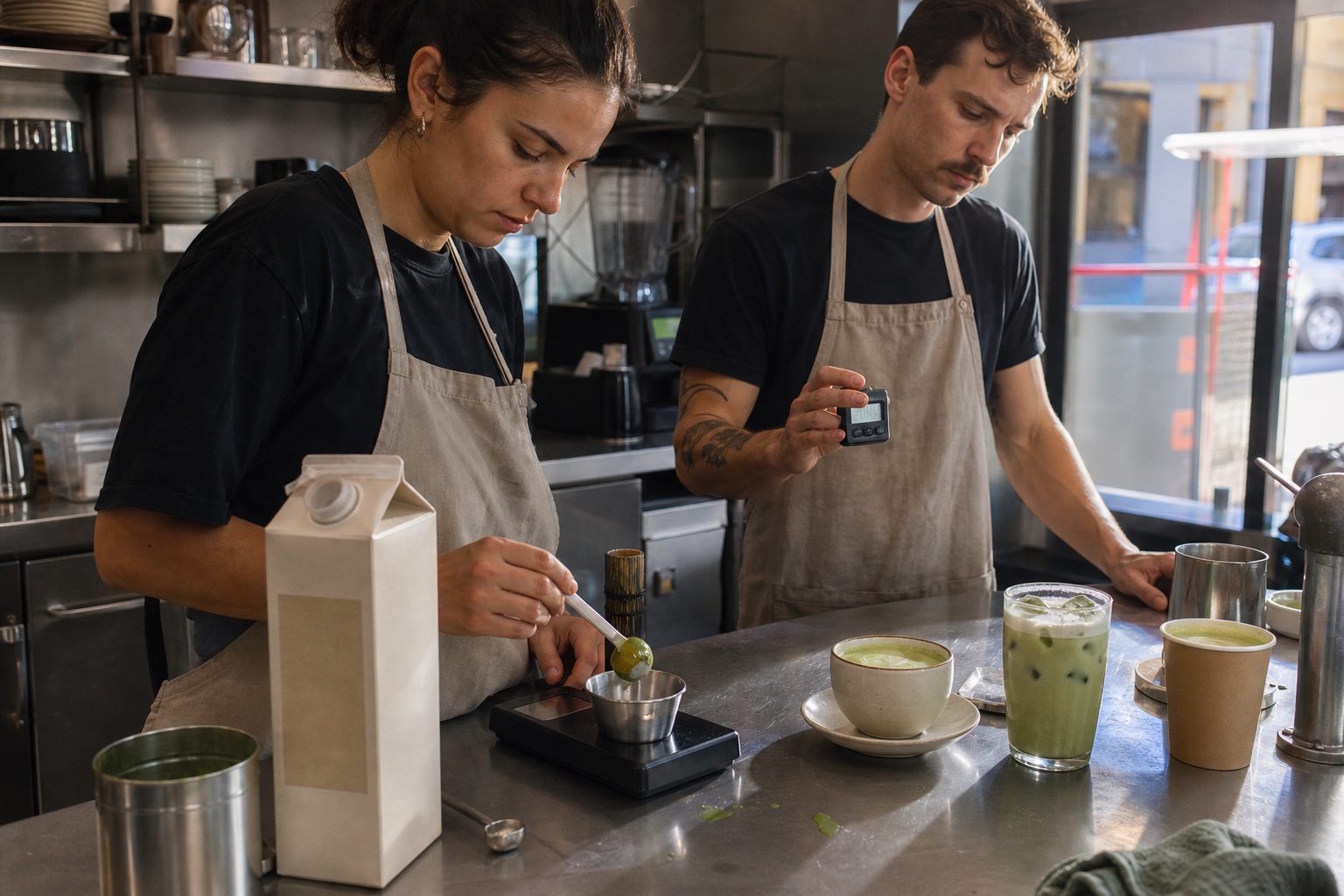
Start with one service brief, not a flavor name
A useful request begins with the finished drink. State whether the launch is a permanent menu item, seasonal feature or limited trial; identify the primary Australian cities or store format; and name the person who will approve taste, operations and purchasing. Then define the flavor direction in sensory language: for example, roasted and low-sweetness, vanilla-led with a clean tea finish, or fruit-led without a confectionery aftertaste.
The first supplier brief should nominate one priority build. If an iced 475 ml drink is expected to drive volume, make that the approval reference and treat the hot version as a second application check. Asking a supplier to make one powder work 'everywhere' without a priority build creates conflicting feedback and makes the two included adjustment rounds difficult to use well.
Lock the actual oat beverage before comparing matcha samples
Use the exact oat beverage intended for stores, not whichever carton is available during tasting. Published analysis of plant-based beverages has found substantial variation in composition between products, and FSANZ's 2023 review of oat beverages sold in Australia and New Zealand showed a wide range of declared sugar concentrations. Those findings do not predict the performance of a particular brand, but they do support a simple procurement rule: lock the matrix before judging the formula.
Record whether the carton is shaken, the volume used, refrigeration temperature and any sweetener already present in the build. If procurement later changes the oat beverage, trigger a focused recheck rather than assuming the approved matcha dose and sweetness will transfer unchanged.
Run separate hot, iced and takeaway builds
For the hot build, record matcha dose, water volume and temperature, whisking or blending time, oat-beverage volume, steaming range, sweetener and final serving volume. Evaluate the first sip and the drink after a realistic service delay. Do not turn these records into universal performance claims; they describe only the tested recipe and preparation method.
For the iced build, record ice mass or count, oat-beverage volume, matcha concentrate method, sweetener and assembly order. Check immediately and again after the expected handover or delivery interval. Use a plain takeaway cup in one trial because lids, ice melt and drinking through a small opening can change the experience compared with an open tasting glass.
Test the chain's operating reality, not only the R&D bench
The winning sample must be executable by store teams. Give a trained barista and a less experienced operator the same one-page build card. Record preparation time, number of tools, powder loss, rework and whether the dose can be measured consistently during a busy period. A formula that needs a fragile sequence or unusually long mixing step may be unsuitable even when the controlled tasting is attractive.
Run the same build in at least two representative store setups before commercial approval. This is an evaluation recommendation, not a claim that a formula is already stable across locations. The decision record should keep the approved formula code, oat beverage, recipe, equipment, cup format and acceptance notes together so purchasing and operations refer to the same target.
Include Australian ingredient-information questions in the brief
For Australia, ask the responsible local food-compliance adviser to review the finished product and service format. FSANZ states that required allergen declarations also apply to foods supplied at cafes or as takeaway: where a label is not required, the information must be displayed with the food or provided to the purchaser on request using the required names. Oats must be declared when present and containing gluten; milk, soy and other relevant ingredients also require consideration when present.
A matcha supplier should provide accurate ingredient and specification documents for its own material, while the Australian buyer remains responsible for assessing the finished menu item, the chosen oat beverage, other additions and local presentation. Avoid unsupported 'gluten-free', allergen-free or clean-label language until the complete product and supply-chain evidence has been reviewed.
Turn test notes into two useful adjustment rounds
After each tasting, consolidate feedback into a single decision sheet. Separate observations from requested action: 'tea finish disappears after ice melt' is an observation; 'increase bitterness' may be the wrong solution if aroma, dose or sweetness is the real cause. Rank each issue by importance and identify which hot or iced build produced it.
XIAO TEA's USD 1,000 development route covers up to five flavor directions, 50 g per flavor, international sample courier and two formula-adjustment rounds after sample receipt. If the project becomes a commercial order, USD 500 is credited against the goods payment. Approved flavors enter production at a one-metric-ton MOQ per flavor, so the final decision should combine sensory fit, store execution, documentation and credible volume—not taste alone.
BEFORE FORMULA APPROVAL
Keep the conclusion tied to the tested application.
Commercial fees and scope reflect the current XIAO TEA offer. Application performance must be evaluated in the buyer's agreed product system. This page does not make an absolute claim about color, dispersion, stability, certification, regulatory status or production capacity.
- Author
- XIAO TEA Application & Commercial Team
- Published
- 20 August 2026
- Review trigger
- Commercial terms, application evidence, regulatory sources or process scope changes
REFERENCE SOURCES
Official and primary references
RELATED QUESTIONS
Questions buyers ask next
Should hot and iced oat-milk matcha use the same formula?
They can share one formula direction, but the two serving builds should be evaluated separately because temperature, ice dilution, foam and serving format change the finished drink.
Can we test several oat-beverage brands in the standard development scope?
The standard scope is built around one agreed application matrix. Testing several oat beverages expands the comparison and should be agreed before development starts.
What should an Australian cafe buyer send with the RFQ?
Send the exact oat beverage, hot and iced recipes, cup sizes, target flavor, target market, store format, expected first volume per flavor, launch timing and any ingredient or label constraints.
What is the custom production MOQ?
The commercial MOQ is one metric ton for each approved flavor or formula entering production.