
BRAZIL · CAFE CHAINS · HOT & ICED LATTE
How Brazilian cafe chains should brief doce-de-leite-style and toasted-coconut matcha lattes
An application and procurement brief for Brazilian cafe groups developing one custom flavored matcha across hot and iced caramelized-dairy and toasted-coconut latte service.
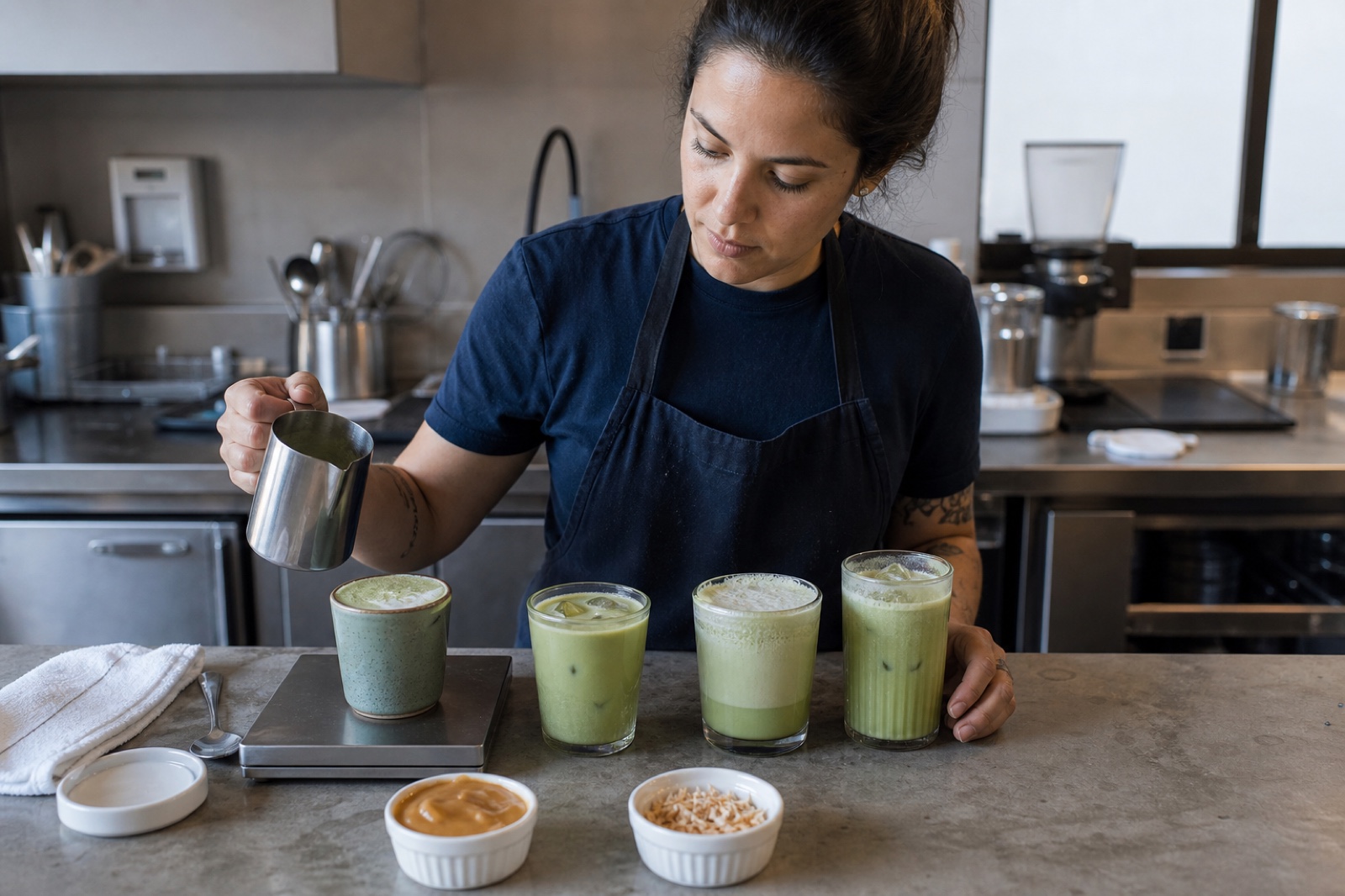
A Brazilian cafe chain should lock the actual milk or plant-based beverage, caramelized-dairy input, coconut input, sweetness, matcha dose, hot and iced cup builds, mixing tools and handover time before requesting samples. Compare candidates in the finished drinks with one score sheet, then ask different store operators to repeat the preferred direction using normal equipment. Powder aroma or one showcase cup cannot establish tea recognition, service repeatability, allergen control, nutrition information or finished-product label suitability.
USE THIS GUIDE IF
- Brazilian multi-site cafe, bakery-cafe and hotel foodservice groups
- R&D, operations and procurement teams defining hot and iced matcha latte service
- Projects with a fixed primary cup and a credible path to one metric ton per approved flavor
NOT THE RIGHT ROUTE IF
- Consumers or single outlets seeking a few kilograms of ready-made powder
- Teams that have not selected the milk base, caramelized-dairy input or coconut format
- Projects asking a powder supplier to approve the finished Brazilian menu name, nutrition information or allergen controls
PROJECT DECISIONS
Seven decisions to lock before latte sampling
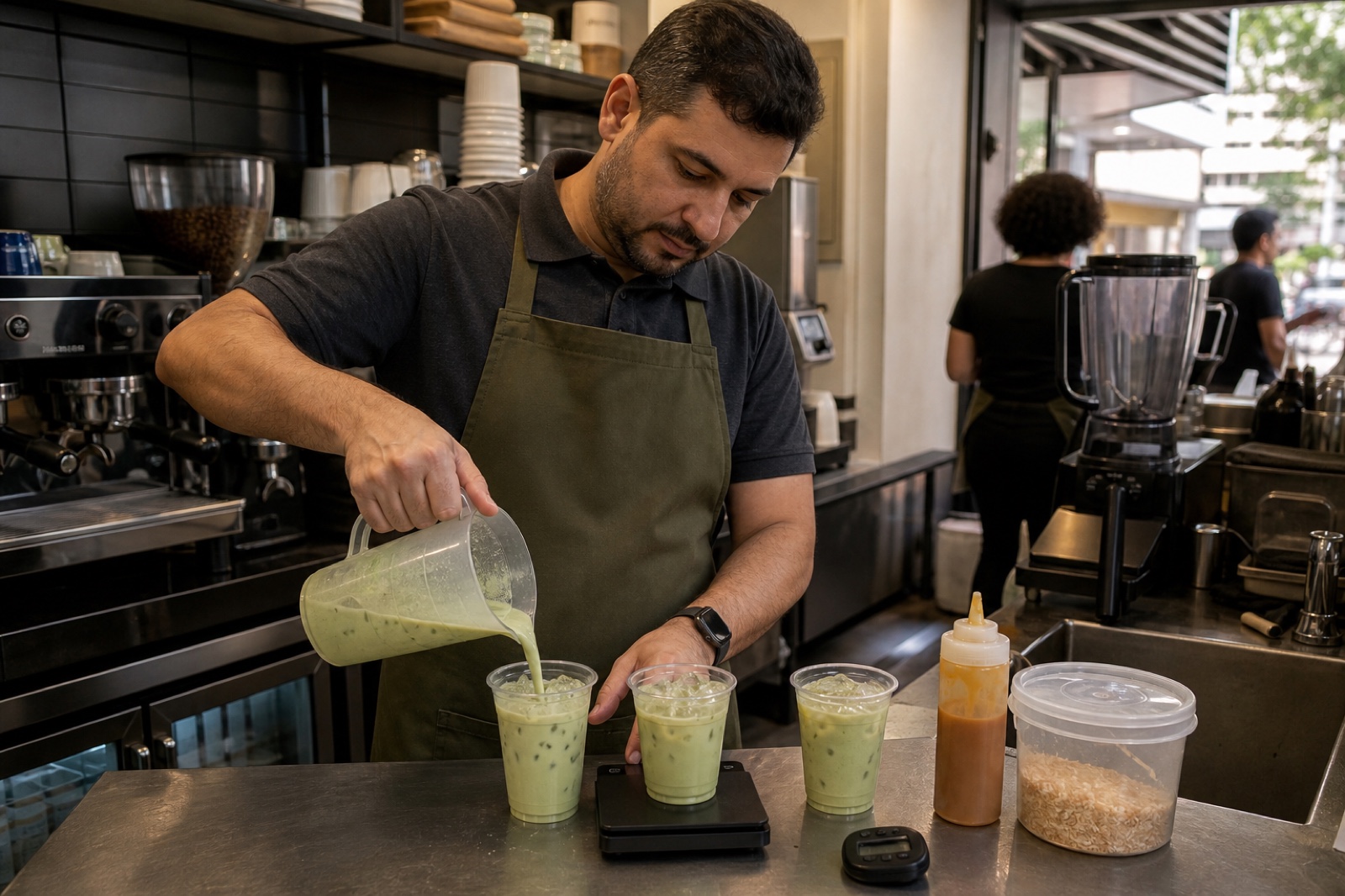
Define the finished menu item before choosing a flavor direction
Begin with the drink the customer will receive. State whether the primary approval reference is a hot dine-in latte, an iced takeaway drink or another fixed format; name the cup volume, intended milk base, sweetening route, service channel and time between preparation and first sip. If both hot and iced versions will launch, select one as the commercial reference and treat the other as a required transfer check. A request for one powder that works everywhere without a priority cup produces contradictory feedback.
The brief should identify the Brazilian cities or store formats in scope, expected first volume, launch timing and the owners of sensory, operations, purchasing and food-information decisions. A doce-de-leite-style and toasted-coconut matcha latte is a development direction, not proof of a national trend. The buyer must validate demand, price and menu positioning. XIAO TEA's task is to develop the supplied flavored-matcha direction against the declared cup and operating method.
Give matcha, caramelized dairy and toasted coconut separate sensory jobs
Write a role map instead of asking for a stronger flavor. The matcha base should remain recognisable through milk, ice and sweetness and finish as tea rather than only green color. The caramelized-dairy direction can provide cooked-milk depth and sweetness, but excessive intensity can flatten tea aroma or leave a heavy finish. Toasted coconut can bridge the roasted notes and matcha, yet a fatty or perfumed coconut impression can dominate the cup if the exact input is not controlled.
This application logic is what separates a custom flavored matcha specialist from a catalogue supplier. XIAO TEA matches tea-base character and flavor architecture to the buyer's actual matrix, then uses structured finished-cup feedback for adjustment. It does not relabel a general latte powder as Brazilian, and it does not assume that a formula approved with fresh milk will transfer unchanged to an oat beverage, a coconut beverage, a different sauce or a higher-ice takeaway build.
Lock the actual matrix and change one planned variable at a time
Use the intended milk or plant-based beverage throughout the first comparison. Record the exact product, storage temperature and amount. Lock the caramelized-dairy supplier item and format, coconut input, sweetener, matcha dose, water volume and temperature, mixing tool, mixing time, assembly order and finished serving weight. A sauce, concentrated dairy preparation and dry flavor system can differ in water, sugar, milk solids and service behaviour; a coconut syrup, coconut beverage and particulate topping are equally different controls.
Prepare coded candidates from one common recipe and change only the flavored-matcha direction during the first screen. Evaluate tea recognition, cooked-milk depth, coconut character, sweetness, bitterness, aroma balance, color, mouthfeel and aftertaste with one score sheet. Keep commercial formulas inside the buyer's controlled project record. Powder color, dry aroma and a carefully styled cup may help the team discuss directions, but none should replace a blinded finished-drink comparison.
Test hot and iced builds separately, then repeat them in store conditions
For the hot cup, record the matcha concentrate method, water temperature, milk volume, steaming range, sweetener, sauce or flavor addition and final cup volume. Review the first sip and a defined handover checkpoint. For the iced cup, record ice mass or count, cold liquid volume, concentrate method, assembly order and the same defined handover checkpoint. Ice dilution and lower drinking temperature can alter sweetness, aroma release and tea recognition, so matching the ingredient list does not make the two builds equivalent.
Move one or two preferred directions from the development bench to normal cafe equipment. Give a trained operator and a less experienced operator the same one-page build card. Record preparation time, weighing or portioning method, powder loss, visible streaks, cup-to-cup variation and rework. Compare multiple consecutive builds rather than one presentation cup. This operator exercise is a buyer-run application check, not evidence of guaranteed performance across stores or equipment that has not been tested.
Prepare the Brazilian product-information handoff before final approval
ANVISA's food-labeling guidance explains that labels carry information such as ingredients, expiry and nutrition and must not present false or misleading information. Its current nutrition-labeling materials point businesses to RDC 429/2020 and IN 75/2020, including the nutrition table and front-of-pack nutrition rules. ANVISA's allergen guidance identifies RDC 727/2022 as the current framework for allergen declarations. The responsible Brazilian business should review the exact finished product, sale format and latest requirements with qualified local support.
MAPA's technical regulation defines the identity and quality of Doce de Leite and reserves that product name for qualifying dairy products. A menu or development phrase such as 'doce-de-leite-style' must not be treated as proof that the supplied powder or finished drink has that legal product identity. XIAO TEA can provide accurate ingredient and specification information for its own material. The Brazilian responsible party must decide the finished menu name, ingredient statement, allergen controls, nutrition information, claims and any packaged-product obligations from the complete recipe and current rules.
Use the two adjustment rounds to reach one documented commercial direction
After each comparison, consolidate all functions' comments into one decision sheet tied to the exact milk, caramelized-dairy and coconut inputs, hot or iced build, dose and checkpoint. 'The coconut becomes perfumed while matcha disappears after ice dilution' is actionable; 'make it more Brazilian' is not. Rank the issues, separate observations from proposed solutions and preserve the candidate code, preparation record, photographs of the declared cup and approval notes for the next buyer-run verification.
XIAO TEA's current USD 1,000 development route covers up to five flavor directions, 50 g per flavor, international sample courier and two formula-adjustment rounds after sample receipt. If the project becomes a commercial order, USD 500 is credited against the goods payment. Commercial production starts at one metric ton per approved flavor. Final release should combine finished-cup sensory fit, repeatable store preparation, accurate supplier documentation, responsible Brazilian information review and a credible volume path—not taste alone.
BEFORE FORMULA APPROVAL
Keep the conclusion tied to the tested application.
Commercial fees and scope reflect the current XIAO TEA offer. Application performance must be evaluated in the buyer's agreed product system. This page does not make an absolute claim about color, dispersion, stability, certification, regulatory status or production capacity.
- Author
- XIAO TEA Application & Commercial Team
- Published
- 27 August 2026
- Review trigger
- Commercial terms, application evidence, regulatory sources or process scope changes
REFERENCE SOURCES
Official and primary references
RELATED QUESTIONS
Questions buyers ask next
Should a cafe approve this flavored matcha from powder or water tasting?
No. Use the intended milk, caramelized-dairy and coconut inputs, sweetness, dose, tools and cup. Powder or water tasting can screen directions, but finished hot and iced drinks should control approval.
Can one formula be assumed to perform the same in hot and iced lattes?
No. Temperature, ice dilution, aroma release, foam and handover time change the finished experience. Test both builds separately and select one primary approval reference.
Can XIAO TEA approve the Brazilian menu name and finished-product label?
No. XIAO TEA supplies accurate ingredient and specification information for its material. The responsible Brazilian business must review the complete recipe, product identity, allergens, nutrition information, claims and sale format.
What should the first Brazil cafe-chain development brief include?
Include the primary hot or iced cup, exact milk, caramelized-dairy and coconut inputs, sweetness, matcha dose, tools, assembly order, handover interval, store format, first volume per flavor, timing and approval roles.