
SWEDEN · SPECIALTY TEA BRANDS · PRIVATE-LABEL MATCHA LATTE
How Swedish tea brands should brief cardamom-vanilla matcha latte sticks and refill pouches
A private-label development brief for Swedish tea brands defining cardamom-vanilla matcha latte powder from home preparation and serving dose through stick-pack, refill-pouch and Swedish food-information handoff.
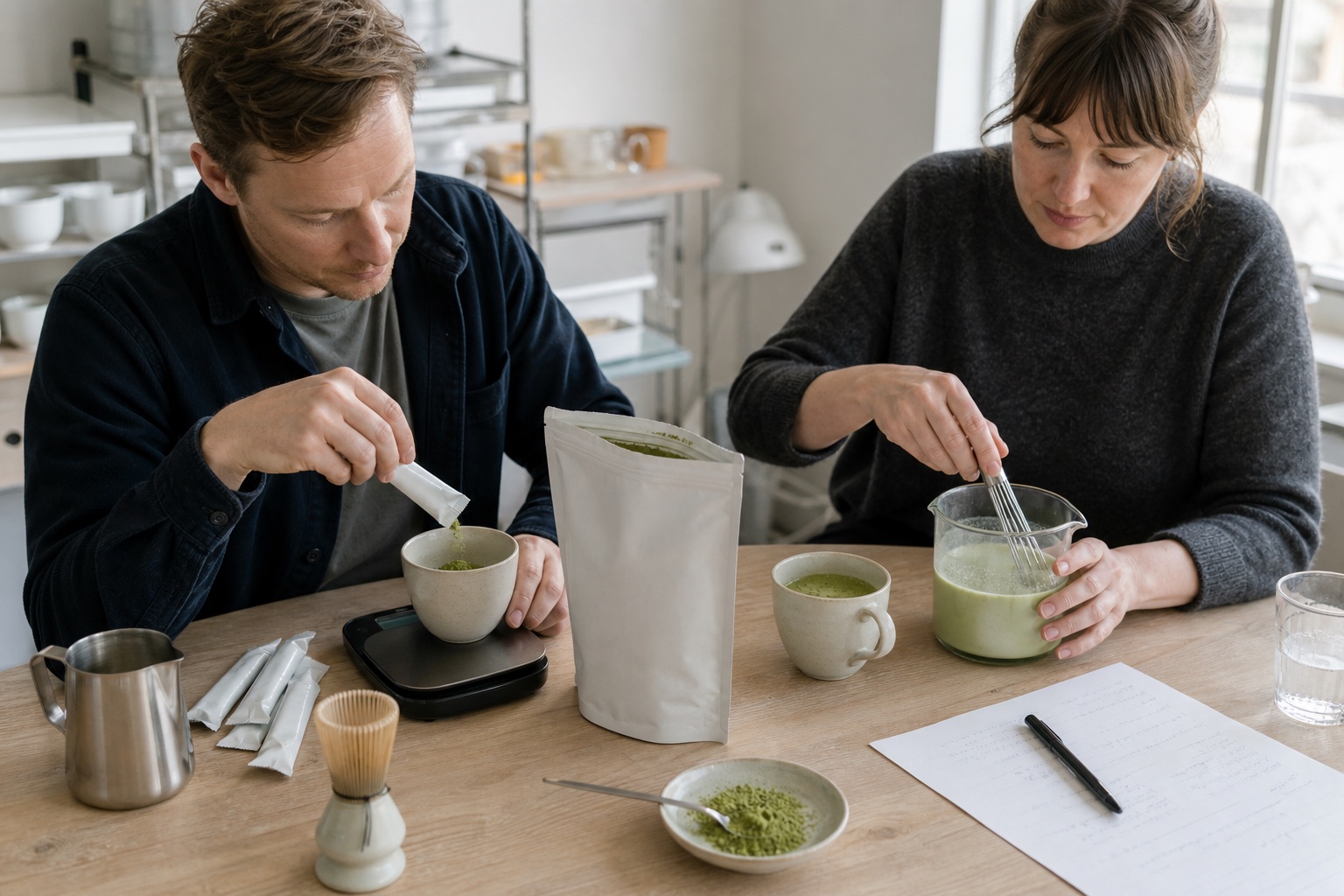
A Swedish tea brand should define one cardamom-vanilla matcha latte recipe and one primary home-preparation method before choosing sticks or a refill pouch. Lock the powder dose, liquid volume, water temperature, dairy or oat-drink reference, sweetness and mixing tools; then compare coded directions in that exact cup. Treat stick fill and pouch reclosure as separate packer decisions. XIAO TEA develops the matcha base and flavor architecture around the controlled application, while the responsible Swedish food business validates the finished formula, Swedish information, allergens, packaging and shelf life.
USE THIS GUIDE IF
- Swedish specialty tea, powdered-beverage and private-label retail brands
- Product, quality and procurement teams briefing a home-prepared matcha latte
- Projects with a selected packer, a defined launch format and a path to one metric ton per approved flavor
NOT THE RIGHT ROUTE IF
- Consumers or small retailers seeking a few kilograms of finished sachets
- Teams that have not decided whether the product is flavored matcha or a complete sweetened latte blend
- Projects asking the ingredient supplier to guarantee finished-pack shelf life or approve Swedish retail artwork
PROJECT DECISIONS
Seven decisions to lock before private-label sampling

Choose the retail product before choosing the flavor direction
Begin by deciding what the consumer will buy. A flavored matcha powder may require the consumer to add a measured sweetener and milk or oat drink, while a complete latte blend may already contain sugar, dairy or plant-derived ingredients, carriers or other functional components. State the intended serving size, net quantity, number of servings, retail channel and primary preparation. If the brand wants both stick packs and a refill pouch, nominate one format as the commercial reference and use the second as a controlled transfer check.
Describe the sensory target in jobs rather than adjectives. For example, the first aroma can be fresh cardamom, vanilla can bridge the sweet milk phase into the tea, and matcha should remain recognizable through the finish without an excessively bitter or perfumed result. Define the intended sweetness, body, green appearance and aftertaste. This is a development framework for a Swedish buyer, not a claim that cardamom-vanilla matcha is a national trend or evidence of a completed customer project.
Give matcha, cardamom and vanilla separate sensory roles
Cardamom can provide a bright aromatic lift, but too much can dominate the first sip, read as medicinal or make the tea seem thinner. Vanilla can soften the transition between the milk matrix and green-tea bitterness, yet a heavy vanilla direction may flatten matcha identity and make different bases taste generic. The matcha base must contribute more than color: it should supply the tea body, bitterness structure and finish that the brand wants consumers to recognise after dilution.
XIAO TEA is a custom flavored matcha development specialist rather than a catalogue reseller. The work starts from the target cup, evaluates a suitable matcha base against that matrix and builds the aroma balance around the buyer's dose, liquid and preparation method. Feedback is then used to adjust a documented direction. A powder approved in water is not automatically approved in dairy, oat drink, a sweetened complete mix or another serving size, so transfer checks remain tied to named conditions.
Lock one home-preparation method and compare coded directions
Write a short preparation specification before the first tasting: powder mass, liquid type and brand or agreed technical description, liquid volume, temperature range, mixing order, whisk or shaker, mixing time and serving temperature. Select dairy milk or one oat drink as the primary approval matrix. If both matter commercially, keep one as the approval reference and run the other as a transfer check. Do not change sweetness, temperature and mixing equipment while comparing flavor candidates.
Prepare each coded direction at least twice with ordinary consumer tools and record dispersion, foam, aroma sequence, tea recognition, spice intensity, sweetness, bitterness, texture and residue. A result that works only with laboratory shear is not a sound home-use instruction. Preserve the candidate code, date, powder dose, liquid, tools and observations. The exercise supports the tested preparation; it does not prove identical behavior in every household water, dairy product, plant beverage or appliance.
Add one delayed check at the brand's intended drinking interval rather than scoring only the freshly mixed cup. Record whether foam collapses, powder settles, cardamom becomes sharper, vanilla becomes dominant or the matcha finish disappears as the drink cools. This gives the development team a practical comparison without pretending to establish shelf life or universal consumer performance.
Treat stick packs and refill pouches as different packer decisions
A stick pack can control the powder mass for one serving and simplify the instruction, but its target fill weight, powder flow, dust behavior, film dimensions, seal area and filling tolerance must be reviewed with the selected contract packer. A refill pouch offers flexible serving sizes and lower pack count, yet the brand needs a clear measuring method, a workable opening and reclosure, storage instructions and a decision on how many uses the pack should support. Do not approve either format from a visual mock-up alone.
Give the packer the final candidate formula rather than a substitute powder, because aroma additions, sugar or carriers can change bulk density and flow. Ask the packer to define pilot checks for fill control, seal integrity, coding, pack condition and retained samples within the brand's qualified food-safety and shelf-life program. XIAO TEA can provide information about its supplied flavored-matcha material, but it does not prescribe a universal film, barrier, seal setting or durability period for an untested finished pack.
The buyer should also reconcile the approved serving dose with the nominal pack count and label instructions. A stick must deliver the declared cup without requiring an unexplained top-up, while a pouch needs a repeatable scoop or weighed-dose instruction. Document any packer tolerance that could materially change sweetness, aroma intensity or tea recognition, then decide whether the formula or the fill specification needs adjustment.
Prepare Swedish food information before artwork release
The Swedish Food Agency's current guidance for prepacked foods lists mandatory information including the food name, ingredient list, highlighted allergens, quantitative ingredient declarations where applicable, net quantity, durability date, storage or use conditions, responsible business contact, origin where required, instructions for use and nutrition declaration. The exact requirements depend on the complete finished product and how it is sold. Regulation (EU) No 1169/2011 provides the wider EU food-information framework, including the requirement that information must not mislead.
For online sales, the Swedish Food Agency states that mandatory food information, apart from date marking, must be available before purchase and that mandatory information must be provided in Swedish. The responsible Swedish food business should review the current rules, product name, ingredients, allergen emphasis, nutrition, claims, instructions and e-commerce display before artwork or listing release. XIAO TEA supplies accurate ingredient and specification information for its material; it does not approve the finished Swedish label or online product page.
Converge from flavor directions to one controlled commercial brief
After the first evaluation, combine product, quality, packer and purchasing feedback in one decision record. Useful comments identify the tested cup and requested change, such as 'cardamom dominates the first aroma in the 200 ml oat-drink preparation' or 'vanilla remains but tea recognition falls after the declared hot-water step'. Requests to make the product simply more Nordic or more premium are not actionable. Rank issues, keep the reference recipe fixed and tie each revision to a candidate code.
XIAO TEA's current USD 1,000 development route covers up to five flavor directions, 50 g per flavor, international sample courier and two formula-adjustment rounds after sample receipt. If the project becomes a commercial order, USD 500 is credited against the goods payment. Commercial production starts at one metric ton per approved flavor. Release should combine controlled home-preparation fit, packer feasibility, responsible Swedish information review and a credible volume plan—not one attractive tasting or an unverified package concept.
BEFORE FORMULA APPROVAL
Keep the conclusion tied to the tested application.
Commercial fees and scope reflect the current XIAO TEA offer. Application performance must be evaluated in the buyer's agreed product system. This page does not make an absolute claim about color, dispersion, stability, certification, regulatory status or production capacity.
- Author
- XIAO TEA Application & Commercial Team
- Published
- 29 August 2026
- Review trigger
- Commercial terms, application evidence, regulatory sources or process scope changes
REFERENCE SOURCES
Official and primary references
RELATED QUESTIONS
Questions buyers ask next
Should a Swedish tea brand choose stick packs or a refill pouch first?
Choose one primary format before development. Sticks control one powder mass but require packer fill and seal review; refill pouches need a consumer dosing, reclosure and storage plan.
Can one cardamom-vanilla formula be approved for both dairy milk and oat drink?
Do not assume so. Approve one defined preparation as the reference and run a controlled transfer check in the second matrix because flavor release, sweetness, body and tea recognition can change.
Does XIAO TEA approve the Swedish label or finished-pack shelf life?
No. XIAO TEA provides ingredient and specification information for its supplied material. The responsible food business and qualified partners validate the complete formula, Swedish information, packaging, food safety and shelf life.
What should the first Swedish private-label RFQ include?
Include the product type, primary preparation, powder dose, liquid, sweetness, cardamom and vanilla roles, stick or pouch format, target net quantity, first volume per flavor, launch timing and approval owners.