SINGAPORE · TEA BRANDS · PANDAN-VANILLA RETAIL MATCHA
How Singapore tea brands should brief pandan-vanilla matcha for retail pouches and sachets
A private-label development brief for Singapore tea brands defining pandan-vanilla flavored matcha from product type and home preparation through retail pack and label handoff.
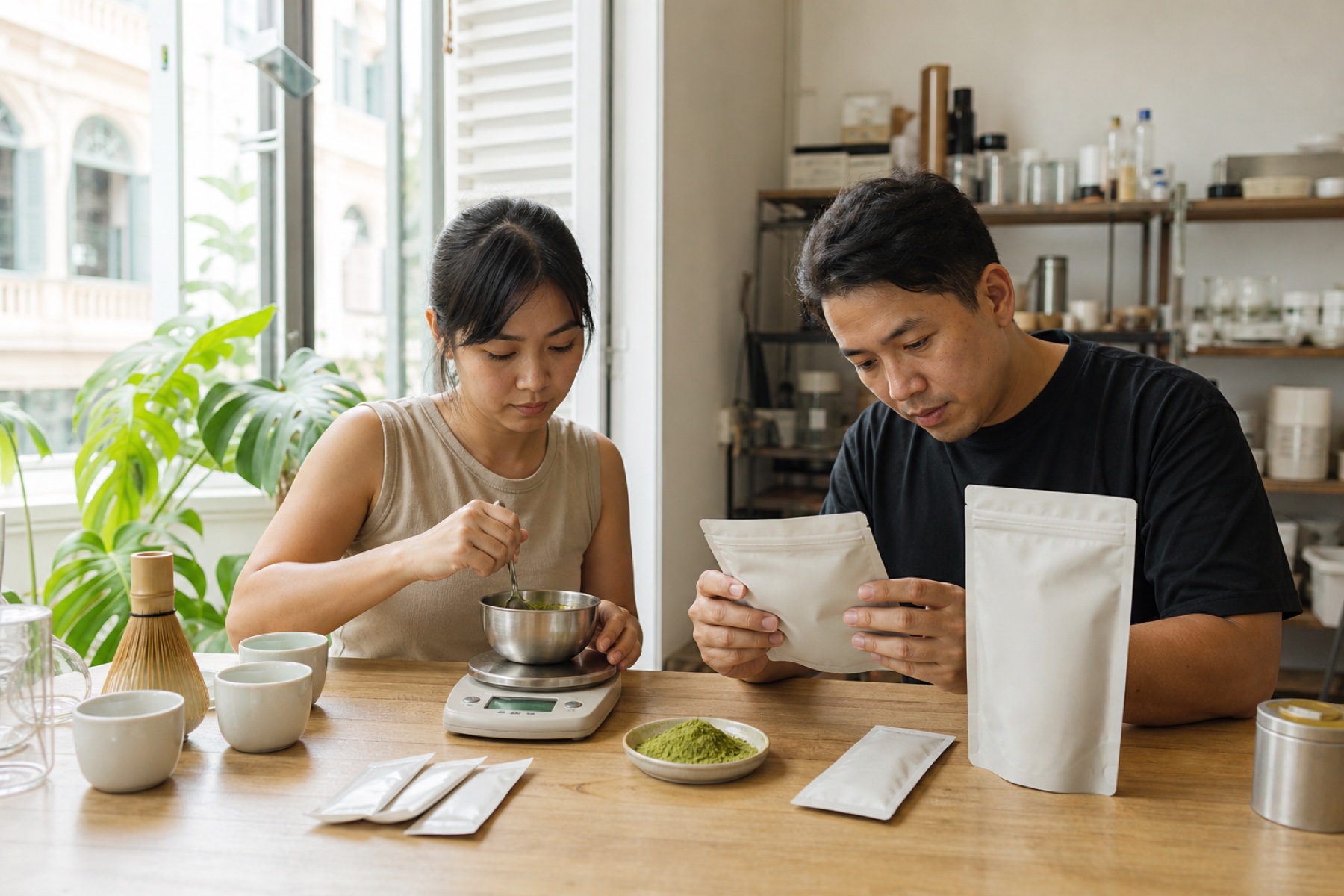
A Singapore tea brand should define whether pandan-vanilla matcha is an unsweetened flavored matcha or a sweetened latte-style mix before requesting samples. Lock one home-preparation route, serving dose, sweetener and carrier system, refill-pouch or single-serve-sachet format, and the finished product's label owner. Then compare candidates with ordinary consumer tools and retain the exact pack and instruction used. Flavor approval alone does not establish filling performance, shelf life or Singapore label compliance.
USE THIS GUIDE IF
- Singapore specialty tea and powdered-beverage brands preparing a private-label retail launch
- Importers or distributors with a defined pouch or single-serve sachet format
- Product, quality and procurement teams with one preparation route and a credible commercial volume plan
NOT THE RIGHT ROUTE IF
- Retail consumers or shops seeking a few kilograms of ready-packed matcha
- Teams that have not chosen between flavored matcha and a complete sweetened premix
- Projects without a path to one metric ton per approved flavor
PROJECT DECISIONS
Seven decisions to lock before a retail-matcha sample brief
Decide the retail product before choosing the flavor sample
Start by naming what the consumer will buy. An unsweetened pandan-vanilla flavored matcha may ask the consumer to add a chosen sweetener and liquid; a complete latte-style mix may already include sugar, dairy-derived ingredients, plant-based ingredients or another carrier system. Those are different products with different dose, preparation, sensory and ingredient-information tasks. A request for a 'pandan matcha powder' without this distinction gives the developer no stable target.
The brief should state the intended Singapore channel, target net quantity, refill pouch or single-serve sachet, one primary preparation route, first commercial volume and who owns sensory, packaging, label and purchasing approval. Selecting pandan and vanilla is a product direction, not evidence that the concept has proven demand. The tea brand should validate the concept, price and channel with its own evidence before a commercial launch.
Build pandan, vanilla and matcha as separate sensory roles
Describe the flavor architecture in roles rather than asking for maximum aroma. Pandan can contribute a green, grain-like and soft sweet-aroma direction; vanilla can round the profile and extend perceived softness; the matcha base must still provide identifiable tea body, color and a coherent finish. The aim is not to use aroma to hide every bitter or vegetal note. The chosen matcha base, flavor system and intended sweetness have to be judged together in the finished cup.
Freeze the comparison controls: matcha dose, flavor direction, sweetener and carrier, liquid, water temperature, mixing tool and serving volume. If the first approval route uses water, do not replace it with oat beverage halfway through the comparison. If the brand intends a named dairy or plant beverage, record the exact product or buyer formula. XIAO TEA works as a custom flavored matcha specialist by matching the tea base and flavor roles to that declared application, then revising from the buyer's structured feedback rather than relabelling a catalogue powder.
Make the approved cup reproducible with ordinary home tools
Write a one-page preparation card before tasting. Record powder mass, liquid type and volume, water temperature where applicable, addition order, mixing tool, mixing time and any rest before drinking. Use the scale, scoop, whisk, shaker or spoon that a normal customer could reasonably use. A laboratory blender may help screen a formula but it should not be the only route if the retail instruction expects a consumer to shake or whisk by hand.
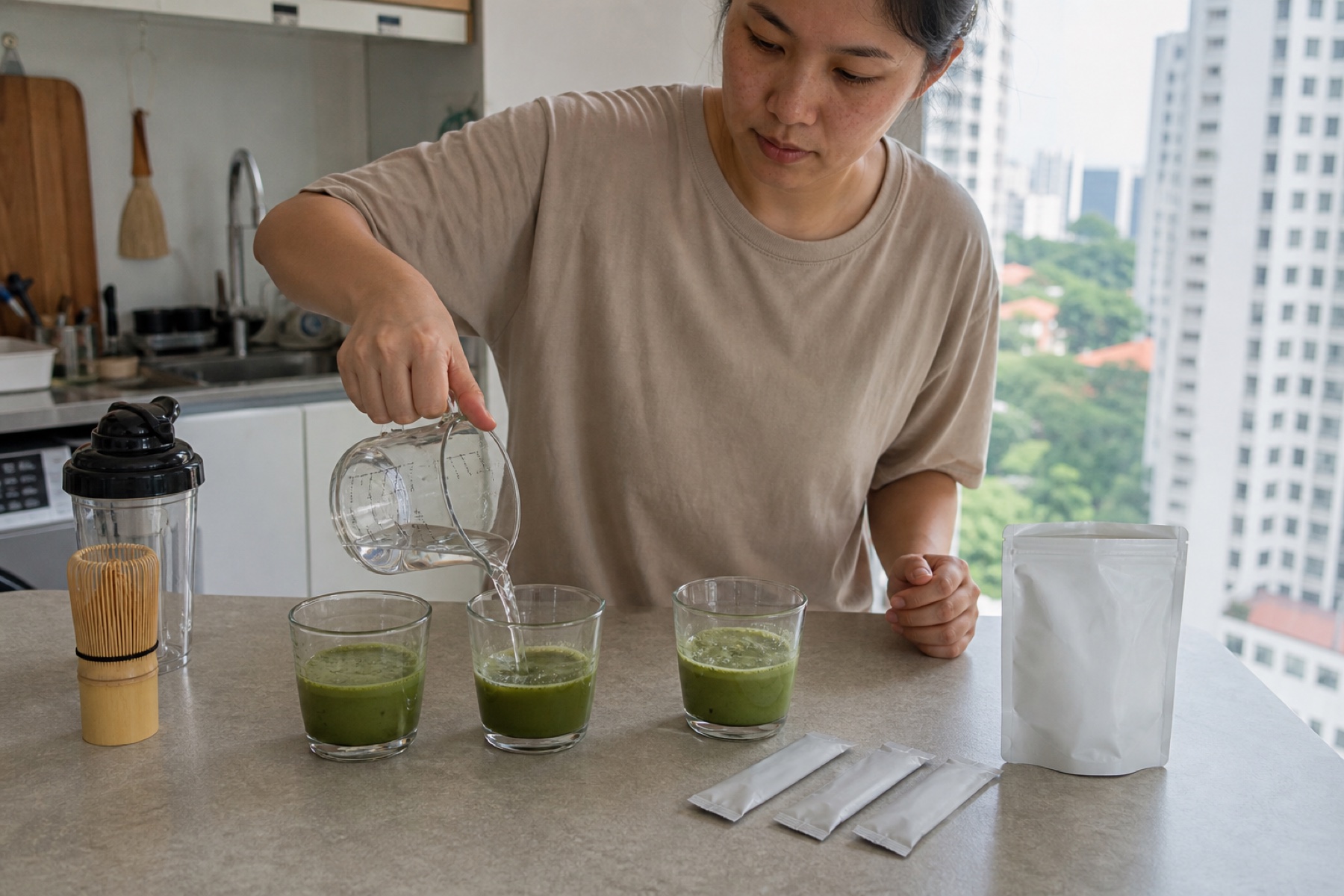
Prepare repeated coded cups from the same candidate and compare dry pockets, clumping, foam, color, pandan recognition, vanilla balance, sweetness, tea body and aftertaste. Record the observed result without converting it into a universal performance claim. The exercise supports an instruction for the tested product and tools; it does not prove that the powder behaves the same in every water, milk, plant beverage or preparation method.
Treat refill pouches and single-serve sachets as different pack decisions
A refill pouch allows flexible serving sizes, but the brand must decide how consumers measure the dose, how the opening is reclosed and what storage and use instructions the responsible business will validate. A single-serve sachet controls the powder mass more tightly, yet the target fill weight, powder flow, seal area, pack dimensions and filling tolerance must be reviewed with the selected contract packer. Do not approve the sachet only from an attractive mock-up.
Ask the packer to assess the finished formula in the intended equipment and selected material. Set retained-pack checkpoints that fit the brand's qualified packaging, food-safety and shelf-life program. At each checkpoint, record pack condition, powder appearance, clumping, aroma, preparation result and any chosen reclosure or serving-dose observation. This article does not prescribe a universal barrier material or shelf life because those conclusions depend on the exact formula, pack, process, storage and distribution route.
Prepare a Singapore label-information handoff before artwork release
The Singapore Food Agency states that all prepacked food sold in Singapore must meet the applicable general labelling requirements. Its consumer guidance says mandatory label information must be in English and includes an accurate name or description, a complete ingredient list in descending order by weight including applicable additives and hypersensitivity-causing ingredients, net quantity, a local business entity and the country of origin for imported food. The responsible brand should review the current rules for the exact finished product and sales format before releasing artwork.
SFA also states that mandatory information must be clear and legible, that the food name and pictures should be truthful, and that an image used only to illustrate use should be identified as a serving suggestion. Nutrition claims must be truthful and verifiable, and a Nutrition Information Panel is required in specified cases, including when certain nutrition or health claims are made. XIAO TEA can provide accurate ingredient and specification information for the flavored-matcha material it supplies; the Singapore importer or responsible food business must assess the complete formula, finished label, claims and pack.
Converge from sample direction to one controlled commercial brief
After the first evaluation, combine feedback into one decision record. Separate observations from requested changes: 'vanilla masks the tea finish in the declared water preparation' is useful; 'make it more premium' is not. Rank issues, identify the tested preparation and preserve the candidate code, dose, liquid, method, pouch or sachet reference and approval notes. The confirmed sample then becomes the basis for packer review, trial-scale checks, batch comparison and change control—not an automatic guarantee of line or shelf-life performance.
XIAO TEA's USD 1,000 development route covers up to five flavor directions, 50 g per flavor, international sample courier and two formula-adjustment rounds after receipt. If the project becomes a commercial order, USD 500 is credited against the goods payment. Commercial production starts at one metric ton per approved flavor. A sound release decision combines sensory fit, repeatable home preparation, packer feasibility, label-information handoff and a credible volume plan; it does not rely on a flavor name or a single fresh tasting.
BEFORE FORMULA APPROVAL
Keep the conclusion tied to the tested application.
Commercial fees and scope reflect the current XIAO TEA offer. Application performance must be evaluated in the buyer's agreed product system. This page does not make an absolute claim about color, dispersion, stability, certification, regulatory status or production capacity.
- Author
- XIAO TEA Application & Commercial Team
- Published
- 24 August 2026
- Review trigger
- Commercial terms, application evidence, regulatory sources or process scope changes
REFERENCE SOURCES
Official and primary references
RELATED QUESTIONS
Questions buyers ask next
Should a Singapore tea brand choose a refill pouch or single-serve sachet first?
Choose the primary format before development. A refill pouch needs a consumer dosing and reclosure plan; a sachet locks one serving but adds packer, fill-weight and seal review.
Can one pandan-vanilla matcha formula be approved for water, dairy and plant beverages?
Do not assume it can. Select one primary preparation route for approval and run focused checks in any additional matrix before claiming the same result.
Does XIAO TEA approve the finished Singapore retail label or shelf life?
No. XIAO TEA provides ingredient and specification information for its supplied material. The responsible food business and qualified partners must review the complete formula, label, packaging, food-safety and shelf-life program.
What should the first Singapore private-label RFQ include?
Include product type, primary preparation, dose, liquid, sweetener and carrier system, pouch or sachet, target net quantity, first volume per flavor, launch timing and the owners of sensory, label and commercial approval.