
CANADA · BAKERY MANUFACTURERS · BLUEBERRY MATCHA
How Canadian bakery manufacturers should brief blueberry flavored matcha for muffins and frozen bakery lines
A production-focused brief for Canadian bakery teams developing blueberry flavored matcha for muffins, loaf cakes and chilled or frozen distribution.
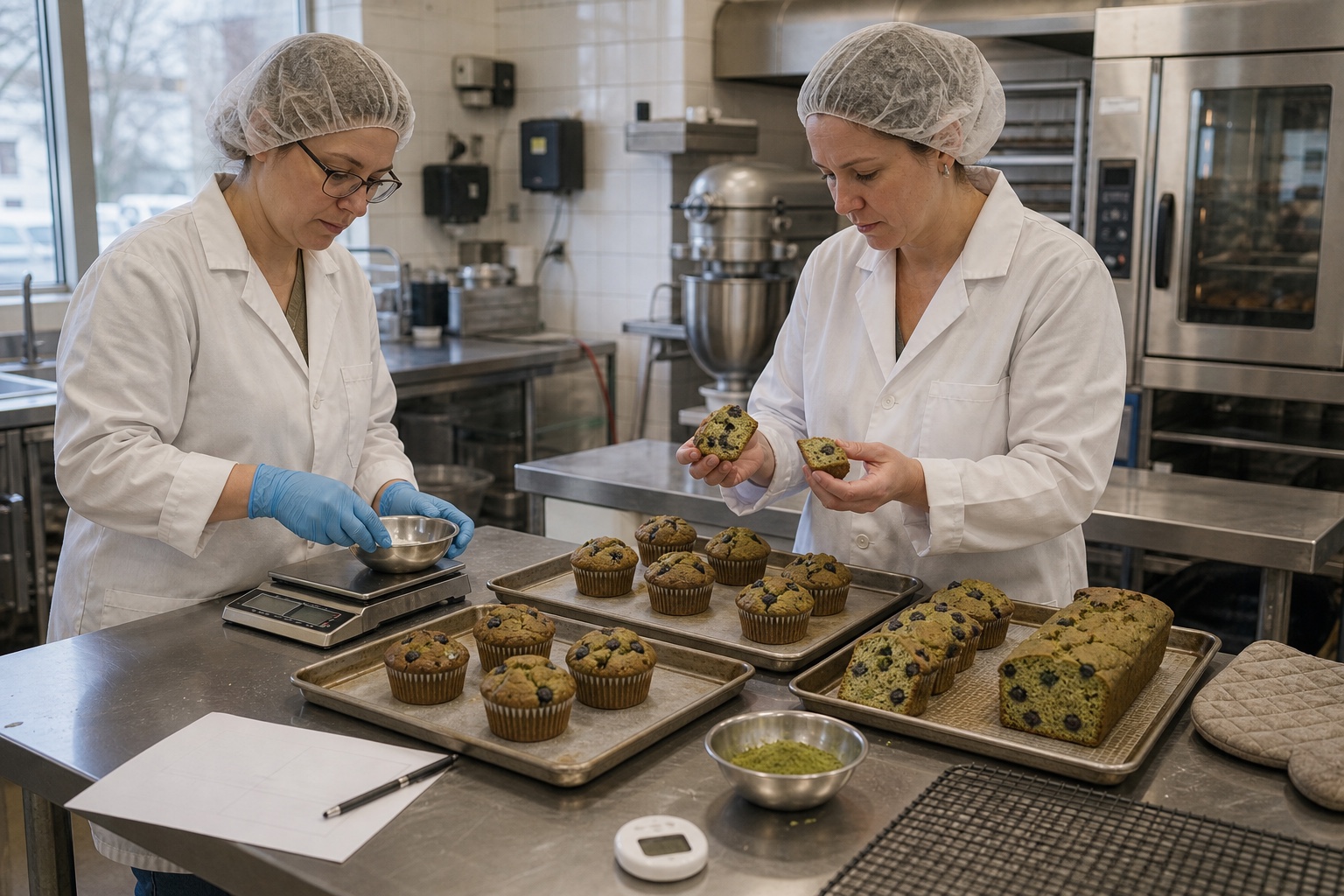
A Canadian bakery manufacturer should approve blueberry flavored matcha in the finished muffin or loaf—not by smelling the powder. Lock the flour, fat, sugar, leavening, blueberry format, batter weight, bake profile, cooling time and distribution route before comparing samples. If the product will be sold prepackaged, keep the formula decision connected to the Canadian buyer's bilingual ingredient, allergen, Nutrition Facts and front-of-package review. The approved record should cover sensory fit, line handling and the exact process tested.
USE THIS GUIDE IF
- Canadian industrial bakeries and central bakery kitchens
- Private-label bakery brands preparing a prepackaged retail launch
- R&D, quality and procurement teams validating fresh, chilled or frozen muffins and loaf cakes
NOT THE RIGHT ROUTE IF
- A home baker or cafe seeking a few kilograms
- Teams that have not chosen a primary baked-product format
- Projects without a path to one metric ton per approved flavor
PROJECT DECISIONS
Six decisions to lock before blueberry-matcha sampling
Translate the flavor idea into one manufacturing brief
Begin with the commercial product: a 95 g retail muffin, a sliced loaf, a thaw-and-sell item or another clearly defined format. State whether the blueberry note should resemble cooked fruit, a bright berry top note or a restrained bakery aroma, and define how much matcha character must remain after baking. The brief should also identify the destination provinces, package format, expected first volume and the people who approve taste, quality, operations and purchasing.
A supplier catalogue cannot answer those questions. XIAO TEA's role as a custom flavored matcha specialist is to match the matcha base and flavor direction to the named application, then use the buyer's finished product as the decision point. That is different from sending a generic culinary matcha and asking the bakery to absorb every process conflict alone.
Lock the blueberry input and batter before comparing samples
Use the intended blueberry input throughout the trial. Frozen berries can add localized moisture; dried pieces, puree and a standardized flavor system behave differently in mixing and baking. These are not interchangeable references. Record supplier item, preparation step, dose and addition point, but keep confidential formulations inside the buyer's controlled project record rather than on a public page.
Freeze the remaining batter variables while comparing flavored-matcha directions: flour system, fat, sugar, liquid, leavening, salt, mixing sequence, batter rest, deposit weight and pan. If the bakery changes the sweetener or berry format midway through the first comparison, it becomes difficult to tell whether the matcha formula or the product matrix caused the result. A clean experiment changes one planned variable at a time.
Evaluate after baking, cooling and the intended distribution cycle
Record oven type, set temperature, actual bake time, deposit weight and a defined end-point used by the bakery. Compare the unbaked batter with the cooled product, but approve only from the finished format. Evaluate berry identity, tea presence, bitterness, sweetness balance, crumb appearance and aftertaste using one score sheet. A green powder or fragrant batter is not proof that the baked product meets the target.
For frozen distribution, run the buyer's actual freeze, storage and thaw sequence before release. For chilled or ambient distribution, use the relevant hold checkpoints instead. The purpose is not to publish a universal shelf-life claim; it is to determine whether the selected formula remains acceptable under the exact route the buyer tested. Packaging and formal shelf-life work remain separate buyer-controlled validation tasks.
Check line handling before calling a sample production-ready
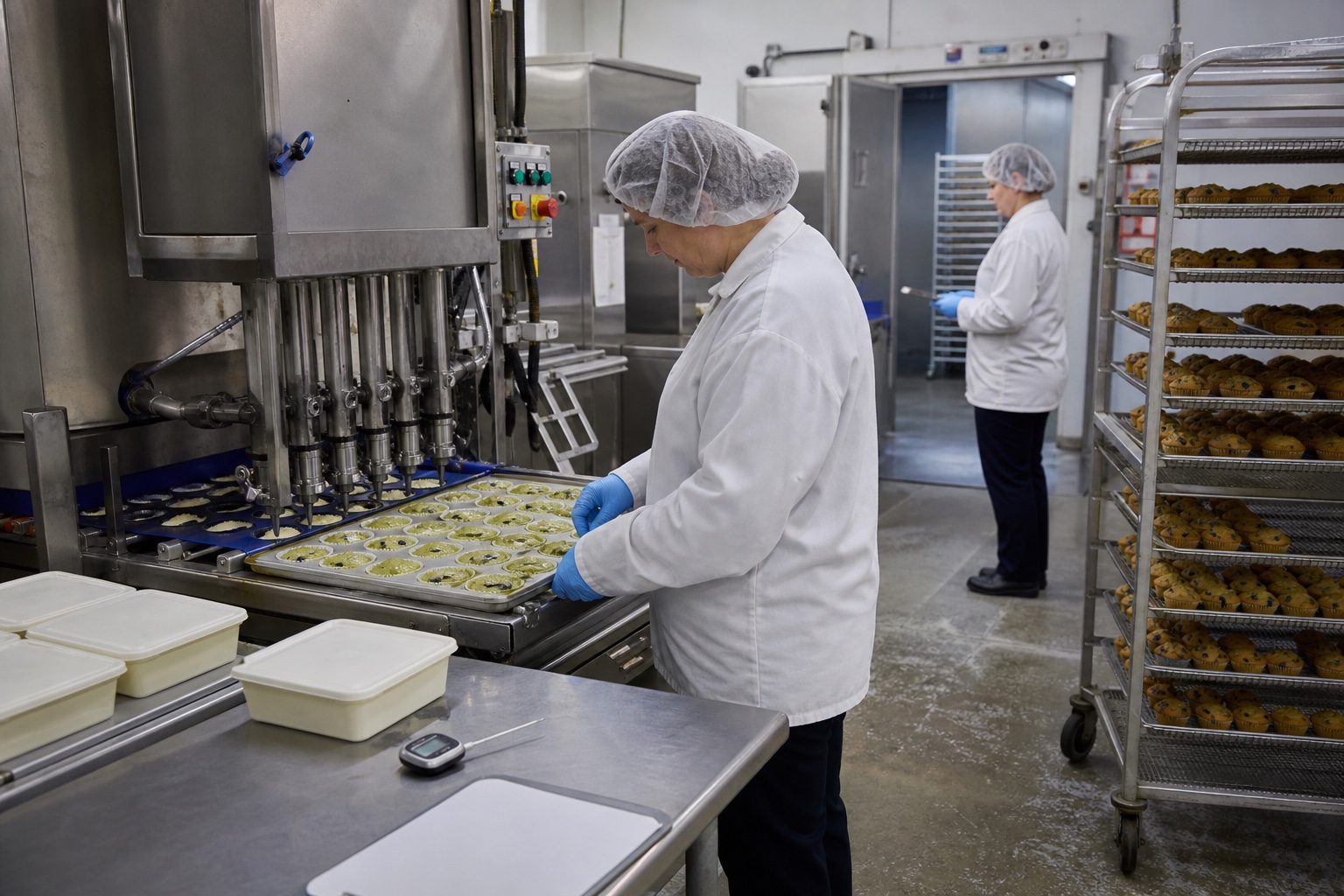
Move the preferred direction from a small bowl to the bakery's normal mixing and depositing equipment. Check powder addition order, dusting, visible streaks, berry distribution, batter consistency, deposit accuracy, pan release and cleaning burden. Record what operators actually do. A sample that depends on slow hand folding or an unusually narrow mixing sequence may not be the right choice for a commercial line.
Keep a coded approved reference and a process sheet together. The record should identify the flavored-matcha formula code, batter version, ingredient lots used in the trial, mixer, batch size, mixing sequence, deposit weight, bake profile, cooling route and acceptance notes. Later batch comparisons should return to that same reference instead of relying on a photograph or an informal memory of color.
Build the Canadian label review around the finished retail product
The Canadian Food Inspection Agency states that mandatory information on consumer prepackaged foods is generally required in English and French. Its industry guidance also says that prepackaged foods with more than one ingredient generally need an ingredient list, with ingredients declared in descending order by weight, and that applicable allergens, gluten sources and added sulphites must be declared. The bakery or responsible Canadian party should review the complete finished formula and package with qualified local regulatory support.
For products manufactured or imported on or after January 1, 2026, the responsible party should also determine whether Canada's front-of-package nutrition symbol rules apply. CFIA says prepackaged foods meeting specified thresholds for saturated fat, sugars and/or sodium may require the prescribed symbol unless exempt. XIAO TEA can provide accurate ingredient and specification information for its supplied material; it cannot decide the legal status of the buyer's full muffin, nutrition values, claims or final label without the complete product evidence.
Use the development rounds to reach one approvable bakery target
XIAO TEA's current USD 1,000 development route covers up to five flavor directions, 50 g per flavor, international sample courier and two formula-adjustment rounds after sample receipt. The buyer should use the first comparison to identify one or two viable directions, then consolidate feedback by finished product and process stage. Comments such as 'berry disappears after cooling' or 'tea finish becomes harsh after thaw' are more actionable than asking for the sample to be simply stronger.
When the project becomes a commercial order, USD 500 is credited against the goods payment. Commercial production starts at one metric ton per approved flavor. The final approval should therefore combine finished-product sensory fit, line execution, documentation, labeling handoff and a credible volume plan. It should never imply a real customer result, factory validation or guaranteed performance unless those facts have been documented for the specific project.
BEFORE FORMULA APPROVAL
Keep the conclusion tied to the tested application.
Commercial fees and scope reflect the current XIAO TEA offer. Application performance must be evaluated in the buyer's agreed product system. This page does not make an absolute claim about color, dispersion, stability, certification, regulatory status or production capacity.
- Author
- XIAO TEA Application & Commercial Team
- Published
- 21 August 2026
- Review trigger
- Commercial terms, application evidence, regulatory sources or process scope changes
REFERENCE SOURCES
Official and primary references
RELATED QUESTIONS
Questions buyers ask next
Should a bakery approve blueberry flavored matcha from the dry powder?
No. Powder aroma and color are references only; approval should be based on the finished muffin or loaf under the recorded bake and distribution process.
Can one sample be approved for both fresh and frozen bakery products?
Only after both routes are tested. Freeze, storage and thaw conditions add checkpoints that a fresh-product tasting does not cover.
Does XIAO TEA prepare the finished Canadian retail label?
XIAO TEA provides accurate ingredient and specification information for its supplied material. The Canadian buyer or responsible party must assess the complete finished formula, nutrition information, claims and final package under applicable requirements.
What is the commercial scope after development?
The development route is USD 1,000 for up to five flavors, 50 g per flavor, international courier and two adjustment rounds. USD 500 is credited to the goods payment after commercial cooperation, and production MOQ is one metric ton per approved flavor.